Denshattack!’s soundtrack was “like trying to turn a train station into music”. We talk to composer Tee Lopes about the creative process
Our interview with Tee Lopes, the composer for Undercoders' fast-paced train action game Denshattack!
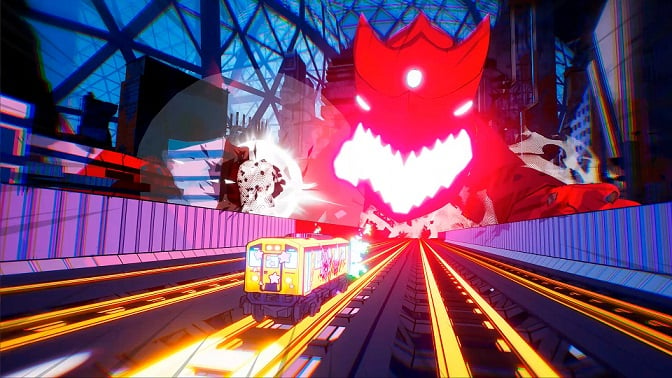
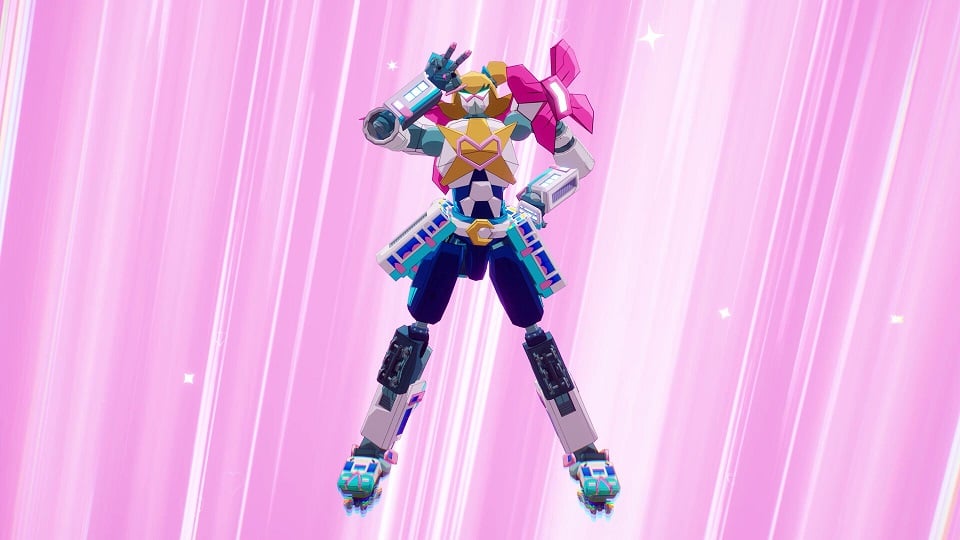
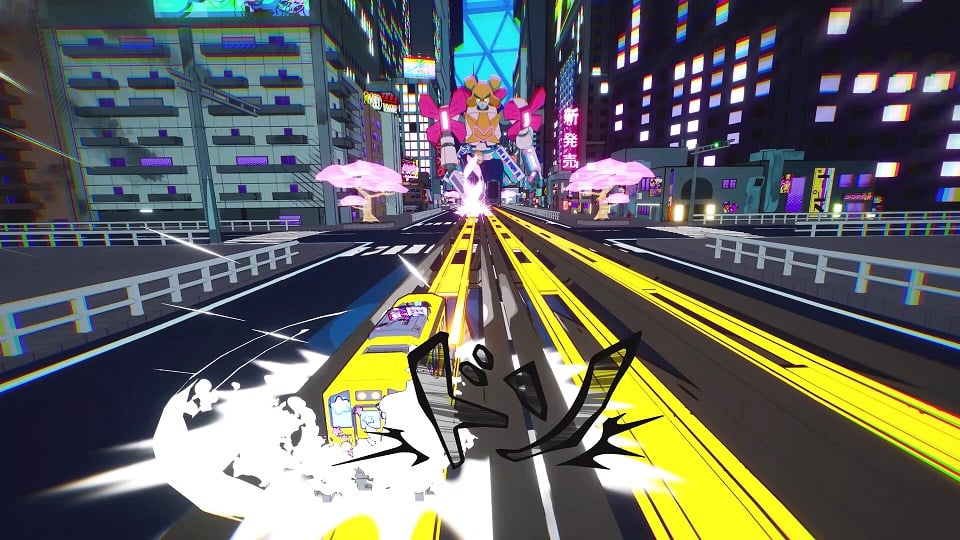
Denshattack!, a fast-paced train action game, was released by publisher Fireshine Games and Spanish indie studio Undercoders on July 15 for PC (Steam/Microsoft Store), PlayStation5, Xbox Series X|S and Nintendo Switch 2. Set in a dystopian world inspired by Japan, the game sets the player on a quest to become a legendary Denshattacker. Across numerous railroad stages modeled after actual locations in Japan, from the suburbs of Kyushu to Osaka, Tokyo and even the snowy Hokkaido, you’ll be performing ollies, kickflips and grinds as you aim to outrun your rivals and defeat the evil Miraido corporation.
Recently, AUTOMATON had the opportunity to interview Tee Lopes, the composer behind the Denshattack! soundtrack. We asked him about how he produced the music for the title, the Japanese influence on his work, the various collaborations he’s worked on, and his history composing for many other Japanese games.
—How was the experience working on Denshattack!?
Tee Lopes (hereafter, Lopes):
Right from the beginning, when I was first invited onto the project, I fell in love with the team’s passion and with the proof of concept they showed me. It was already full of crazy ideas, and you could immediately tell they were trying to make something with a very strong personality. I loved the concept and thought it would be a great chance for me to do something a little different.
A lot of my work has been on retro revivals, sequels, or games connected to older classics, and I really love doing that. But every now and then, I also crave the chance to work on something completely original, where I’m not following somebody else’s footsteps or trying to live up to an established musical language. I can just do my own thing and throw ideas out there. Denshattack! gave me a lot of that freedom, and creatively it was actually pretty therapeutic.
I also got to work with close friends such as Andrew Gomes (Andrew One), Sean Bialo, Toni Leys, and Jonny Atma, as well as musicians I’ve admired for years. Ryo Nagamatsu sang on my song “Unstoppable,” which marked the first time he had sung on a video game theme. He also helped me with Japanese lyrics, and through the process we became friends. I also had the chance to work with Harumi Fujita, who is an absolute sweetheart. Everyone I met through the project was incredibly down-to-earth and humble. It’s a strange and wonderful feeling to work alongside musicians you’ve been listening to and taking inspiration from since you were a kid.
And then there was the development team itself. The programmers and designers are ridiculously creative. Watching the game come to life and seeing them implement one insane idea after another, I’d constantly be thinking, “What am I even making music for here?” in the best possible way. Every time I saw something new, there was another surprise.
There was just a really good energy around the whole project. Undercoders, the developers, Fireshine Games, the publisher, and Kid Katana, who handled the musical coordination and label side, were all wonderful to work with. It’s easily been one of my favorite experiences working in games.
—What were the Japanese music influences on the game?
Lopes: The Japanese influences were honestly all over the place, partly because so much of my own musical DNA already comes from Japanese music and media.
Growing up, that was stuff like video game music, anime, Super Sentai, Japanese movies. . Then later, once the internet made it much easier to discover music from outside whatever was immediately available around you, I started getting really into Japanese fusion, city pop, and a lot of other artists and styles.
Then there’s obviously the traditional side too. I used taiko, shakuhachi, koto, shamisen, and other traditional Japanese instruments when I wanted to give certain tracks more of that flavor.
I still haven’t had the chance to visit Japan, unfortunately, but I really want to do so soon. Hopefully I can look back at this interview one day and say, “Okay, I finally went.” I’ve been interested in the culture for such a long time that bringing some of those elements into the soundtrack felt pretty natural to me.
I also did some more focused research for particular tracks, especially into Japanese festival music and traditions. One example was Kyoto’s Gozan no Okuribi, which I researched as inspiration. I ended up using sound and rhythmic elements inspired by the festival itself, as well as traditional Japanese instruments, and that eventually became the track “Gozan No Okuribi ~五山送り火~.” Fun Fact: the Japanese rappers I initially intended to collaborate with on this track bailed at the last minute, so I took on the challenge of rapping on the track myself, phonetically, even though I don’t speak Japanese! It was daunting, but with Nagamatsu-san’s help (and blessing) it made me feel a lot more comfortable about it.
So really, it was a combination of everything I had absorbed naturally from games, movies, anime, Super Sentai and Japanese music growing up, plus some more specific research whenever a track called for it.
—The music is great. How did you go about composing it?
Lopes:
Thank you so much for the kind words, on behalf of the whole team. There wasn’t really one set process, because the game covers so many musical styles, especially once you take into account all the different artists involved. But at the very beginning, the dev team and I did have a pretty clear idea of what the core identity should be. We wanted it to feel radical, urban, dirty, and grungy.
The way I pictured it was almost like trying to turn a train station into music. Think about all the things you associate with that environment: grimy stone and brick, rusty tracks, smoky air, noise, graffiti, crowds of people, all those rough textures. Musically, that made me think of distortion, dirty textures, sampled hip-hop, chopped-up sounds from different places, that kind of thing.
Then, I started mixing that with styles I associate with extreme sports and adrenaline. Punk, drum and bass, garage, house, all these genres that work really well with skateboarding, skydiving, racing, or those old videos of people doing completely ridiculous stuff. I also love putting real-world sounds into my music, and I’ve done that on a lot of previous projects, so naturally I started bringing train noises and environmental sounds into the soundtrack too. That was basically the starting point.
Then more artists came in, and everybody brought their own interpretation of that world. That’s when the soundtrack started spreading out into all these different genres and directions. I think that’s actually one of its biggest strengths. When you have that many collaborators, you end up with something much more eclectic and surprising than if one person had written every track. But there are still enough shared ingredients running through everything that it feels like one soundtrack rather than 80 songs from completely different games.
—Of the 80 tracks, how many did you personally work on?
Lopes: On the official 80-track soundtrack, I contributed to 25 tracks. Andrew One contributed to 17, and Sean Bialo to 15, with the rest coming from the other artists and collaborators on the project.
That number doesn’t include everything I wrote for the game’s cutscenes, though. I also scored roughly half of the cutscene music, so if you count all of that as well, I contributed somewhere around 35 pieces of music altogether.
It was a very collaborative soundtrack, and I think that’s a huge part of why it ended up having so much variety and personality.
—You worked on titles by Sega among other Japanese games. How is it working on Japanese IP?
Lopes:
Yeah, I’ve been working with Sega for almost ten years now, and over that time I’ve also had the chance to work on quite a few Japanese games and franchises, including Sonic, the Streets of Rage 4 DLC, Monster Boy, Contra, and others.
It’s very meaningful to me because growing up I generally gravitated more toward Japanese games than Western ones. There was just a different kind of flair to them – the artwork, the way characters moved, the worlds, the attitude, and obviously the music.
Musically, I was hearing things in Japanese games that I wasn’t hearing nearly as much in Western game music. Different instrument choices, jazz and fusion influences, more adventurous chord progressions, really strong melodies, and just a different harmonic language in general.
A lot of Western game music at the time leaned more heavily into rock, simpler chords, or more straightforward melodies. There’s nothing wrong with that, of course, but the things Japanese composers were doing tended to line up much more closely with what I personally found exciting about music.
So now getting to work on the kinds of games that shaped so much of my own musical taste is still pretty surreal. A lot of the games, composers and artists that inspired me growing up happened to be Japanese, so being able to contribute to some of those worlds now is extremely gratifying.
—Thank you for your time!
Denshattack! is out for PC (Steam/Microsoft Store), PlayStation5, Xbox Series X|S and Nintendo Switch 2.
Genki
Articles: 4Related Posts