

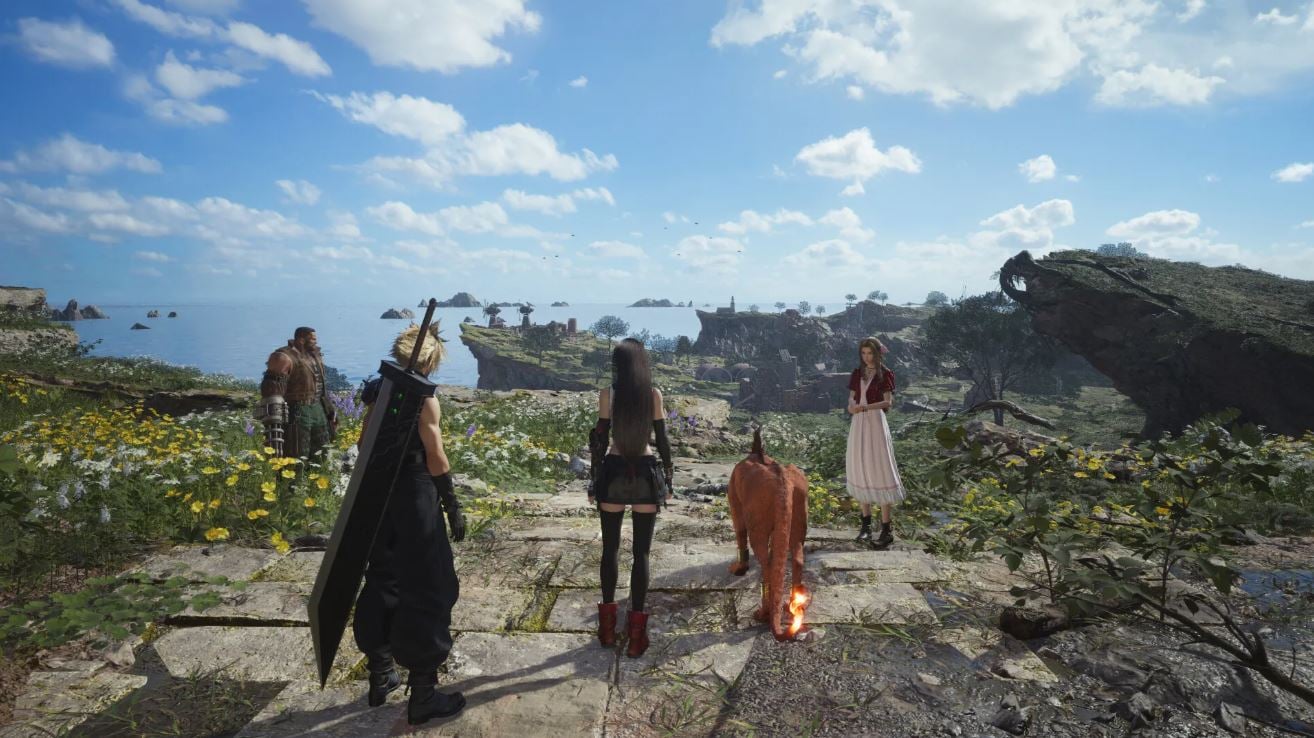
With Final Fantasy VII Remake Intergrade’s recent release on the Nintendo Switch 2 and Xbox Series X|S, Square Enix’s remake trilogy is going fully multiplatform. While this is a much-awaited development for many Final Fantasy fans, some players have also expressed concern about whether the need to accommodate platforms of differing specs could potentially affect the graphics level of the trilogy’s next and final installment.
AUTOMATON recently talked to director Naoki Hamaguchi, who addressed these concerns in detail.

—The FFVII Remake series has so far centered on high-end platforms like PS5 and PC, but now you’re making a move to include comparatively lower-spec platforms like Xbox Series S and Nintendo Switch 2. While this is certainly welcome news, some fans online have voiced concern that this could lead to the third installment compromising on graphics to match lower-spec systems. Has the shift to multiplatform development had any such impact on you?
Naoki Hamaguchi (hereafter Hamaguchi):
Both the Nintendo Switch 2 and Xbox versions have been incredibly well received and generated a lot of buzz online, and that attention has also made me realize how many people are worried about this issue. However, our decision to go multiplatform with the FFVII Remake series will not in any way lower the quality of the third installment. Our development structure simply doesn’t work that way to begin with. …I suppose I’ll just have to keep saying it (laughs).
—While it does feel reassuring to hear that from you considering your background as an engineer, I think it’s also a given that a developer wouldn’t say anything negative about their own work before release. It could just be interpreted as marketing talk. How would you address that?
Hamaguchi:
(Laughs) I understand why people might think that. Since I haven’t previously had the chance to explain in detail why there’s no need for concern, I’d like to take this opportunity to do so. I’ve heard that talk about this has been circulating ever since the Switch 2 and Xbox Series X|S versions launched, so if I can help ease even a little of that anxiety, I’d be very glad.
—Thank you. So, to return to the question, why can you say that adding platforms with performance gaps won’t result in a decline in graphical quality on high-end systems?
Hamaguchi:
When developing a game, there are four key points to consider across platforms. First is CPU, the computational side that governs character behavior and executes game logic. Second is the GPU, which handles graphics rendering and related tasks.
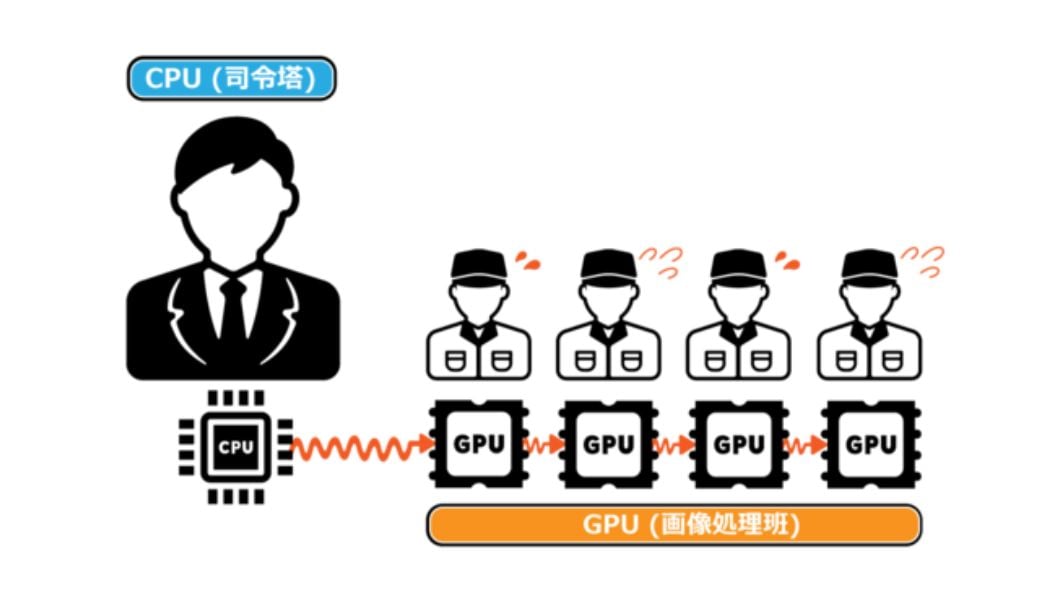
The third is RAM, or memory, which determines how much data can be loaded while the game is running. You often hear that the Xbox Series S is difficult to port to, and that’s largely because it has less memory compared to other platforms. If memory is insufficient, it can even cause the game to hang (as in freeze/stop responding). By contrast, the Nintendo Switch 2 has ample memory, which makes it relatively easy to develop for in that respect.
Finally, there’s ROM, or storage media such as cartridges and discs. In the past, we often had to reduce data size to fit within physical media constraints. Broadly speaking, I believe these four elements are the key considerations in game development.
—Understood.
Hamaguchi:
I’ll break them down one by one: Regarding ROM and overall game size, the Nintendo Switch 2 physical edition uses a game key-card through which data is downloaded. That means we don’t need to shrink data just to fit it on a cartridge or improve read speeds, so it’s highly unlikely to affect game sizes on other platforms.
As for RAM, the Switch 2’s ample memory means there’s little concern there. The Xbox Series S does have its limits, but we already optimize for each platform individually to the absolute limit, so memory constraints on one platform don’t impose restrictions on others.
Now, about CPU – I feel like there’s been a shift over the past four or five years. Traditionally, 30fps was the basic standard for console RPGs. But with the arrival of the PS5 and Xbox Series X, we’ve entered an era where 60fps is expected on consoles as well.
—That’s true, 60fps is considered a given nowadays.
Hamaguchi:
Our current approach to developing games is based on the idea that if a title runs at 30fps on platforms like PS4, Nintendo Switch 2, or Xbox Series S, it should be able to achieve 60fps on high-end platforms. In other words, we don’t design the game to fully saturate a high-end CPU at 30fps.
Instead, on hardware that lends additional CPU headroom, we scale density elements, like increasing the number of NPCs in towns. As a result, towns feel more alive on higher-spec hardware, while lower-spec systems may display fewer NPCs. So even when factoring in Nintendo Switch 2 or Xbox Series S support, CPU-related bottlenecks are unlikely.
Finally, the area most people are concerned about is GPU, the graphics processor. When a game launches across multiple platforms, many enjoy comparing the visual differences, like in those side-by-side comparison videos (laughs).
—(Laughs) Well, it is something to be concerned about.
Hamaguchi:
The main concern is that if development assumes hardware of a certain level as the standard, all platforms might be pulled to that level of quality. What I’d like to clarify first is that the highest-end gaming environment is PC.
While PC gaming is gradually expanding in Japan, overseas growth has been even more rapid. The market has broadened tremendously across both consoles and PC. The FFVII Remake series has sold very well on platforms like Steam and the Epic Games Store, so we develop assets with the broad PC market in mind. In fact, our 3D assets are created at the highest quality level based on PC as the foundation.
When FFVII Rebirth launched, there was talk about how the PC version looked better than the PS5 version, and our philosophy will not change for the third installment. As our fundamental principle, we do not design assets to meet the lowest baseline. Instead, we create them for high-end environments first.
We then apply what we call “reduction,” adjusting assets and tuning them appropriately for each platform. This means that we avoid negatively impacting high-spec platforms. This isn’t unique to us, either, I believe it’s become fairly common practice among developers in recent years.
—So you first create the highest possible quality graphics, then scale and optimize for each platform’s performance.
Hamaguchi:
That’s right. We fine-tune things to ensure the high-quality assets we create are delivered to players at a consistent level. While optimization is necessary to match each platform’s specifications, I can state clearly that this does not impose any constraints on high-end hardware.
—For high-spec platforms, you can simply use the original assets without modification, right?
Hamaguchi:
Speaking in purely technical terms, we categorize PS5 and PS5 Pro as “mid-range platforms” internally. Compared to high-end PCs, texture sizes may differ by roughly 1.5 to 2 times, mesh loading by 1.5 to 2 times, and polygon counts by more than three times. That’s how big the difference can be.
Conversely, among currently supported systems, the one adjusted toward lower specifications is the Steam Deck, since it operates at less than half the PS5’s baseline. Therefore, I’d like to once again say that supporting multiple platforms does not impact overall quality.
—I see, so PC serves as your lead platform, and even the PS5 Pro is treated as something to optimize for, like with other platforms
Hamaguchi:
That’s correct. By the way, when adapting the game for each platform, simply lowering quality across the board isn’t necessarily the solution, because this can compromise the intended visual expression. That’s why we make sure to review everything by eye and fine-tune so that each port matches the original vision.
—Since we’re on the topic of visuals, let me ask a slightly pointed question. Some people argue that if you’re going to spend resources on optimizing for lower-spec hardware, those resources might be better off invested in improving assets or creating new content, ultimately benefiting dedicated fans more. How would you respond to that?
Hamaguchi:
I see (laughs)… Let me put it this way. By making the FFVII Remake series multiplatform, we’re increasing the number of players who can access and play the game. That means our work can reach more people.
Naturally, that leads to higher overall sales. With that additional revenue, we can forecast returns and reinvest them into development. In other words, if supporting a particular platform is expected to increase sales by a certain amount, that allows us to expand our development budget and resources accordingly.
…That said, to be honest, my biggest reason is that, as a creator, I’m genuinely happy when more people get to play the games we’ve made.
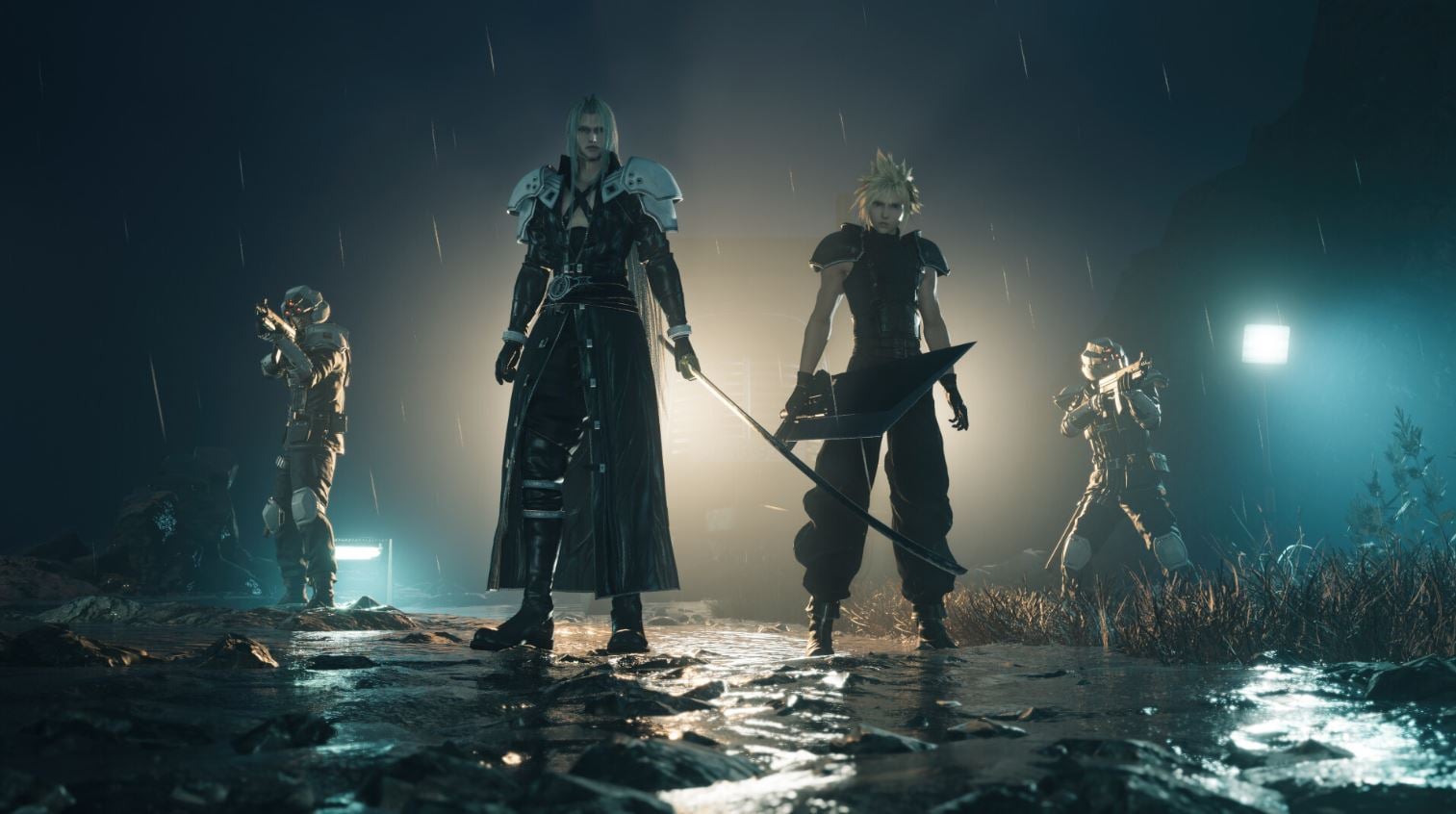
—So in the long run, even players on high-end platforms benefit from ports. Since I’ve already asked one tough question, let me add another. Some worry that going multiplatform means the development team isn’t able to devote itself to the trilogy’s finale. How would you address that concern?
Hamaguchi:
We have a dedicated unit within my team that handles porting work, and they operate separately from the team developing the third installment. The porting unit is deeply committed and has been tuning those versions with meticulous care, so I trust them and oversee their work from a distance. That allows me to focus on the third game.
Development of the third installment is progressing very smoothly, and we’re almost exactly on schedule with the milestones we set at the beginning of the project. The game is already in a playable state, and right now, we’re in the final push phase, refining and building up the experience. We’re at the stage where the quality improves day by day, and each time we play it, the scenery feels different, so it’s genuinely exciting. I think it won’t be too long before we’re able to share some kind of update with everyone.
—I’m looking forward to it. Thank you for speaking so openly with us.
Final Fantasy VII Remake Intergrade, which includes a major additional episode centered on Yuffie Kisaragi, is available on PC (Steam, Epic Games Store, Microsoft Store), PS5, Nintendo Switch 2 and Xbox Series X|S.
The trilogy’s second installment, Final Fantasy VII Rebirth, is available on PC (Steam, Epic Games Store) and PS5, with Nintendo Switch 2 and Xbox Series X|S versions scheduled for release on June 3.


Great interview. I really appreciate the fact that PC is respected as the base and then they scale everything else downward among the hardware stack rather than having Console as the base and then moving it to PC. This needs to be standard in Japan as a whole. But I am glad to hear it is becoming more common in recent years.
In what world is a PS5 a high end system? It’s ancient. Even the Pro is a joke.
Dude, read the article, they called it mid-range lol
where? all i see is they call the PS5 Pro a mid-range.
They’re not willing to compromise. Does Naoki Hamaguchi know that textures appear almost in front of the player on PC, too? Why does the lighting sometimes disappear completely on PC? I haven’t seen that on PS5.
Both part 1 and 2 run like trash on PC still to this day
I wish the porting unit would start working on FF13 and 13-2.