Final Fantasy VII Remake Intergrade, an expanded version of the original remake, came to Nintendo Switch 2, Xbox Series X|S and Xbox on PC on January 22. While the Switch 2 edition has garnered much praise for its all-around stable performance, some players couldn’t help but notice that characters’ hair textures tended to suffer from some rendering issues.
AUTOMATON recently spoke to director Naoki Hamaguchi, the FFVII remake trilogy’s director at Square Enix, who told us about the technical background and causes of the issue.
—It feels like a great deal of effort went into optimizing FFVII Remake for each platform. Do you personally feel that bringing it to the Nintendo Switch 2 and Xbox Series X|S required a lot of work?
Naoki Hamaguchi (hereafter Hamaguchi):
Yes. I sometimes see comments suggesting that since FFVII Remake originally released on the PS4, porting it should have been simple. However, it’s not actually a port of the PS4 version. After the PS4 release, we enhanced the game’s assets to create Intergrade for PS5, and now, we ported that Intergrade version to Nintendo Switch 2 and Xbox Series X|S, so there was certainly a lot of optimization to do.
On Xbox Series S, for example, we were faced with memory constraints, and with the Nintendo Switch 2, there’s the added characteristic of handheld mode, where performance constraints are tighter. Our graphics engineers meticulously tuned the game until we could ensure a stable 30fps, and I think that even among our other current ports, the result really stands out. The response from both Xbox and Nintendo fans has been very positive, so I feel it was worthwhile.
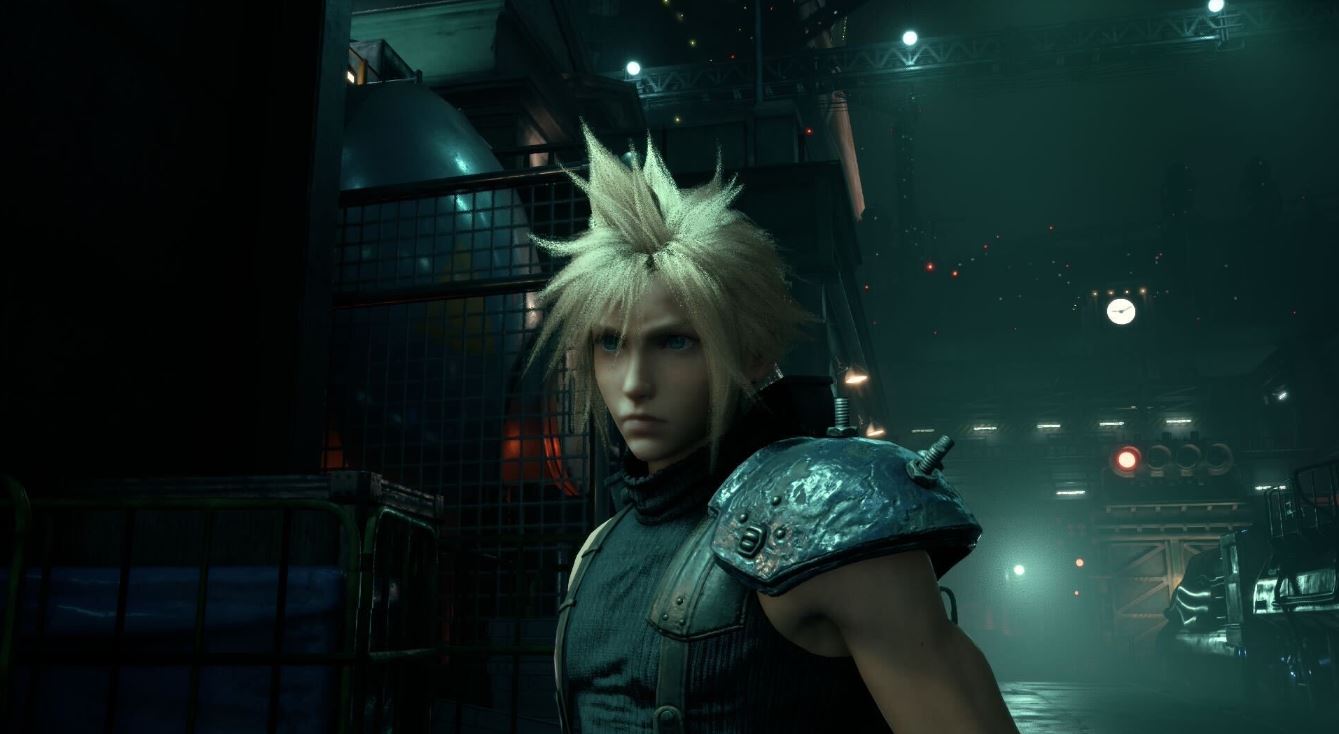
—Speaking of the Switch 2 version, some players have pointed out that Cloud’s hair can sometimes look kind of jagged. How do you view those reactions?
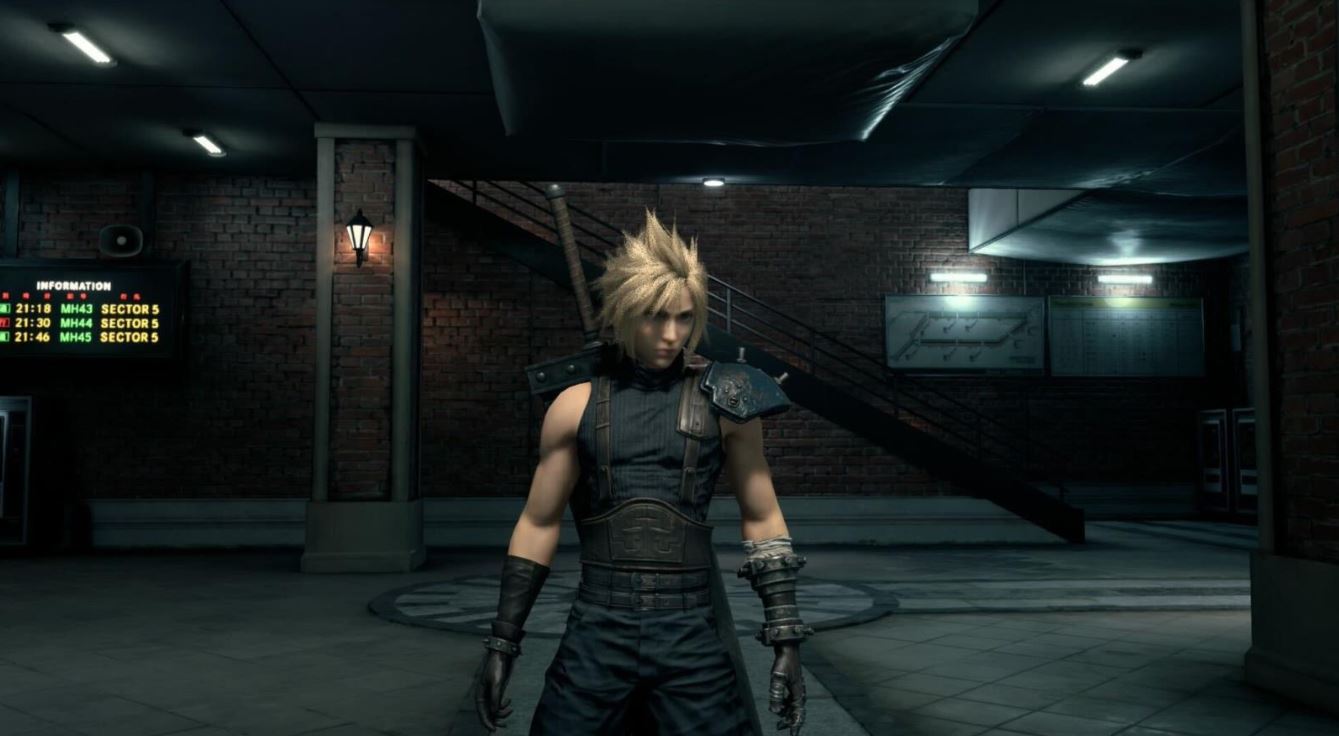
Hamaguchi:
Of course, each platform has many passionate Final Fantasy fans, and I understand that people will react. That said, there are inevitably things that can and cannot be done depending on hardware, and I believe it’s important for us to explain those differences carefully.
Personally, I want to avoid differences in gameplay experience between platforms as much as possible. I want every customer to feel confident in buying the game, regardless of the version. However, since each piece of hardware was built around a different kind of gameplay experience, and has its own strengths and performance characteristics, we do our best to deliver the highest possible performance within those constraints.
—I see. To dig a bit deeper, why does Cloud’s hair frizz out like that sometimes?
Hamaguchi:
This often comes up with other companies’ ports as well, and there’s a clear technical reason behind it. I’ll try to explain it as simply as possible.
In FFVII Remake, we use a technique called TAA (temporal anti-aliasing) to prevent character outlines from appearing jagged. TAA works by referencing not only the current frame being rendered, but also information from previous frames, layering them together to produce a smoother, near-high resolution image.
Now, hair is made up of extremely fine elements, so if you render it as-is, individual strands can flicker at the pixel level. To address this, we implemented a special process whereby each strand of hair switches on or off at the pixel level from frame to frame. When combined with TAA, this allows the fine lines of the hair to connect smoothly across frames.
However, Nintendo Switch 2 has a handheld mode, which comes with some extra constraints. To reduce processing load, there are situations where the game is forced to lower its internal resolution. When resolution drops, TAA becomes less stable, and the rough, jagged edges in the hair become more noticeable.
That’s not to say that handheld mode is always running at low resolution. In FFVII Remake, we use DRS (dynamic resolution scaling), which automatically adjusts the internal resolution between HD and Full HD depending on the load of each scene. To summarize:
High-load scene → internal resolution drops → hair is more likely to look jagged
Lighter scene → internal resolution rises → hair appears smooth
On Nintendo Switch 2, the basic mechanism is to lower internal resolution to maintain a stable frame rate, then compensate using DLSS. To briefly explain, DLSS uses AI to predict how the image “should” look and reconstructs it at near-high resolution.
DLSS is generally smarter than TAA at reconstruction, so even when internal resolution drops, the overall image can still look quite clean. However, as I mentioned earlier, our hair rendering switches individual pixels on and off each frame, and this doesn’t pair well with DLSS, which can result in jagged edges sometimes. While there are some inherent constraints to handheld hardware, we will continue optimizing to improve things as much as possible.
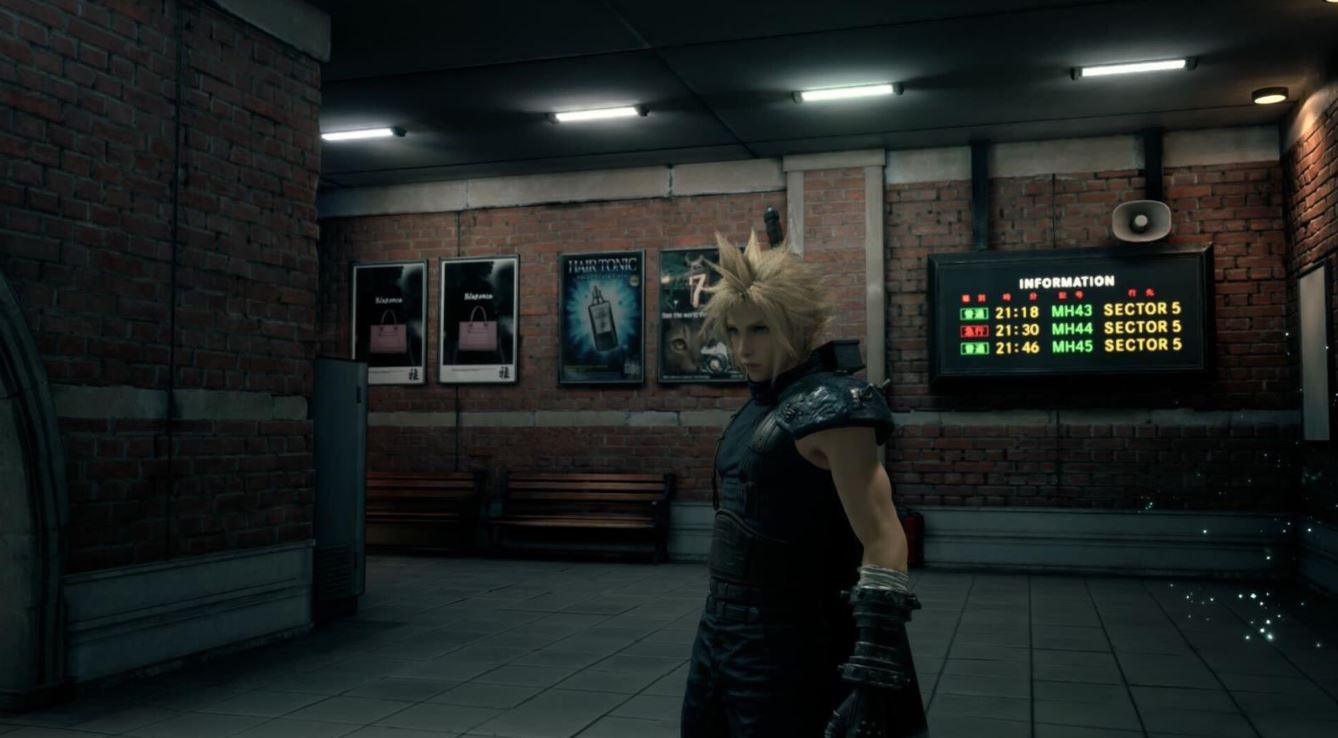
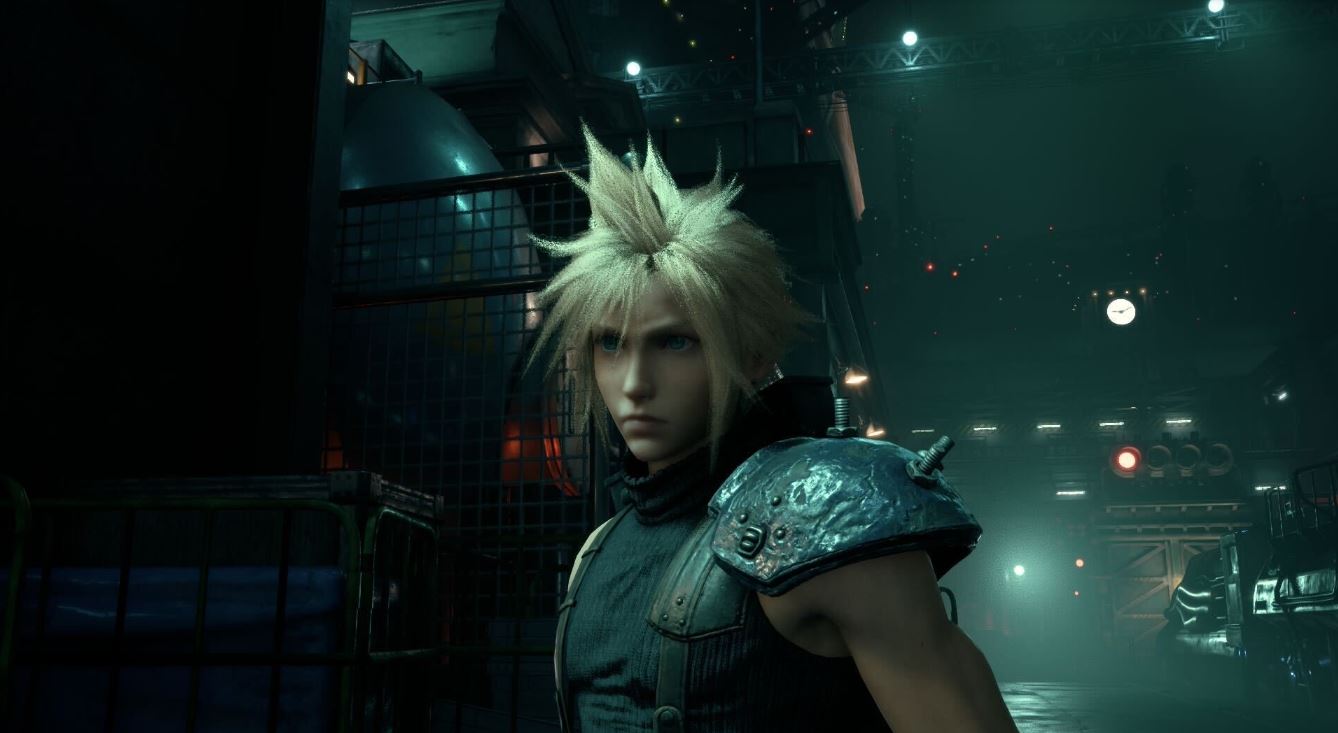
—That means that if the 3D model’s hair weren’t as finely detailed, or if the character were wearing headgear, the jaggedness be less noticeable?
Hamaguchi:
Exactly. With cel-shaded characters, for instance, it wouldn’t stand out nearly as much. The more photorealistic you go, the more resolution becomes crucial for achieving high quality through anti-aliasing processing. That’s when jagged edges become noticeable.
—Which means this will continue to be a challenge for future entries. How do you plan to address it in future ports, like FFVII Rebirth?
Hamaguchi:
That’s right. As I mentioned, on Nintendo Switch 2, the basic mechanism is to lower internal resolution in heavy scenes to stabilize frame rate, and then compensate with DLSS. That system doesn’t pair so well with our current hair rendering method, which is why jaggedness can appear.
While there are inherent limitations to handheld hardware, I think being able to play anytime, anywhere, in your preferred style, at a stable frame rate, is truly wonderful. We will continue optimizing to maintain stable frame rate while improving the visual quality as much as possible.
—FFVII Remake Intergrade was developed to target platform-appropriate resolutions and 30fps, and I think it achieved that well. Will similar performance targets apply to future releases?
Hamaguchi:
Yes. We’re consistently aiming for 30fps wherever possible. For FFVII Rebirth and the third installment of the trilogy, our engineers are working hard on tuning to ensure stable performance at that level. I hope players will look forward to it.
Final Fantasy VII Remake Intergrade, which includes a major additional episode centered on Yuffie Kisaragi, is available on PC (Steam, Epic Games Store, Microsoft Store), PS5, Nintendo Switch 2 and Xbox Series X|S.
The trilogy’s second installment, Final Fantasy VII Rebirth, is available on PC (Steam, Epic Games Store) and PS5, with Nintendo Switch 2 and Xbox Series X|S versions scheduled for release on June 3.