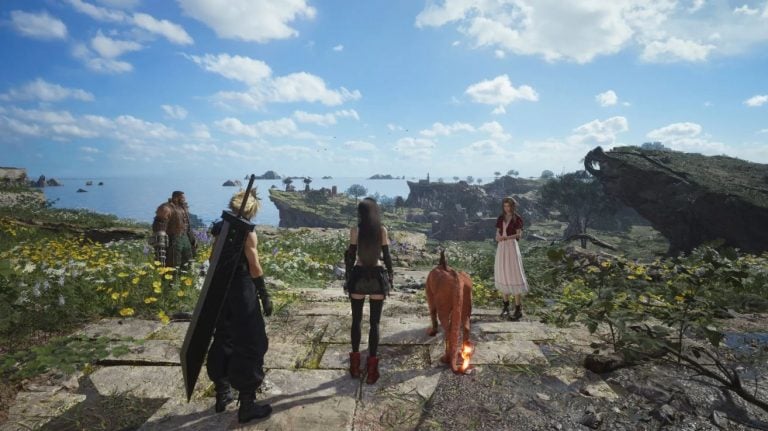
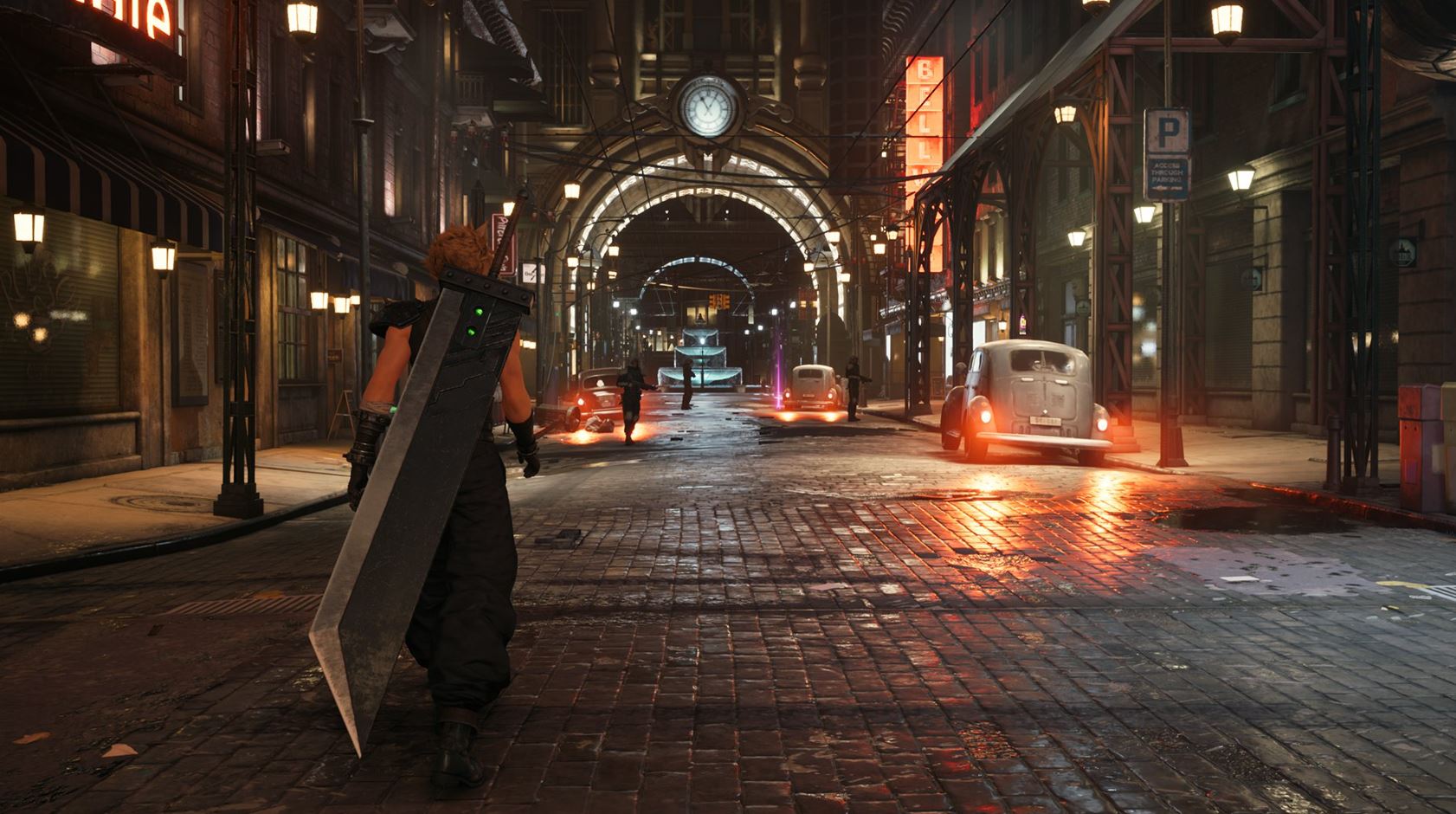
Final Fantasy VII Remake Intergrade, an expanded version of the original remake, came to Nintendo Switch 2, Xbox Series X|S and Xbox on PC on January 22. The Switch 2 version was released on a Game-key card, rather than a traditional cartridge. While key cards are often used for titles with hefty file sizes, they don’t contain the full game data themselves, which makes them a somewhat controversial pick from a gamer’s perspective. At the same time, there seem to be cases when developers have little choice but to opt for them.
AUTOMATON recently interviewed Square Enix’s Naoki Hamaguchi – director of the FFVII Remake trilogy – who gave us some insight into why Final Fantasy VII Remake Intergrade adopted the key card format on Switch 2.
—Regarding the game’s Switch 2 version, there are still voices asking why FFVII Remake had to be a key card, with many arguing they would have preferred a standard game card. You’ve responded to these concerns on social media previously, but could you explain the background?
Naoki Hamaguchi (hereafter Hamaguchi):
There’s simply no way around key cards in certain respects. If you compare loading directly from a game cartridge (containing all game data) to loading from the Nintendo Switch 2’s internal storage, the load speed difference is roughly double.
Some have expressed concern that multiplatform development may impose constraints not only on graphics, but even on game design itself. However, this is precisely why we didn’t choose a cartridge.
Our game design isn’t built around loading all data upfront, with nothing further being loaded afterward. Even during gameplay, data is constantly swapped in and out, and given that premise, the loading speed from a game card would inevitably be insufficient, leading to stress for the player. In addition, with currently available cartridge capacity, there is the practical limitation that the full game data simply wouldn’t fit in the first place.
However, as long as we can secure the high-speed storage read speeds such as SSD or UFS (on Switch 2), the design we’re aiming for becomes achievable within the scope of optimization for each platform. For the third game in the trilogy, we’re proceeding with development with the goal of delivering a large-scale experience similar to Final Fantasy VII Rebirth, so please rest assured on that point.
In the past, when faced with practical issues related to load speed and storage capacity we couldn’t resolve, we had to decide not to release on Nintendo systems. However, Nintendo Switch 2’s performance is impressive, and with a key card format like FFVII Remake, releasing the games became possible. I believe the only thing I can do is continue to sincerely communicate that fact to users.
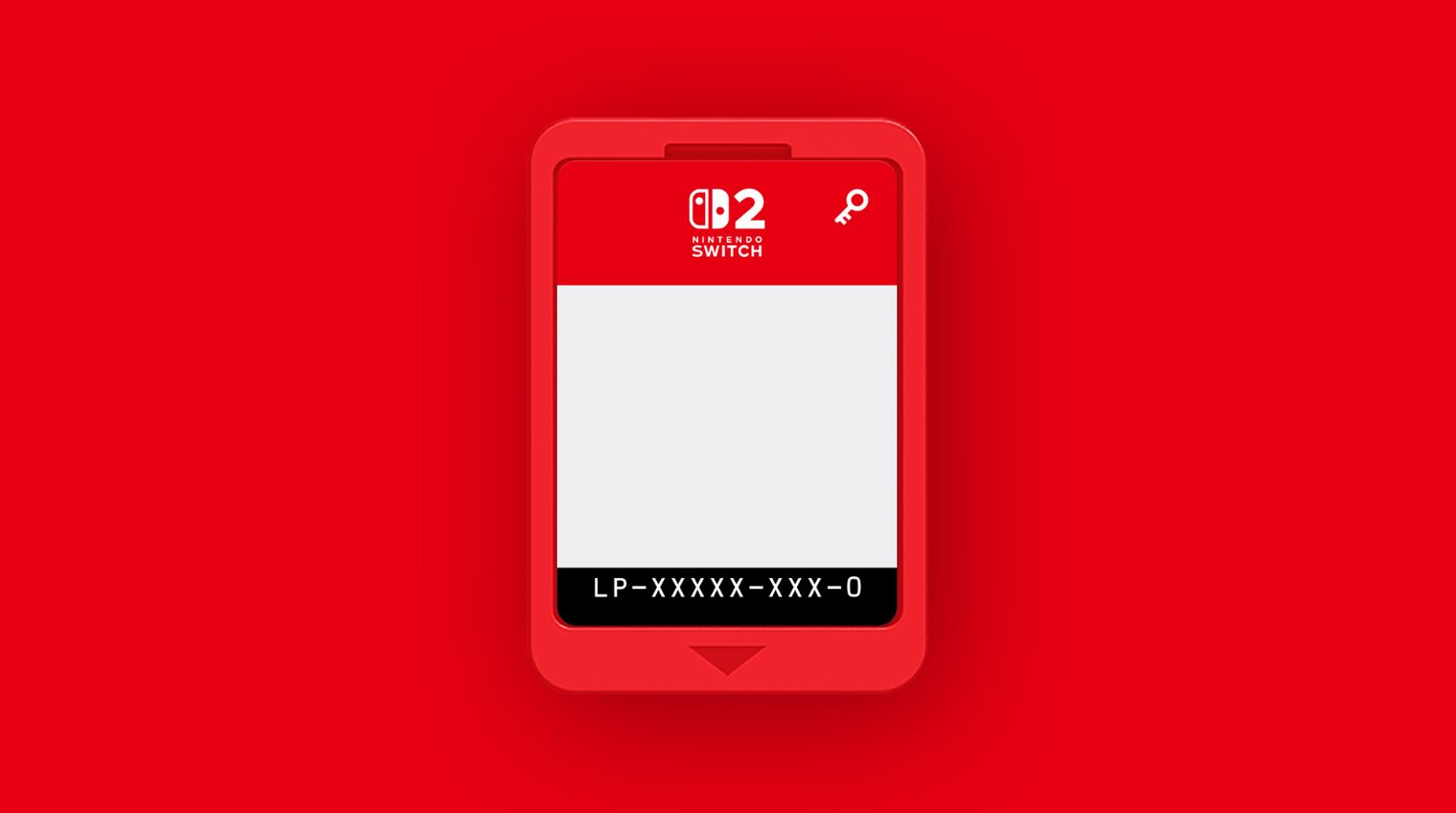
Despite everything, I’m relieved that FFVII Remake reached our customers and was well-received. I think we’ve been able to play a significant role in broadening awareness of the key card format for future titles. I have absolutely no intention of demanding that all gamers accept key cards. I would simply be happy if people could understand that there are games that can only be released because the key card format made it possible.
—How would you respond to the criticism that the key card format is simply a way to cut cartridge costs?
Hamaguchi:
From my personal perspective, I see the technical side as the primary reason. Rather than trying to increase profit margins, we chose to use key cards because the games we aim to deliver simply cannot be realized on standard game cartridges. If doing so allows the series to reach even more players going forward, that would make us very happy.
—Understood. Thank you very much.
Final Fantasy VII Remake Intergrade, which includes a major additional episode centered on Yuffie Kisaragi, is available on PC (Steam, Epic Games Store, Microsoft Store), PS5, Nintendo Switch 2 and Xbox Series X|S.
The trilogy’s second installment, Final Fantasy VII Rebirth, is available on PC (Steam, Epic Games Store) and PS5, with Nintendo Switch 2 and Xbox Series X|S versions scheduled for release on June 3.