

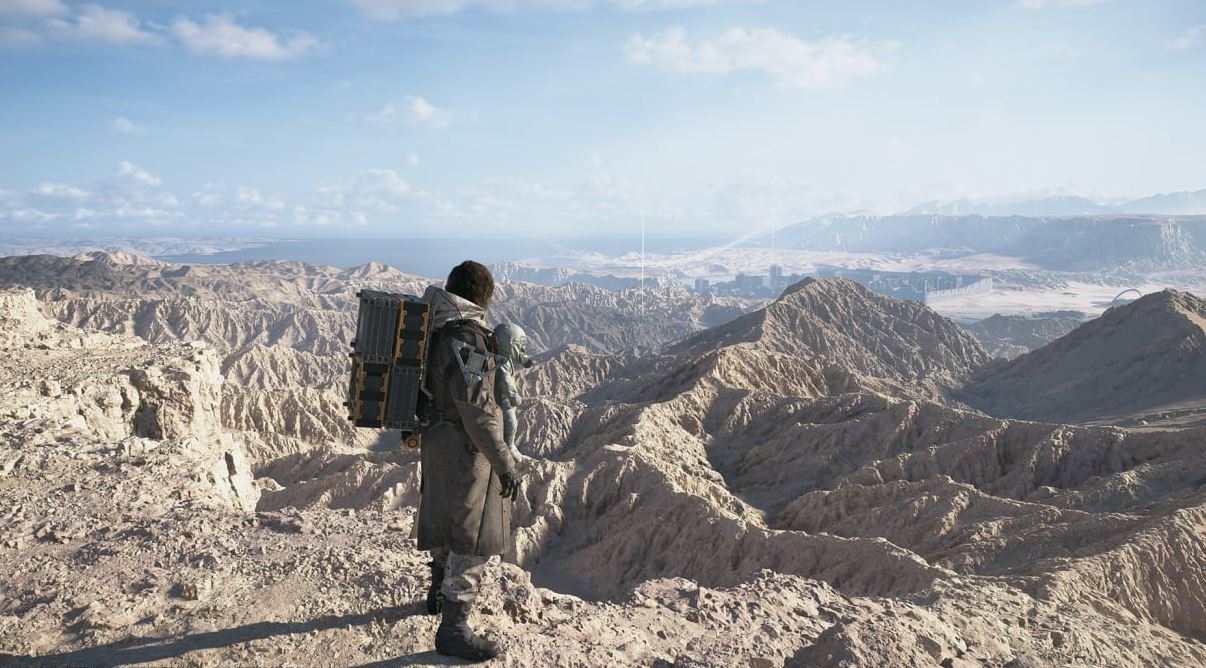
Much like its predecessor, Kojima Productions’ Death Stranding 2: On the Beach was built in Decima, a proprietary game engine made by Guerrilla Games, the developers of Horizon: Zero Dawn. The highly realistic 3D visuals and smooth performance of Death Stranding were pushed to an even higher level in the new sequel, which has brought a lot of attention to Decima itself, as well as the whizzes working with the engine at Kojima Productions.
AUTOMATON recently sat down with Akio Sakamoto, chief technology officer at Kojima Productions, to find out more about how the studio works with Decima and why they chose the engine for the development of the Death Stranding series.
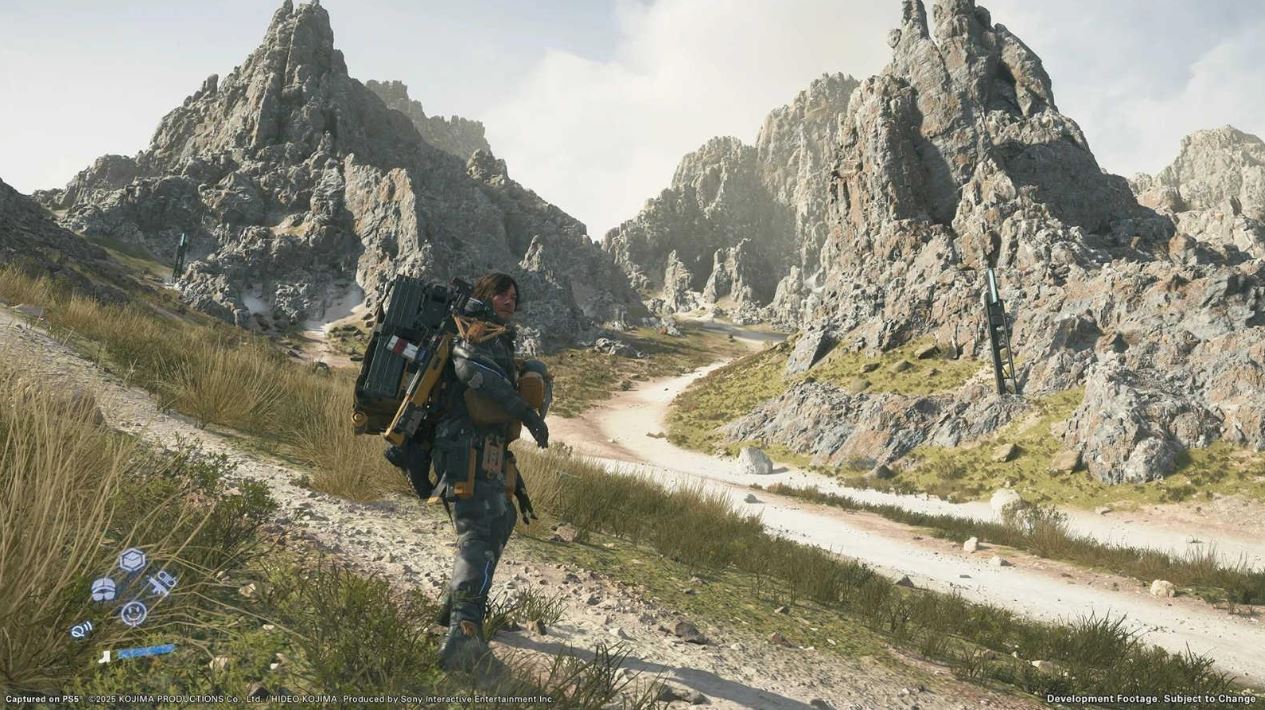
—Please introduce yourself and tell us about your career.
Akio Sakamoto (hereafter Sakamoto):
My name is Sakamoto, and I serve as the CTO at Kojima Productions. I joined the studio shortly after its founding, and I’ve been in this role since my second year.
Before that, I worked at a major game company, where my background in graphics programming led me to contribute to the development of its in-house engine, as well as titles built on that technology.
—What was your first impression of Decima like? How has your impression of the engine changed over time?
Sakamoto:
When we were considering adopting Decima, I had the opportunity to evaluate the engine directly. It offered many of the capabilities needed to build an open-world game, and while some aspects are less immediately approachable than commercial engines, its runtime rendering analysis tools stood out. Being able to access such a rich set of data without relying on external tools is incredibly valuable. The development environment – built for large-scale, multi-disciplinary teams – also included features I had long hoped to implement in the engine I worked on previously. With all of that in mind, we decided to adopt Decima.
It has now been nearly ten years since we began using the engine. While no engine is the best choice in every scenario, Decima enables us to accomplish many things that would be difficult to achieve elsewhere.
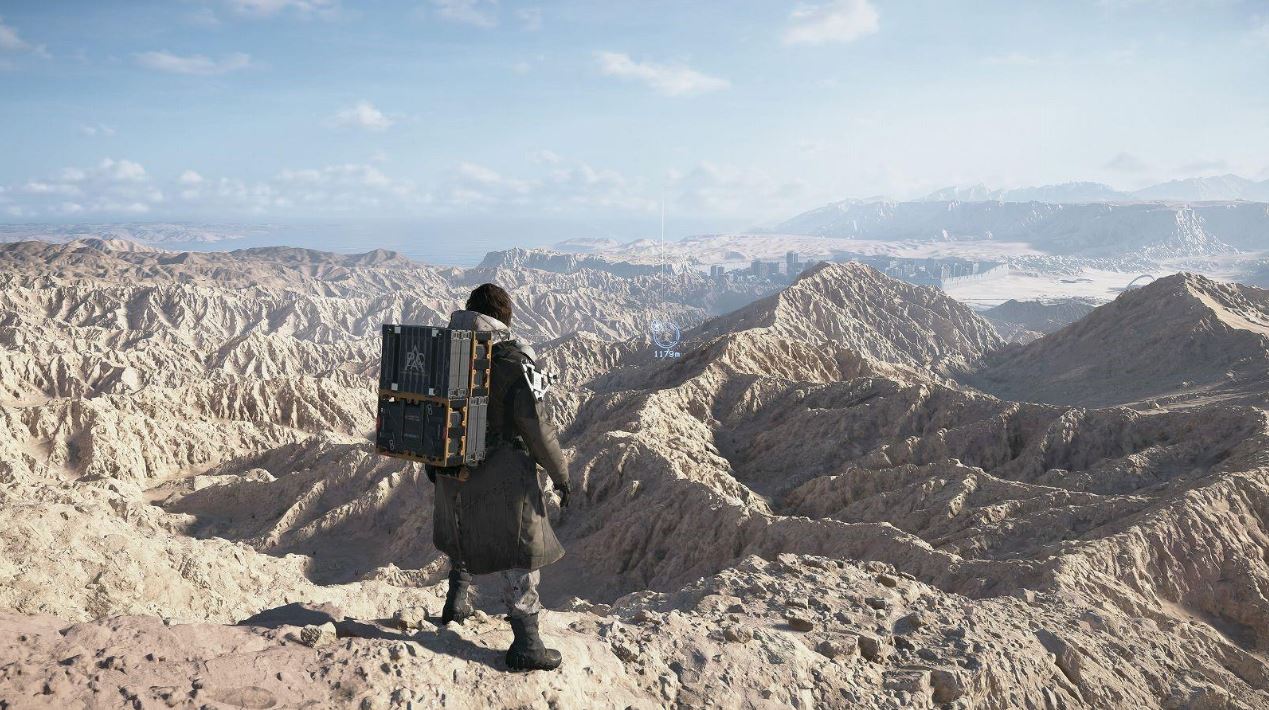
—Death Stranding 2 has received high praise not only for its character models, but also for its environments. I know you probably can’t go into detail about your “secret sauce,” but could you explain what went into creating this iconic scene, for example?
Sakamoto: To recreate the opening landscape, based on Fonts Point in California, we conducted extensive on-site research and gathered a large volume of reference material in pursuit of maximum realism.
Because the environment is an expanse of sandstone formations stretching to the horizon, large-scale geometry and lighting were the most critical elements to get right.
For the terrain, the sheer amount of geometry required us to prepare three types of data, each with distinct structures and LOD (Level of Detail) stages optimized for different sandstone formations. By dynamically switching between them based on viewing distance, we were able to reproduce dense, natural-looking terrain across a vast area.
The final polygon count reached approximately 25 million, yet the scene still maintained a stable frame rate. This was something made possible in large part by Decima’s rendering capabilities.
For lighting, we repeatedly validated and adjusted our setup against actual illuminance measurements to achieve physically accurate results. Through this process, we found that relying solely on GI and SSAO did not provide sufficient occlusion during times of day when ambient light dominates.
To compensate, we introduced a dedicated mid- to long-distance occlusion map to better control SkyLight behavior, which significantly enhanced the final image quality.
Through these technical refinements, and the strengths of the Decima Engine, we were able to bring this landscape to life with the level of beauty and fidelity we aimed for.
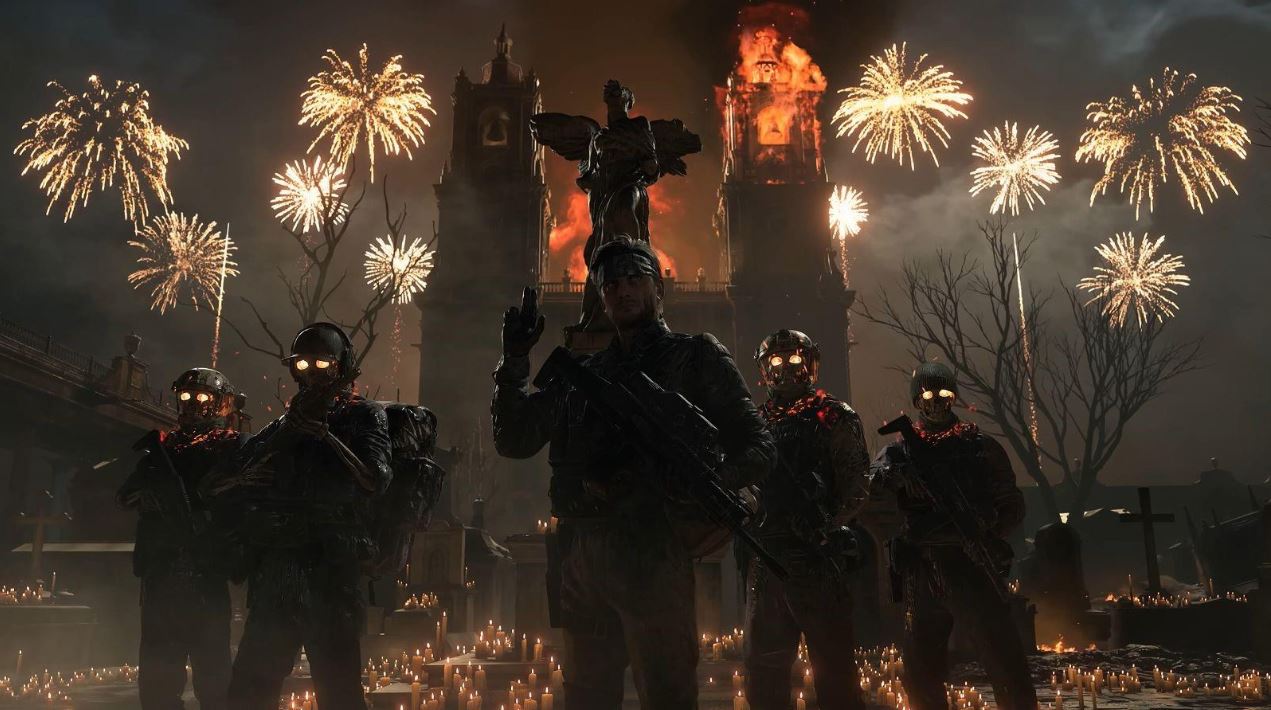
—Death Stranding 2 also had a lot more extravagant moving objects than its predecessor, but I was impressed by how stable the performance remained, even in that fireworks scene early on.
Sakamoto: During the concept art phase, there was a request from the team to depict numerous fireworks inspired by the “Day of the Dead” celebrations in Mexico. We had originally built a system in DS1 capable of generating many particles for the BTs, and we expanded and refined that system so that it could also render fireworks. By specializing the system for this purpose, it also became easier to experiment with reflections.
—Do only programmers work directly with Decima? In a recent interview, you commented that you want artists to be able to create shaders too.
Sakamoto: When people talk about game engines, attention tends to focus on the parts that relate directly to the game’s visual expression. But in reality, a game engine provides a wide range of functions that support every aspect of development. In that sense, the number and type of tools used may differ depending on one’s role, but I don’t think there is a single developer whose work is completely unrelated to Decima.
—Do you modify Decima at Kojima Productions? If so, do you communicate modifications to Guerilla? I found it interesting that you were given a “Special Thanks” in Horizon Forbidden West’s credits, so I was wondering if you provided feedback to Guerilla on Kojima Productions’ case studies to improve the engine’s functionality.
Sakamoto: Even when something appears visually similar, Kojima Productions and Guerrilla don’t always require the exact same expressive capabilities. When we need functionality specific to our projects, we modify the engine ourselves – and in some cases, develop entirely new features. We share these updates with Guerrilla at the code level.
When we first adopted Decima, we began holding regular meetings with Guerrilla, and this practice continues today. I’m not sure whether our contributions warranted a Special Thanks credit in Horizon Forbidden West, but in those sessions, we present the modifications we’ve made, the features we’ve added, and the results from our internal testing. I believe some of this work has served as a reference and has been incorporated into Guerrilla’s environment as well.
—Thank you for your time.
Death Stranding 2: On the Beach is available on PS5. The PC version is set to launch on March 19, 2026 via Steam and Epic Games Store.


2 games in ten years there’s your answer
I’ll tell you exactly why they used the Decima Engine. It was an engine Sony had and it can render great looking graphics. Just like the Fox Engine. Sure MGS5 used Unreal and it looks nice. But the performance is bad. Look at all the Unreal games released. Specifically UE5. One of the few good looking Unreal games with proper performance was FF7 Remake, and it still had stutter issues. And that was UE4. If Kojima was still at Konami, Unreal would’ve never been used.
Are we allowed to just enjoy the product? ffs
FF7 looked like total shit on PS5, compared to PC. It was really bad. DS2/DS2 prove you don’t have to compromise graphically for consoles and is great for that.
Metal gear solid 5 or V did not use unreal, it was using the fox engine. i think you are thinking of the remaster of metal gear solid 3 which did use unreal