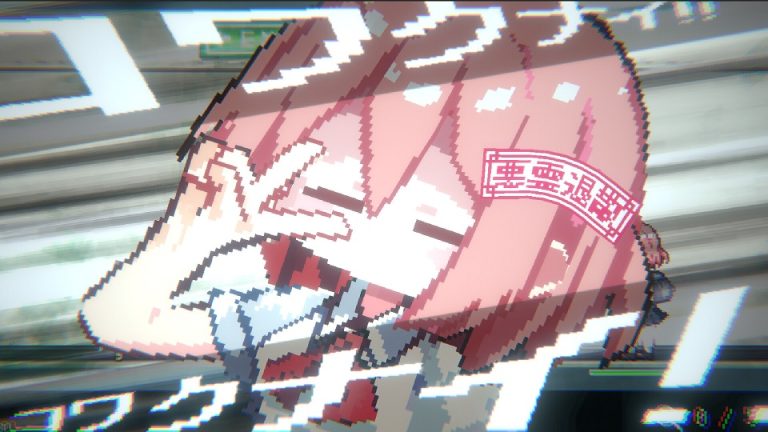
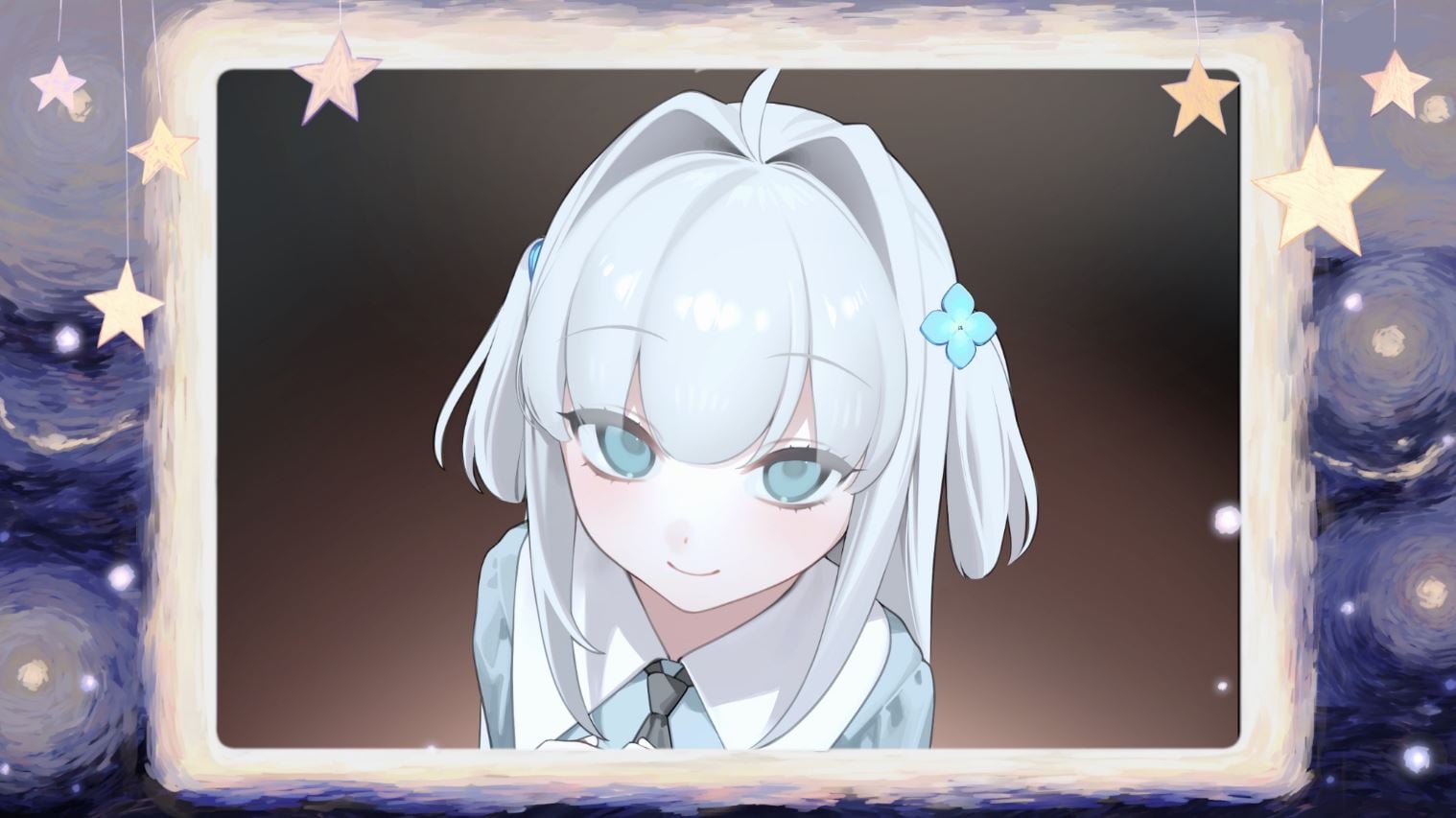
For nyalra, the Japanese creator behind NEEDY STREAMER OVERLOAD, 2025 was a turbulent year. Following the massive success of his hit visual novel, he found himself at odds with the game’s publisher, which ultimately led him to establish his own game company. Called HazeDenki, this two-man company is a fresh start for nyalra, who’s already working on new projects.
AUTOMATON sat down with nyalra to ask him about HazeDenki’s goals as a company and its upcoming two projects – the visual novel Sister Other Paranoia and an unannounced strategy game. He also talked to us at length about his creative influences and fascination with communities, otaku culture, alienation and the grotesque. The interview was conducted at midnight, when nyalra is most likely to be active.
―First, could you introduce yourself?
nyalra:
I’m nyalra. I’m currently making games at my newly founded company HazeDenki. Thanks for having me.
https://hazedenki.net/post/hazedenki
―Given your position, I’ll be asking you questions as “nyalra, the CEO of a game company” this time. How do you personally see yourself as a game creator?
nyalra:
Actually, it wasn’t until you put it that way that I realized, “From now on, I have to think about what I say from the perspective of a game company representative.” But sorry, I still just see myself as someone who loves bishōjo games (gal games) and is living off the remnants of that. Whether it’s games or anime, I basically have a world inside me, and all I want to do is to express it.
Because what I want to express changes, the genre I use to express myself changes too. Right now, it feels like I have two themes I want to explore through games. That’s why I started making games again. I myself am more of an anarchist, or rather, someone who just can’t fit into society very well, so a lot of what I want to make is tied to that. Lately, I think that’s turned into me making games for people who don’t fit into society.
—What kind of environment are you currently working in, when making games?
nyalra:
Well, uh, I’m just kind of doing what I always do – working with my headphones on and my notebooks laid out on the desk. I usually start by writing everything I’m thinking down on paper. I’ll scribble out sentences with a fountain pen, then later type them into Google Docs. Since the paper itself is just for notes, I usually toss it after each session, I don’t think there’s much point in revisiting it anyway. Also, I get distracted all the time while I’m working. I’ll open a bunch of books on Kindle, or start watching videos. I don’t think I’m the type to get super-focused. Yeah.
—How do you look for ideas when developing games?
nyalra:
I like looking at artwork and watching movies as a hobby, so I never really feel like I’m lacking inspiration. If you watch movies every day, you end up finding something you want to do every day. It’s always been like that for me. Although, lately I feel like I’ve been taking in way too much while neglecting my output. Since I’ve never studied anything in my life that I wasn’t personally interested in, I don’t really like the way people talk about “doing the required reading.” I’ve never learned about something just to “keep up with the conversation.” Because of that, there are definitely times when I’m out of the loop on the latest content or trends. But I think the secret to creativity is really just being able to do things in a way that comes naturally to you.
—Are there any games that influenced your own work?
nyalra:
I’ve always loved Monster Rancher 2. In my mind, NEEDY STREAMER OVERLOAD follows the same kind of gameplay flow as Monster Rancher 2, and I think that’s where my roots lie. Also, since a lot of the games I’m personally hooked on belong to the bishōjo genre, I think I was influenced by AliceSoft titles like Daiakuji. AliceSoft games casually pull off some pretty awful stuff, and I think that’s where their uniqueness lies.
I love that kind of thing. It also ties into why I chose the term “game” for my new work. To get people to really read the story, a sense of immersion is essential. Especially when it comes to establishing emotional attachment to the heroine, I honestly think immersion is everything. The eroge I loved – like AliceSoft and ELF titles – were games that heightened immersion by letting you control the character. I think they’re the reason why I want to make games now.
That said, early on, I did have this idea that I needed to read as much “literature” as possible so I wouldn’t be embarrassed in front of ’90s or early-2000s otaku. That was partly because a lot of the eroge I loved were clearly paying homage to literary works.
—Thank you. Could you tell me about how you came to found your own company?
nyalra:
Right after releasing NEEDY STREAMER OVERLOAD, I was already thinking up a new visual novel project on a personal level. People tend to think of NEEDY STREAMER OVERLOAD as something I made completely the way I wanted to, but it was still a team project. So, I wanted to make something even more detached from others’ influence, where I could just do what I wanted with my own writing, regardless of sales.
In a way, it was also a form of pushback against the big projects, like the anime adaptation work that was waiting for me next. I wanted something I could make purely for fun, like a true hobby project in between the “real work.” I didn’t want to do just big-name projects as a writer, so I created a proposal with the idea of making a visual novel that would resonate only with those who truly understood it… but in the end, several years passed without the company I was working with at the time (Why so serious) moving forward with the project.
I had already invited my programmer friend HAYAO to join the development of the new game, but at the time, he was swamped with a massive workload related to NEEDY STREAMER OVERLOAD and simply couldn’t spare any attention for anything else. Despite having already quit his previous job, the employment discussions with him were left hanging, and he began ignoring my communications regarding the project. Then, at one point, things had progressed to the stage where we could start development. But as you know, the dispute began between myself and Mr. Daichi Saito, the CEO of Why so serious, and the project I’d nurtured over several years was ultimately forced to shut down.
After being left in limbo for years only for it to end in cancellation, I was honestly shocked. A lot of people reached out to me then. Some even apologized, saying they couldn’t help anymore. While everyone was sincerely offering me their support, one person told me: “If you don’t want this to happen again, you should make your own company and hold the rights yourselves.” And I thought, yeah, that’s true. If we didn’t hold the rights ourselves, we wouldn’t be able to get help from others either. So, HAYAO and I talked it over. We decided we wouldn’t let anything be taken from us this time. We were determined to properly make a visual novel this time around, and we resolved to establish our own company. That’s how HazeDenki came to be.
—Does the company consist of just you and HAYAO right now?
nyalra:
Yes. Since it’s just the two of us, these roles don’t mean anything grand, but I’m the CEO, and he’s an executive. We’re not really interested in managing a business in the traditional sense – as long as we hold the rights to what we make, that’s enough for us. I would say the vibe is closer to a creative circle.
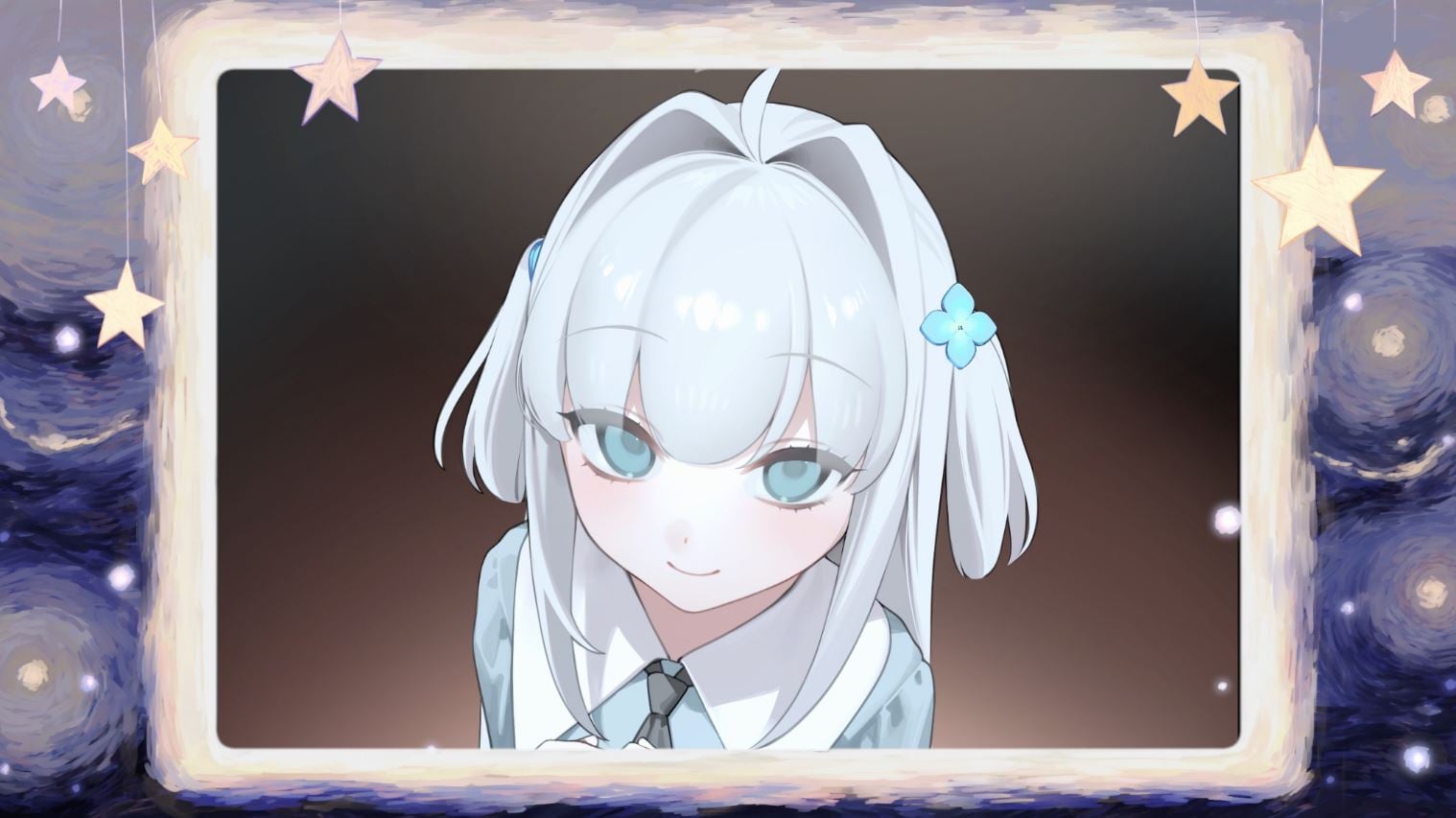
HazeDenki is currently developing two games. One is the visual novel that was previously canceled, called Sister Other Paranoia. That’s a project only me and HAYAO are working on. The other is a strategy game. I’m handling the scenario, and former NEEDY STREAMER OVERLOAD staff members like programmer Torii, artist Nennai, and sound creator Aiobahn are involved too. They’re participating in development mainly as contractors.
https://store.steampowered.com/app/4240150/Sister_Other_Paranoia
—How would you describe the atmosphere within the team right now?
nyalra:
I’m working with people I never thought I’d get to make games with again, so honestly, it’s just really fun. To begin with, we didn’t have any major conflicts during NEEDY STREAMER OVERLOAD either. Of course, there are bound to be conflicts when making games, but somehow, even those feel insignificant compared to the sheer joy of gathering together and pushing the project forward. I’m really happy!
Every month, we meet up in Akihabara for progress meetings, talk about what we’ll aim to finish next, and that time is just really enjoyable. It feels like, “Yeah, this is how it was supposed to be.” When Nennai sketches things out on the spot in response to what I’m saying, going “Like this, right?” and the game starts taking shape right there, it’s truly delightful. It makes me think, “This is what indie is all about.”
―What are HazeDenki’s goals as a company?
nyalra:
For now, we’re focused on doing our best to complete the two games we originally set out to make. But as I mentioned earlier, HazeDenki is something I founded together with HAYAO, our programmer. He’s someone who’s worked as a programmer since graduating, and after we release the games we’re currently making, I’m really looking forward to seeing what kind of game he creates on his own once he’s built up more experience.
HAYAO is a friend I’ve been hanging out with ever since we met on Twitter ten years ago. All this time, he’d been bottling up the frustration of wanting to make games for a living, but not being able to. Now that he’s finally in a position where he can make games freely, he’s extremely fired up. He quit his job to make games, but it took years to get here. Being able to properly make a game at all makes him incredibly happy right now, so I’m already looking forward to what comes next.
—Could you tell me about the visual novel you’re planning to release first among your upcoming projects?
nyalra:
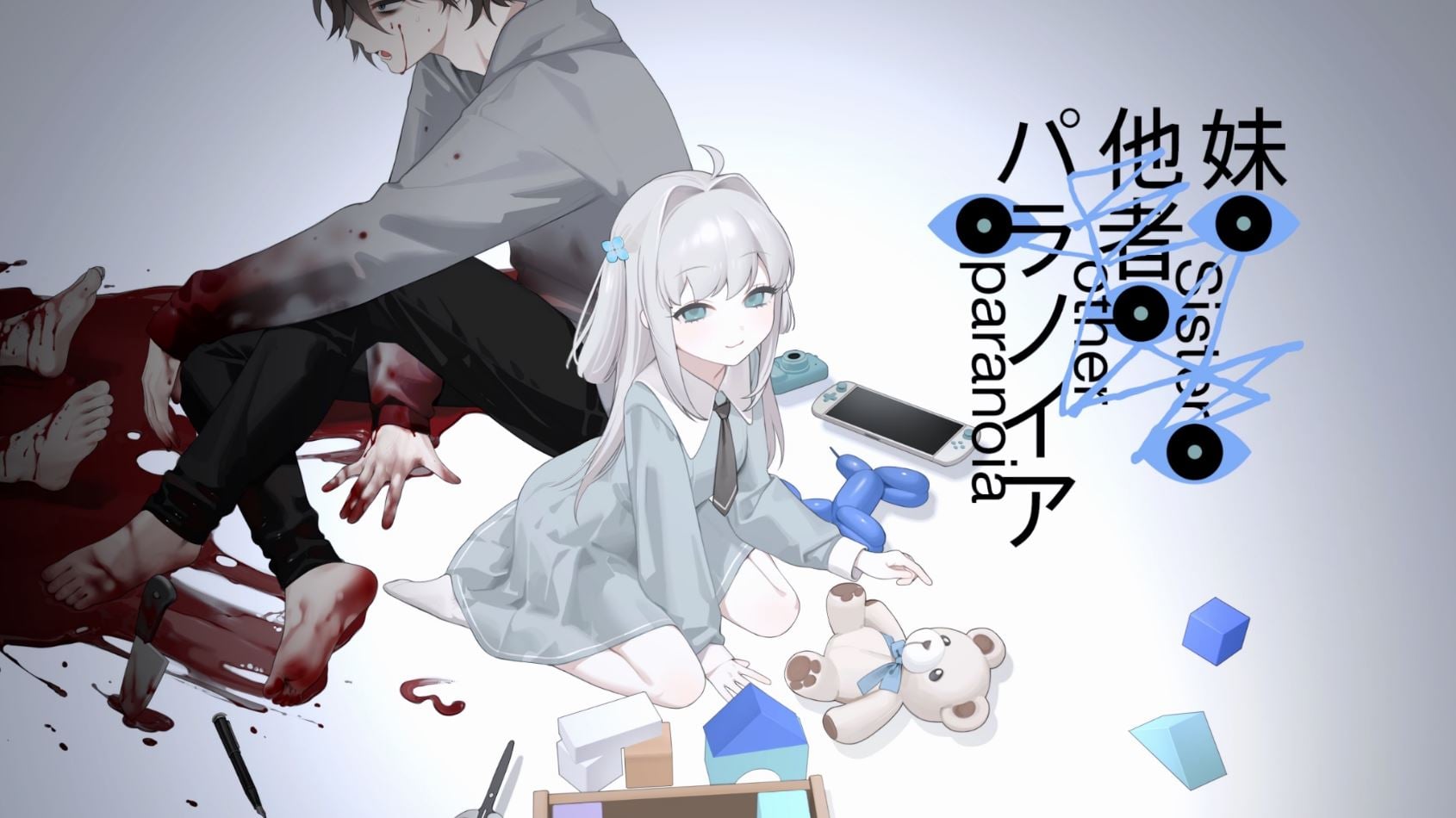
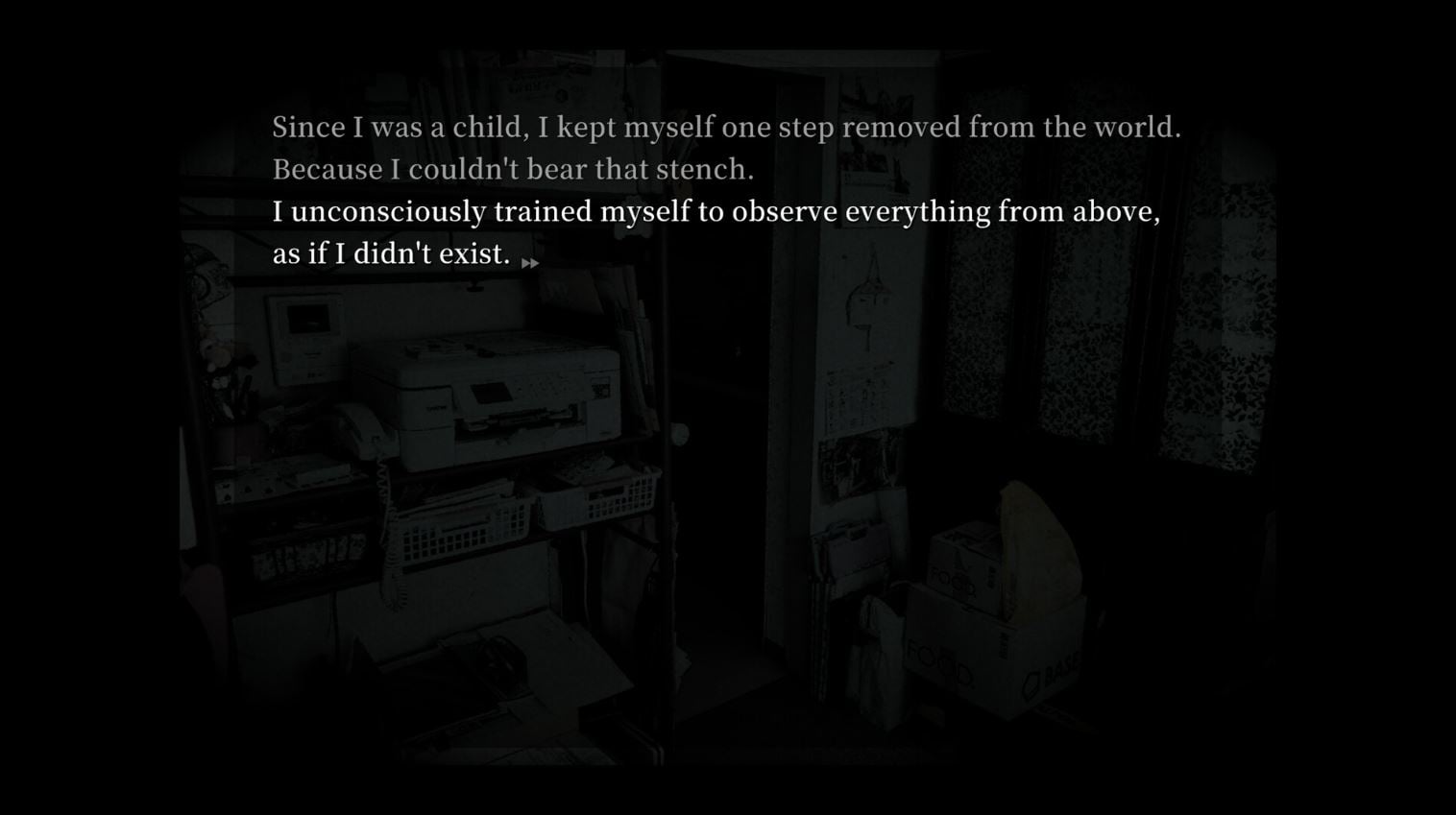
It’s called Sister Other Paranoia, and we recently launched the Steam store page. Personally, I’m creating this game hoping to express “the grotesque” more openly than I did in NEEDY STREAMER OVERLOAD. Back when I was really into eroge, macabre expressions existed as a kind of culture within that genre. I don’t think you can just recreate that as-is in the modern day, and it’s become a type of expression that people are reluctant to interact with. But I also believe there are people who can only find salvation in works like that. So I thought, now that I’ve reached a point where I don’t care how much I get criticized, I’ll be the one to make it. I want to lay bare everything I hate, and then crush it all in a grotesque way.
—So you’re fully aware the game may be criticized for its content, but still want to make it for those who can only be reached through that kind of expression?
nyalra:
To explain the story within the limits of what I can share right now, the protagonist is a 19-year-old who writes light novels. After winning a light novel award, the attitudes of people around him – like seniors in his club, friends, or even women he interacted with online – start to change, even though they used to treat him normally before. He grows increasingly irritated by this every day, to the point where he begins to obsess over the thought, “I want to kill them.” …Yeah… I don’t think this is a game where anything good will come from playing it. At the moment, I expect it to take about 10 hours to clear.
The choice of theme was heavily influenced by the brutal eroge of the 2000s. In particular, I’ve been strongly influenced by the works of Ren’ya Setoguchi. I’ve always wanted to make something like his CARNIVAL, it’s a work that feels like it’s made entirely out of self-consciousness. Sister Other Paranoia doesn’t really have as much of the bishōjo elements you’d find in male-oriented eroge from that era, but if I were to put it in a cool way, you could say it’s what you get when only the literary aspects remain.
—Just hearing the synopsis, I can tell the game deals with very bleak themes. The genre is described as a “dark visual novel.” Is it correct to understand the system as a fairly standard visual novel where you mainly read text?
nyalra:
At its core, it’s a game where you just read text, but I also really wanted to test how far we could push the visuals using modern development tools, since we’re making a visual novel in the present day. As HAYAO has been blogging about on the HazeDenki website, we realized we can manipulate the game screen far more than we expected. It feels like we’re able to do about ten times more of the kinds of effects visual novel fans back in the day probably wished for. Effects that would’ve taken an incredible amount of time ten years ago can now be done pretty quickly with tools like Unity.
Once we realized that, it became clear we could do a lot of cinematic-style presentation too. So if we’re going to release a cutting-edge visual novel, we want to put real effort into the system side as well. I love movies myself, so with this game, I want to push as far as I can in terms of how much we can pull players into a novel game through its presentation.
—Could you tell me about your current planned release schedule?
nyalra:
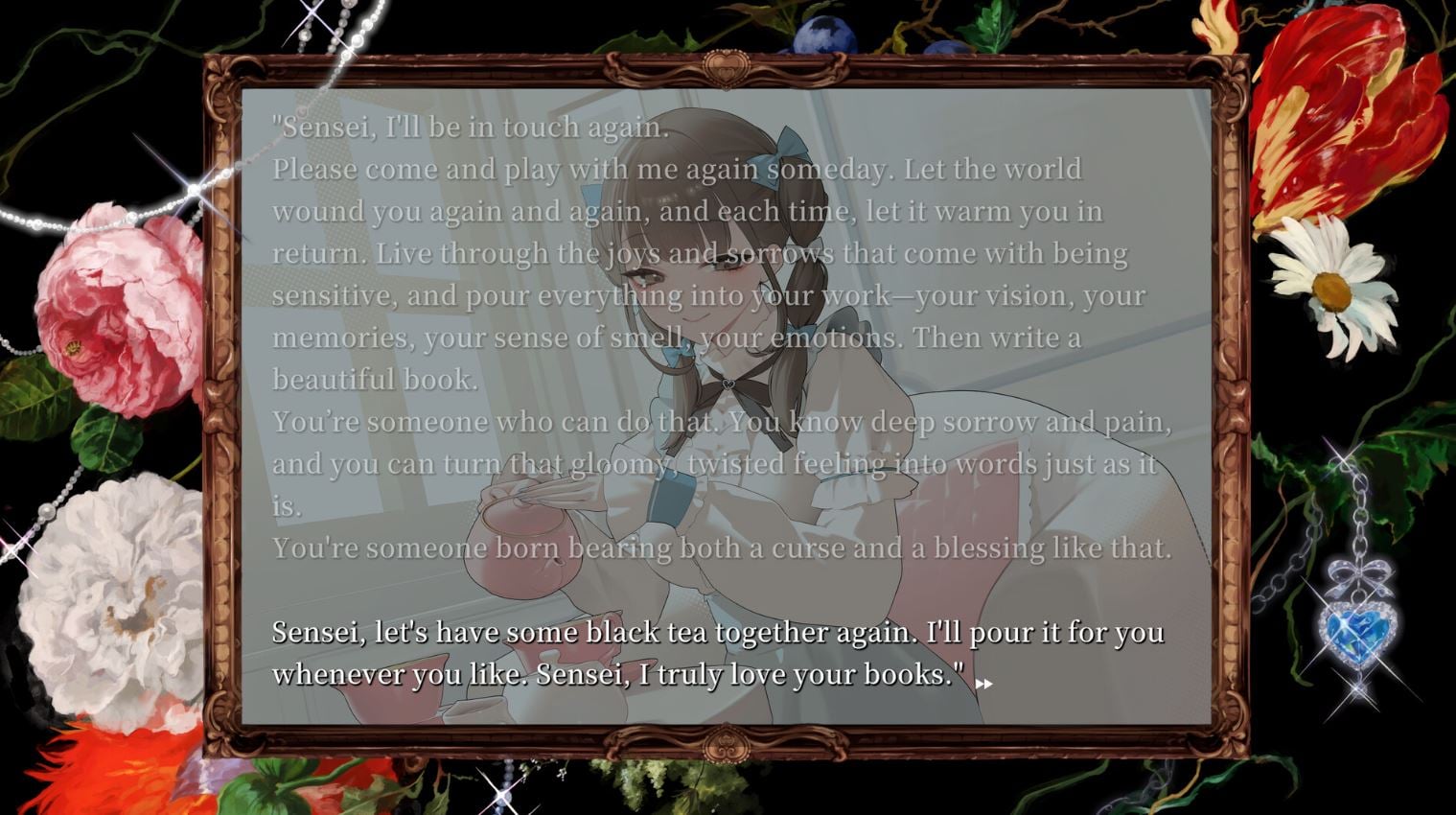
First, I’d like to sell the physical version at Anime Expo in Los Angeles in July, and then at Comiket in Japan in August. We’ll release it on Steam afterwards too, of course, but I want to cherish these sales channels. For overseas audiences, we plan to translate the game into Chinese and English. Since it’s a work that leans heavily into my personal tastes, I’m not really thinking about large-scale expansion. I just hope it resonates with people who genuinely love visual novels, especially the grotesque kind.
—Moving on, could you tell me more about the second title, the strategy game?
nyalra:
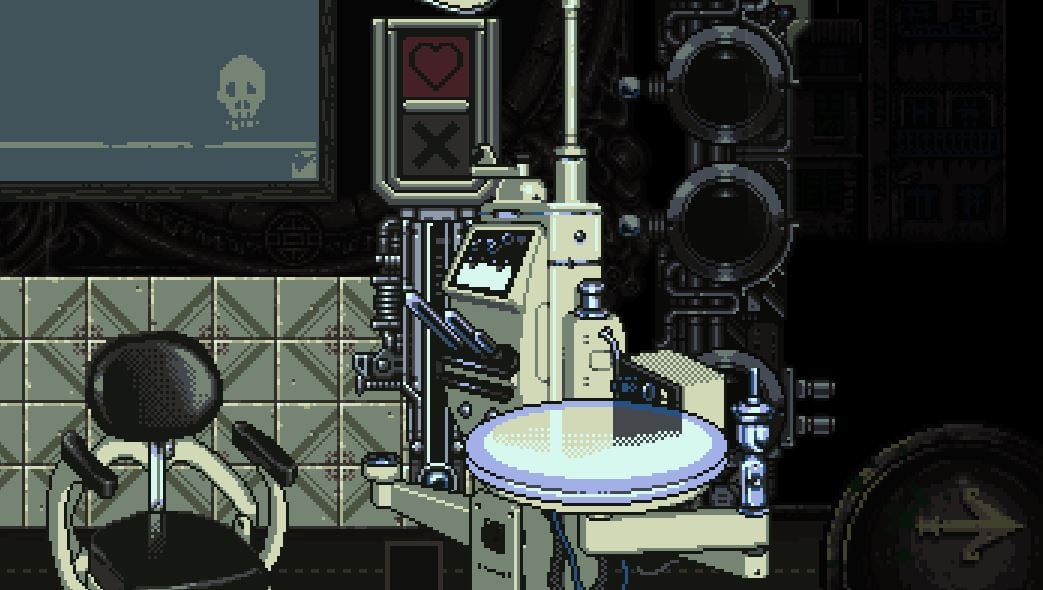
I can’t reveal much about it yet, but it’s a project being made by the core members who worked on NEEDY STREAMER OVERLOAD. While implementing a completely different game system from our previous work, we want to take ideas we couldn’t use before, and a world we wanted to expand further, and turn that into a much more substantial game.
Because it was our first time making a game together, I think our previous work still had areas that weren’t fully refined, including game mechanics. This time, I want things like number management and multipliers to feel satisfying, and first and foremost, I want to make a game where a single playthrough is genuinely entertaining as a game.
—Since it’s a strategy game, what kind of gameplay are you envisioning?
nyalra:
I’ve been really hooked to the Tropico series, so it’s going to be a community management simulation game. In NEEDY STREAMER OVERLOAD, the “community” was depicted within a very narrow scope, basically one-on-one, or through fans’ posts that spontaneously gathered online. But in our next game, I want to properly depict what it means for people to actually live within a community.
I wanted to steadily increase the number of people in the game. As the population grows, the number of people who can be saved increases, and so does the number of people who become enemies. If character relationships are locked into one-on-one interactions, the game world inevitably starts feeling very small, and that’s not good. I realized I needed to break out of that way of thinking myself. I wanted to move from a game where the player decides whether or not to save a single heroine, to one where they think, through numbers, about how to save, or not save, an entire community. I think it’d be great to express that through a heavy setting.
—What kind of change in mindset led you to become interested in communities as a theme?
nyalra:
Over the past few years, my work has become known to many people, and I’ve gained both fans and haters all over the world. Through that, I’ve seen all kinds of people. For example, I’ve exchanged replies with overseas fans, and I even personally made an English-speaking Discord server. At the same time, in Japan, I’ve been bombarded with harsh words from people who are aggressive about everything, so-called antis.
Having made aggressive posts myself in the past, I understand it’s inevitable I get criticized for it. But because of that, I’ve also started to notice that there are people who are constantly “setting things on fire,” and not just me. I began asking myself, how should people like that, who are burning with complexes and resentment, be saved?
When people are forced to live as “the weak,” they usually can’t find salvation without believing in something. Historically, religion has always been what saved people, especially overseas. In ancient Egypt, the pyramids were objects of faith for people. In Islamic societies, there are many people who find self-affirmation through praying five times a day. I love traveling abroad, and even in regions that seem less affluent than Japan, the “quality of happiness” often appears much higher. But when I think about what might save people living in modern Japan, nothing really comes to mind. VTubers feel too physically real to be objects of faith, and devotion to otaku content fades as people get older. I can’t think of anything that seems capable of saving us.
Communities, and the people within them who can’t be saved. My interest in how those people live led me to the worldview I want to depict in my game. That’s the idea, I suppose.
—Does that mean the target audience for your games is “the people you want to save”?
nyalra:
No, whether the people who play my games are actually saved or not doesn’t really matter to me. Ultimately, it’s the people who are able to take a step forward on their own who find salvation. Even if I were to create a game that presented some kind of answer, nothing would change unless the player themselves felt something. But when it comes to those kinds of people, I’ve always had this sense that I’m looking at another version of myself from a “parallel universe”. When someone says something aggressive to me, I think, “If things had gone a little differently, I might’ve said the same thing.” It’s always a mix of sympathy and dismissal.
If there’s one way I differ from other creators, I think it’s probably there. Other creators probably don’t make their haters think, “I could have been you.” But just as I genuinely believe “If my circumstances were different, I’d be saying the same thing as you,” I think there’s probably something about me that makes others genuinely feel the same way about me.
In Tropico, which I mentioned earlier, you play as a dictator of a Caribbean island nation and manage the country. System-wise, no matter how much you strengthen your dictatorship, you can still make the citizens feel happy. That idea of what a community can be like was a huge hint for me. If it were me, I’d have everyone build a pyramid. You know, something grand, something that can make everyone happy if they get together and work hard for it.
—When dealing with such sensitive themes, why did you choose games as your medium, rather than say, novels or films?
nyalra:
I touched on this briefly earlier, but emotional investment in a heroine is determined by the level of immersion. Ultimately, I believe only games can achieve the level of intensity I’m after, so I chose the medium again to capitalize on that. In NEEDY STREAMER OVERLOAD, it’s because the player keeps making their own choices that they end up linking Ame-chan that beyond what the game’s text alone could achieve. By continuing to make decisions yourself, your emotional investment in the heroine deepens.
Basically, my thinking is: “People tend to want a ‘return’ proportional to the effort they’ve put in, so if I make players choose more, they’ll love the heroine more.” Part of why I like old eroge, I think, is because there were always those extra hurdles you needed to overcome to win over the love interests.
There’s always a state of mind you reach after taking all those detours like, “I’m finally with this girl after going through so much,” and It’s a sensation you can’t arrive at just by reading text or watching footage. That’s the true strength of games. Honestly, that’s why I never really liked visual novels where you only read text. NEEDY STREAMER OVERLOAD was built entirely around that philosophy. I arrived at that system because of the belief that “if you’re going to engage with the heroine, there’s no way just reading text is enough.”
—The more I hear about it, the more I feel this game carries such profound respect for 90s and 00s eroge that it hardly seems like a modern game.
nyalra:
Yes, with this project, I want to go a step further than before and really reach those eroge freaks who loved ’90s AliceSoft games, or the slightly underground eroge scene. I think eroge back then carried a kind of demand that could only be born in strange places, and could only be satisfied by strange games. With that in mind, I’ve always wanted to deliver weird things to weird people myself.
Even among people who didn’t play eroge back in the day, I think there are still may who fundamentally love those kinds of games, and I’d be happy if I could reach them. There’s no way I can make something on the level of classic AliceSoft titles, but if I were to release a modern take on a 00s strategy eroge today, I think anyone would find it fun. Whether it’s someone in their 20s or 30s playing, I think they’d have the same reaction. Clicking units into place on the screen, watching the characters end up in all kinds of predicaments – that’s ultimately the most fun, isn’t it?
—Both your new work and your previous title seem to consistency carry a kind of “venom” towards society. With NEEDY STREAMER OVERLOAD, there was heavy criticism of how certain themes were depicted, while at the same time many follow-up works influenced by it began appearing worldwide. How do you personally feel about those reactions?
nyalra:
I’ve honestly never paid much attention to my influence on other works. Maybe that’s because I never considered things like the “yume kawaii” or “yami kawaii” depictions of mental health that often get criticized, or references to drug culture* like “overdose,” as the essence of NEEDY STREAMER OVERLOAD in the first place. Even if people isolate just the “girl with mental issues” aspect, that’s not really the story I wanted to tell in the game.
What I ultimately wanted to talk about with NEEDY STREAMER OVERLOAD was communities. Or more specifically, about how to live on the internet. How many people in the world are actually talking seriously about how to live on the internet? If my work has any influence, I want to make people think about the internet itself, but there really aren’t many successors going in that direction. I feel weird about being the only one forever talking about how to live on social media, so I hope more people eventually join in.
*The game’s title is NEEDY GIRL OVERDOSE in Japan.
―Even in your video appearances, you’re often introduced as “an internet person.”
nyalra:
Well, I think of myself as a “human person,” though.
―A “human person,” you say?
nyalra:
Yes. Even though we call it the internet, it’s still a gathering of humans. If someone thinks of it as just “cold, digital relationships,” I think they’re misunderstanding it. If you think of it as a place full of messy, very human people fumbling around, it’s actually one of the most human places there is. Being knowledgeable about the internet is the same as being knowledgeable about people.
I’m on the autism spectrum, and I’ve always felt that, to survive in society as a community,, you have to observe people and become knowledgeable about them. Maybe my experiences so far have led me to think that way.
—On HazeDenki’s official site, you publish dev logs and other updates in both Japanese and English. Is that also part of engaging with the community?
https://hazedenki.net/api/Post
nyalra:
Not really. I’m just translating articles I wrote in the past that I liked and reposting them. Since I already wrote them as diary entries, I figured it’d be nice if English-speaking users could read them too.
That said, internet culture in English-speaking or Chinese-speaking regions is obviously different from Japanese internet culture. I want to understand those differences, and I think there’s tremendous significance in us reaching out to them from the Japanese side. Even without me acting as a bridge, I’m sure passionate English-speaking users will translate the Japanese on their own and interpret what we say, but when I personally tell them, as a Japanese otaku, “This is how I think as a Japanese otaku,” they get incredibly excited.
Japanese otaku rarely show much interest in overseas otaku culture, and not many people really look closely at their unique culture. From their perspective, it’s pretty rare for Japanese otaku to reach out to them at all. Simply knowing they exist, and paying attention to their culture makes them happy, and I enjoy that a lot. There’s such a cultural gap between Japanese- and English-speaking otaku that learning about each other’s cultures is genuinely fun. I even started running a Discord server for English speakers myself, and while expanding our games overseas was part of it too, interacting with them has become a source of purpose in my life.
https://discord.com/invite/ug7vue8tAf
—Are there any titles from the overseas otaku culture sphere that you personally like?
nyalra:
From the English-speaking world, OMORI and Doki Doki Literature Club! are very close to the kind of games I want to make, so I’m really conscious of them. I’m also on good terms with OMOCAT, the creator OMORI. As for Doki Doki Literature Club!, it’s a game that treats the bishōjo game genre itself as its theme, but I think it’s really cool as a work that has evolved in its own way while still drawing inspiration from Japan.
In China, I recently experienced an immersive horror attraction. The scale of it was something that could only exist in a country with as much land as China, and I felt real potential there too. I think many people in China still haven’t experienced it, and I honestly want to tell them, “This kind of entertainment is something Japan could never do, so be proud of it, and just go experience it.”
—While your works deeply depict very local, Japanese communities, they’re also supported globally by overseas fans. Why do you think that is?
nyalra:
Hmm. Even if it’s about a local Japanese community, I think the story of “teenage angst” transcends borders. The way frustration manifests in different communities is usually pretty similar. Ultimately, it’s about whether someone can fit into a community or not. I’ve come to understand firsthand that the situation of kids who can’t fit into society is basically the same no matter the country. If anything, it’s probably harder to make otaku friends overseas than in Japan. I imagine they’re hungrier for connection and have it even tougher.
I’m from Okinawa, but I still know all too well the pain of struggling to make otaku friends. In places like the US, where you don’t even know if someone with the same interests lives in the same state, the loneliness must be even worse. I feel like I should be able to understand that loneliness, or at least, I want to understand it.
That said, I feel this way towards them because they’re like me – people who can’t fit into society. Fundamentally, I’m an antisocial person, so for those who can work normally or focus on their studies, I honestly just think, “Do whatever you want.”
—It sounds to me like that feeling of solidarity with people who can’t fit into society, on the internet or otherwise, connects directly to your current interest in community.
nyalra:
That might be true. If you think about it, it’s not just fans – even haters are, in a sense, “people who can’t fit into society,” so in a broad sense they’re part of my “kind” too. Compared to people who can live normal lives just fine, I’d honestly rather talk to my haters.
That aside, being able to make another game with former teammates like Torii and Nennai makes me genuinely happy. Unlike my visual novel game, this is a project involving a lot of people, which naturally means development costs in the tens of millions of yen. Since I’m utilizing the full team, I think I should invest a proper amount of money. For this game, I’m aiming for something that can really become a global hit.
—Finally, as the representative of HazeDenki and as a game creator, do you have a message for your fans?
nyalra:
When I learned that a game called Doki Doki Literature Club! had been released by overseas creators, I felt frustrated. The themes it tackled were precisely the kind of themes Japanese creators should have been exploring in the first place, and I was really disappointed that Japanese creators hadn’t yet produced a proper answer to that work within the visual novel genre. That feeling is where my roots as a game creator lie. Through NEEDY STREAMER OVERLOAD, I got a sense of “I can do this too,” and now I truly believe visual novels still hold immense potential.
I know this sounds arrogant, but it’s no good for Japanese creators, who should be the natural pioneers of visual novels, to just keep repeating “things were better back in the day,” ignoring new works, and arrogantly declaring “this isn’t like visual novels used to be.” I’m going to make visual novels, and since I’ve gone this far with my provocations, I’ll also say that everyone else should make visual novels too.
—Now that you’ve mentioned that, let me ask one last question. For those who are about to start creating after being influenced by your words, or those who’ve already started, what advice would you give them?
nyalra:
Are there really people like that? If so, that makes me genuinely happy. No matter how stagnant your life feels or what excuses you make for yourself, nothing will start unless you take that first step, and once you’ve taken it, you’ve basically already won, I think.
If I had to offer something more concrete, I’d say this: I’ve lived a life where I naturally ended up reading books and watching movies, so in terms of the origin of everything, I guess watching lots of movies is probably the way to go. Once you lose interest, it’s over. Output is something you can generate pretty easily if you have enough input, so I want people to just increase their input as much as possible. Besides, it’s fun. If you don’t find learning fun, I think something’s already gone wrong.
Making things is really just a case of “liking something makes you good at it.” Even now, I’m still full of admiration for things. The reason I can keep working in the visual novel medium is ultimately because I love the culture, and that’s what matters.
—Thank you for your tine. I’m looking forward to your future projects.
Sister Other Paranoia is currently in development for PC (Steam).