


Last December, SEGA announced New VIRTUA FIGHTER Project, the Virtua Fighter series’ sixth mainline entry and first brand-new title in almost two decades. To find out more about the long-awaited 3D fighter, AUTOMATON interviewed producer Riichiro Yamada. In this installment, we ask Yamada about his team’s criteria for adding new features to the game, as well as the measures they’re taking to expand the series’ playerbase.
You can read part one of this interview here.
—Tell us about yourself and your career so far.
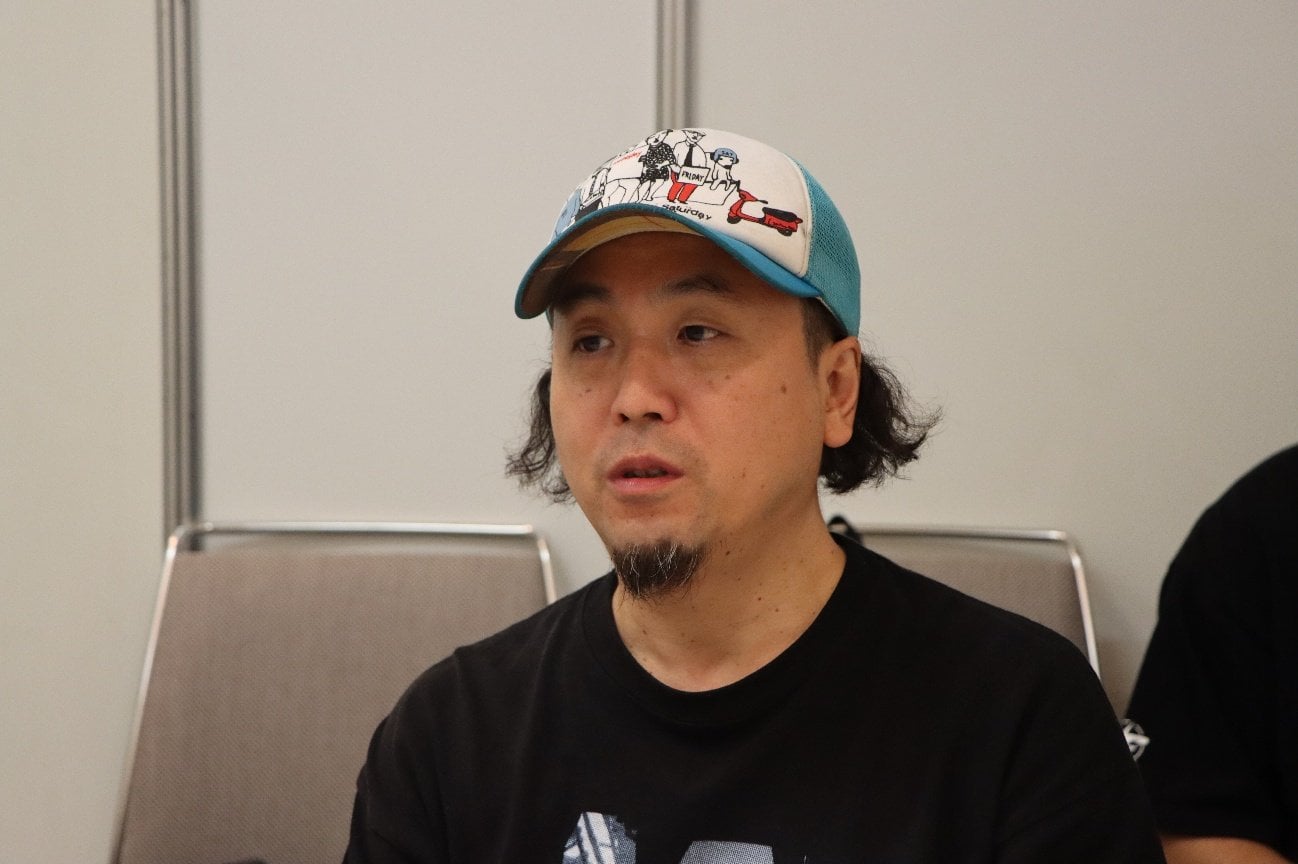
Riichiro Yamada (hereafter Yamada):
I’m Riichiro Yamada, the producer of this project. I joined SEGA in 1999 as a game designer, and over the years I’ve been involved in all sorts of projects, from console titles to mobile games. At one point, I actually left SEGA and worked on game development at Warner Bros. Entertainment, but I returned to the company in 2023. I’m what you’d call a boomerang employee (laughs).
After I came back to SEGA, the idea for a new Virtua Fighter started taking shape, and I’ve been involved in the project since its inception.
—How did the New VIRTUA FIGHTER Project come to be?
Yamada:
Many players have long wanted to see Virtua Fighter revived and hoped something would be done about it. Since arcades have shrunk as a market for fighting games, we decided to focus our efforts on the console market instead.
Meanwhile, within SEGA, the Virtua Fighter team was integrated into RGG Studio, which prompted discussions about properly revisiting older IPs. Before long, people started saying, “Let’s make Virtua Fighter,” and I was assigned to oversee the project as producer.
—When the project was first launched, did you have a shared goal or vision within the team?
Yamada:
Of course, our goal is to make a game worthy of being nominated for Game of the Year. Like the very first Virtua Fighter, we want a title that doesn’t just sit within the “fighting game” mold.
The fighting game genre tends to be seen as a special, niche category. But Virtua Fighter actually isn’t like that; it’s easy for anyone to pick up and play, and I think that’s one of its strengths.
If a game isn’t something anyone can enjoy, it won’t reach the level of recognition needed to even be considered for GOTY. This is the meaning behind our target of “making New VIRTUA FIGHTER a GOTY-worthy game.”
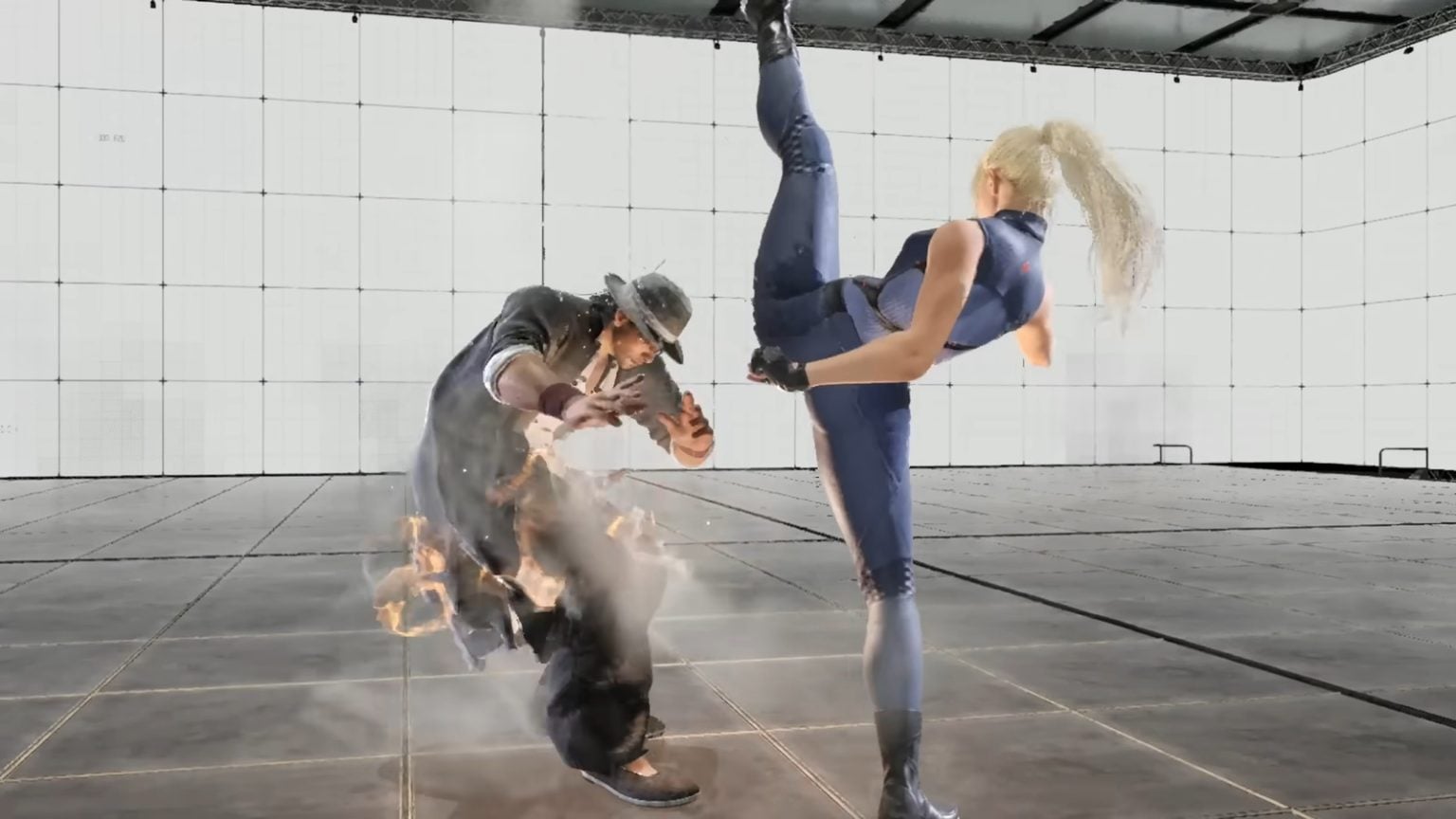
—You’ve already revealed some battle footage, including new systems and mechanics. What kinds of new gameplay were you aiming for with these additions?
Yamada:
In an ongoing series, it’s important to bring in new things, but also to strip things down from time to time. Personally, I think most fighting games share broadly similar rules, so I wanted to introduce a slightly “different way to play” within that framework.
The consistent, core rules of fighting games are fun on their own, but I wanted to add something new, so we introduced the Uprising* rule set. Even if what you do during a match doesn’t change fundamentally, switching up the rules allows it to evolve into a different kind of gameplay. The base fighting-game rules are already fun, that’s a given for us, but since this is a new entry, we want to experiment with various ideas.
(*Uprising: for now, all we know is that it’s a new battle rule built around “dynamic momentum-shifting opportunities,” offering a distinctly different experience from Standard rules)

—The series has made bold gameplay system changes before too, like the throw tech changes in VF5 or the introduction of a bound system. Some of these have received mixed reactions, but are you prepared for similar reactions this time?
Yamada:
Of course. We believe the new features and system changes from VF4 to VF5 – good or bad – represent one coherent, completed evolution. Above all, the fact that people still play it today is proof of its high level of completion, and proof that the path of evolution we took wasn’t a mistake.
But if we just keep piling more on top, we’ll end up with a game that’s overly complex. So, with New VIRTUA FIGHTER, we need to experiment by cutting away some of the things we’ve built up, as well as bringing in new features.
To make these decisions, we’ll keep testing various ideas, but I trust Takeda (VF series battle director Yosuke Takeda) to safeguard the truly important parts (laughs). As someone who’s been making VF forever, he understands this best. Similarly, our programmers and motion designers also know very well what parts of a fighting game absolutely must not be touched. It’s about preserving those core elements while incorporating new ideas.
Naturally, new elements will be tested thoroughly and only added if they’re entertaining, but we know some people will inevitably still feel that things were better before. Still, I think it’s important to make something even people who’ve never played VF before will want to try, so we’re eager to take on new and fun challenges.
—Is that the “New” in New VIRTUA FIGHTER?
Yamada:
The final title isn’t confirmed yet (laughs), but yes, the “New” reflects that intent. It’s our commitment to truly making something new.

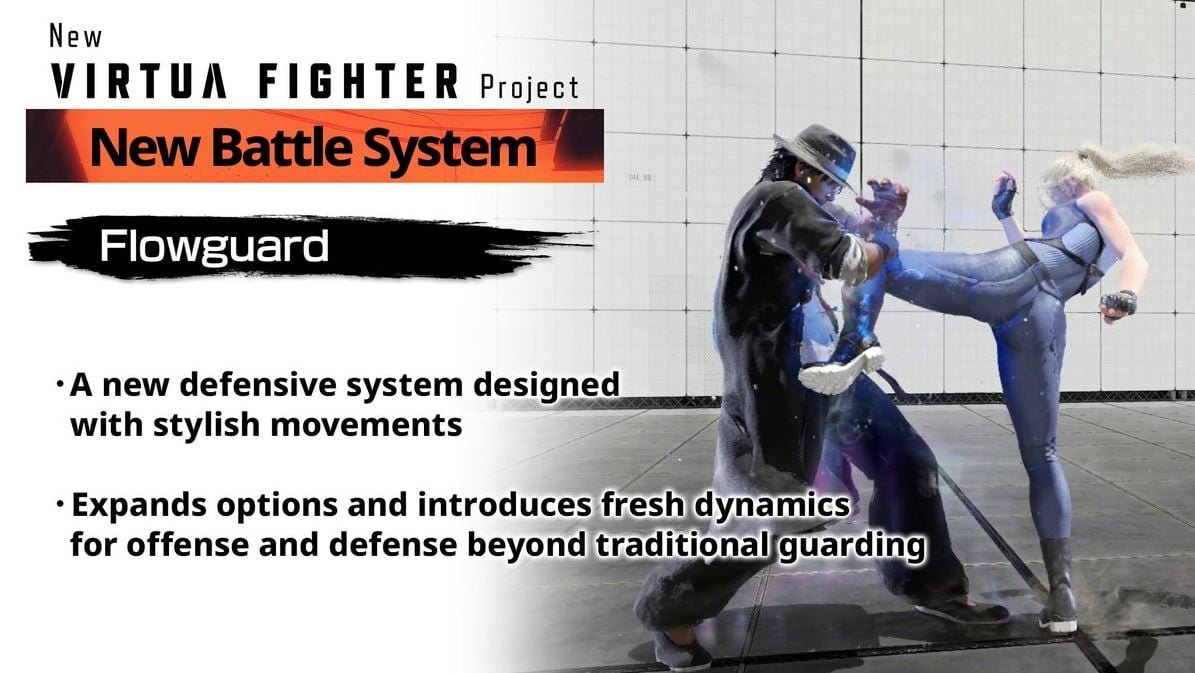
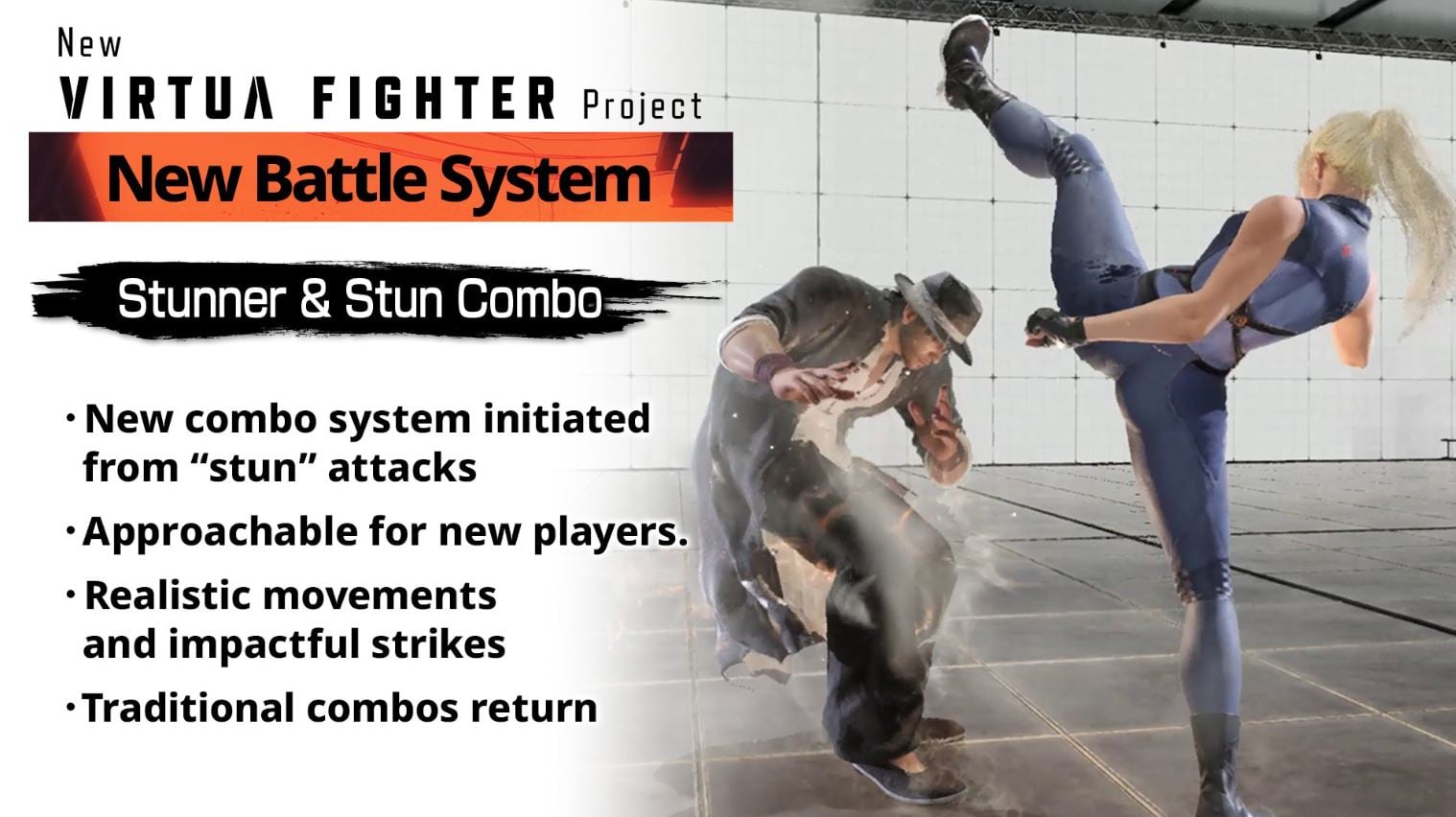
—At Tokyo Game Show, you revealed the Break & Rush, Stunner and Stun Combo, and Flow Guard systems as new additions. How did you balance offering accessibility for newcomers vs providing depth for core players?
Yamada:
We prioritized broadening the game’s appeal to casual players. That said, we’re not simply “making things easy” and neglecting core players. No matter what, a certain degree of challenging aspects and depth must remain.
—To begin with, VF is known for having a huge number of motions and a high degree of complexity.
Yamada:
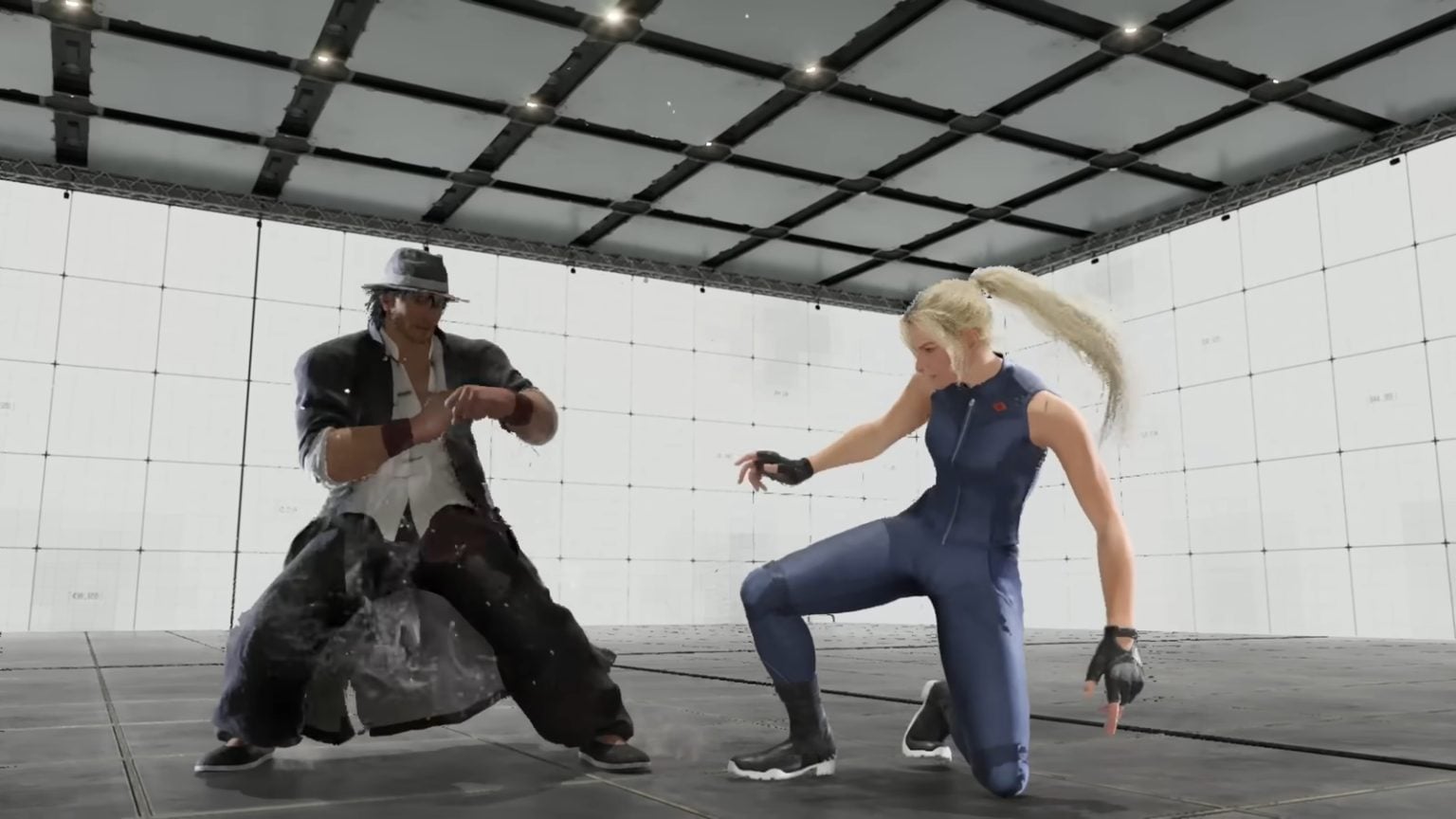
That’s right. As long as that complexity is preserved, I think we can keep experimenting with various approaches to broaden the game’s appeal. That’s why we’re keeping foot positioning, for example.
From the perspective of fighting-game players, it’s one of those confusing elements that just adds more stuff to memorize. But for people unfamiliar with fighters, it’s a “Wow, they even care about those kinds of details? That’s awesome” kind of element. The fact that stance affects the number of combos to learn really only matters to players at the top level.
So even though it’s technically a complex mechanic, it doesn’t necessarily narrow the game’s entry point as much as you might think.
During playtests, we ask people with zero VF experience about such things, and they respond with “That looks fun,” or “I didn’t know it had things like that.” Meanwhile, long-time fans express concern or give feedback, but the “beginner” imagined by veteran players is often nowhere near an actual beginner. We realized that many of the things veterans assume beginners worry about are things beginners aren’t even thinking about. It reminded us that we need to look at things from a more neutral perspective.
—True, an average player wouldn’t even notice their stance changed (laughs).
Yamada:
But changing stances is fun, isn’t it? (laughs). When a game gives you tools, you naturally want to use them. Having different moves based on stances is a cool feature, but we need to prevent it from becoming overly complicated or annoying. Raising the bar too high and making the game frustrating is the last thing we want.
—Has New VIRTUA FIGHTER drawn inspiration from recent fighting games like Street Fighter 6, Tekken 8, and Fatal Fury: City of the Wolves?
Yamada:
First, I believe it’s crucial for fighting games not to be confined by established concepts. The concept of “fighting games” varies by country, and I think the mindset of it being a specific, defined genre can lead to narrow thinking.
Instead, we’re focusing on making a game that’s just fun. I believe what’s important is to keep holding on to that principle. That’s how the very first Virtua Fighter came to be too.

—I believe Virtua Fighter was among the earliest to incorporate real martial arts movements into a game. It often feels more like a “kung-fu simulator” than a typical fighting game. Is that philosophy still alive?
Yamada:
Yes, I believe the reason why players are attracted to Virtua Fighter is because it’s part simulator, and because it doesn’t try to imitate other fighting games. While we take cues from what has made other titles successful, we want to preserve a strong sense of uniqueness.
—Finally, do you have a message for fans of the series waiting for New VIRTUA FIGHTER?
Yamada:
We’re working hard to make this a game that doesn’t stay confined to the “fighting-game” category, something even people who’ve never touched the series before will find fun. We haven’t revealed the full picture yet, but we should be able to show more in the next update. Please look forward to it.
New VIRTUA FIGHTER Project is currently in development. The release date and supported platforms are TBA.
[Interviewer, writer: Hiroshi Hirose]
[Editors: Kosuke Takenaka, Hideaki Fujiwara]

Exciting!!
Really interesting interview, I hope the outcome will be great!!!