

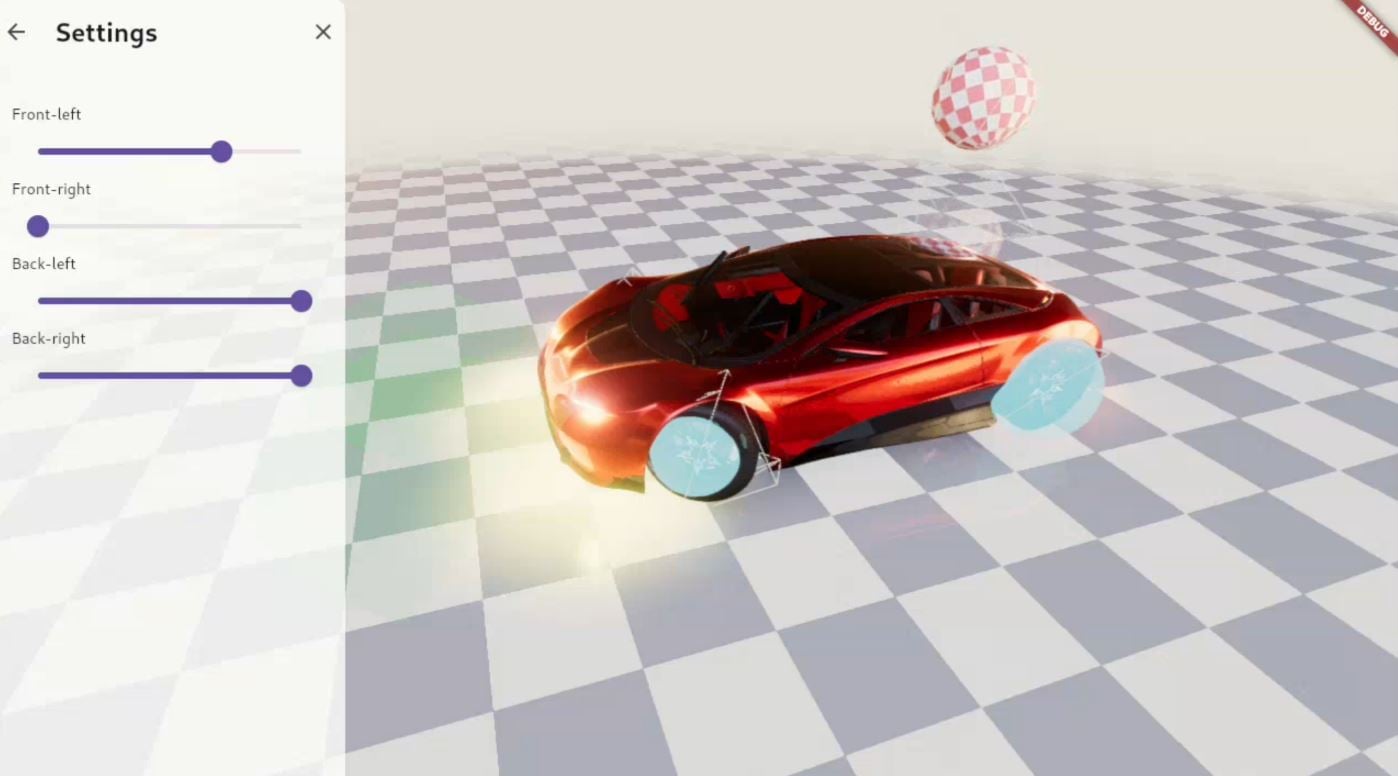
Toyota Connected North America, a subsidiary of Toyota Motor Corporation, recently announced that its proprietary game engine, Flourite, is currently in development. The engine works closely with Flutter, Google’s UI framework, and uses the Dart programming language to write both the game logic and user interface. Its purpose is to yield high performance even on lower-end or embedded hardware, with tasks such as running 3D graphics and interactive UI elements via in-vehicle systems being easy to execute.
Four key features are currently being showcased on Flourite’s official webpage:
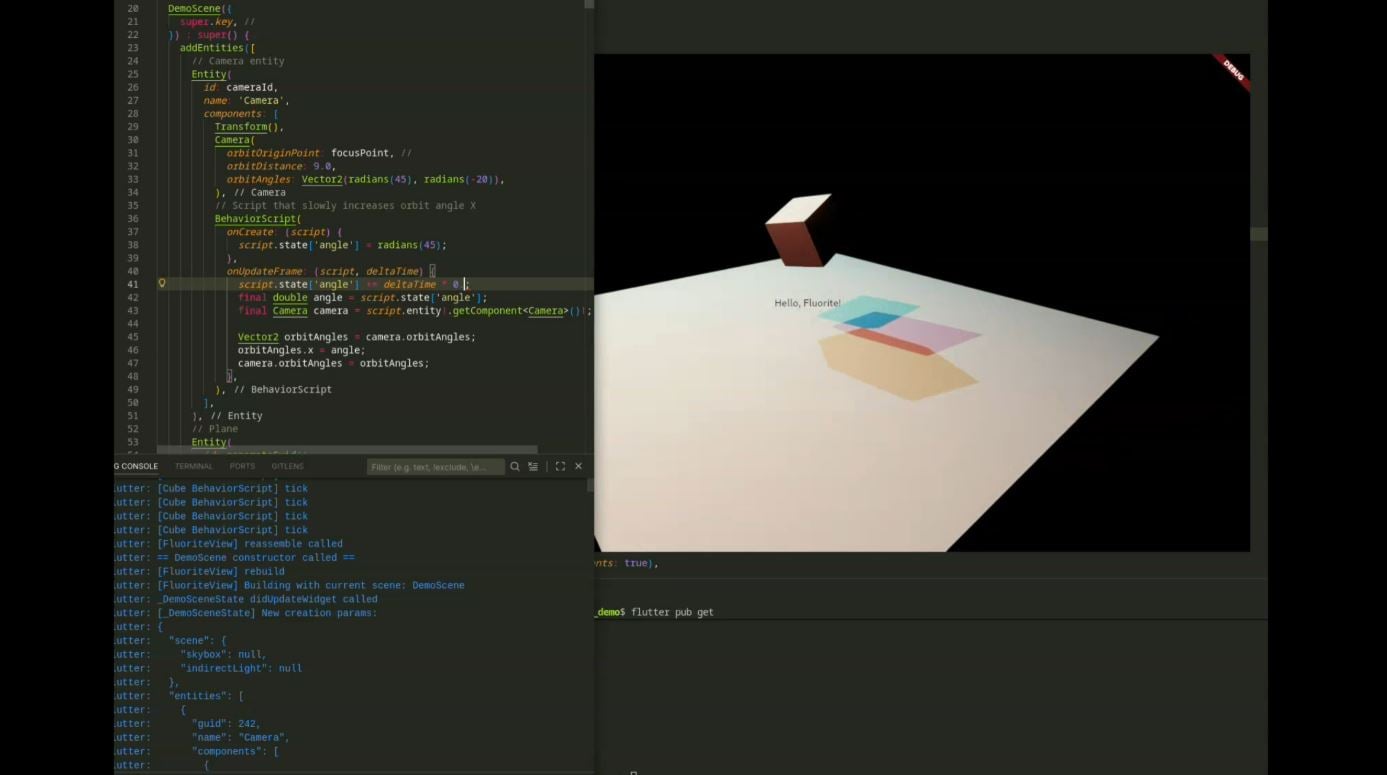
The first is a high-performance Entity Component System (ECS) core, which is written in C++ to squeeze out as much performance and create room for optimization for weaker hardware. At the same time, it allows devs to use Dart and higher-level game tools, so they can transfer knowledge from other game engines.
The second is model-defined trigger touch zones, which allow digital artists to set up“clickable” areas inside graphics software tools like Blender and assign them to trigger certain actions. Developers can just hook up the click events to whatever behavior they want, making 3D interface building a lot simpler. It also lets end-users interact with objects and controls in a more intuitive way.
The third is console-grade 3D rendering, which is powered by Google’s Filament renderer and uses modern, console-grade graphics APIs to make games look prettier.

Last is support for Flutter’s Hot Reload feature, which allows developers to update their scenes and quickly see changes in just a few frames. This allows teams to confirm their edits and iteratioons faster, speeding up the game development process.
According to a February 1 presentation at the Free and Open Source Software Developers’ European Meeting (FOSDEM) 2026 in Brussels, Toyota Connected North America considered different game engines to use for its future automotive device 3D displays (source: Game*Spark). After learning that prominent engines in the market (such as Unity) come with high licensing fees or are too resource-intensive, they decided to create a game engine of their own. While Flourite’s main purpose is to develop Toyota’s in-vehicle 3D displays, its nature as an open-source engine could allow it to find its way into regular game development.
Related: Sony venture announces first car to include PlayStation Remote Play integration


Sounds like useless techslop
And you said ‘slop’.
You sound like someone that jumps on board the latest internet trends, probably can’t think for yourself.