

“Itchie”, a Japanese programmer and producer who used to work at game companies like Square and SNK, recently took to X to reflect on a fallacy that tripped him up earlier in his career as a developer. The post has since set off a discussion about tutorials in games – especially gamers’ inherent dislike of them.
“Back when I was developing mobile games,” Itchie wrote, “I once noticed a high player dropout rate, and suspecting that players were getting stuck during the tutorial, I decided to add extra explanations. However, after closely examining logs, I realized that players were barely reading the instructions in the first place. The reason for the high dropout wasn’t because people didn’t understand, it was because they were made to wait too long without getting to touch the controls.” Upon realizing this, Itchie revised the game’s instructions and shortened the tutorial section by 30 seconds, which led to a visible improvement in player retention.
“It was an example of a failure caused by the developer making assumptions about players’ comprehension instead of measuring it,” he recalled.
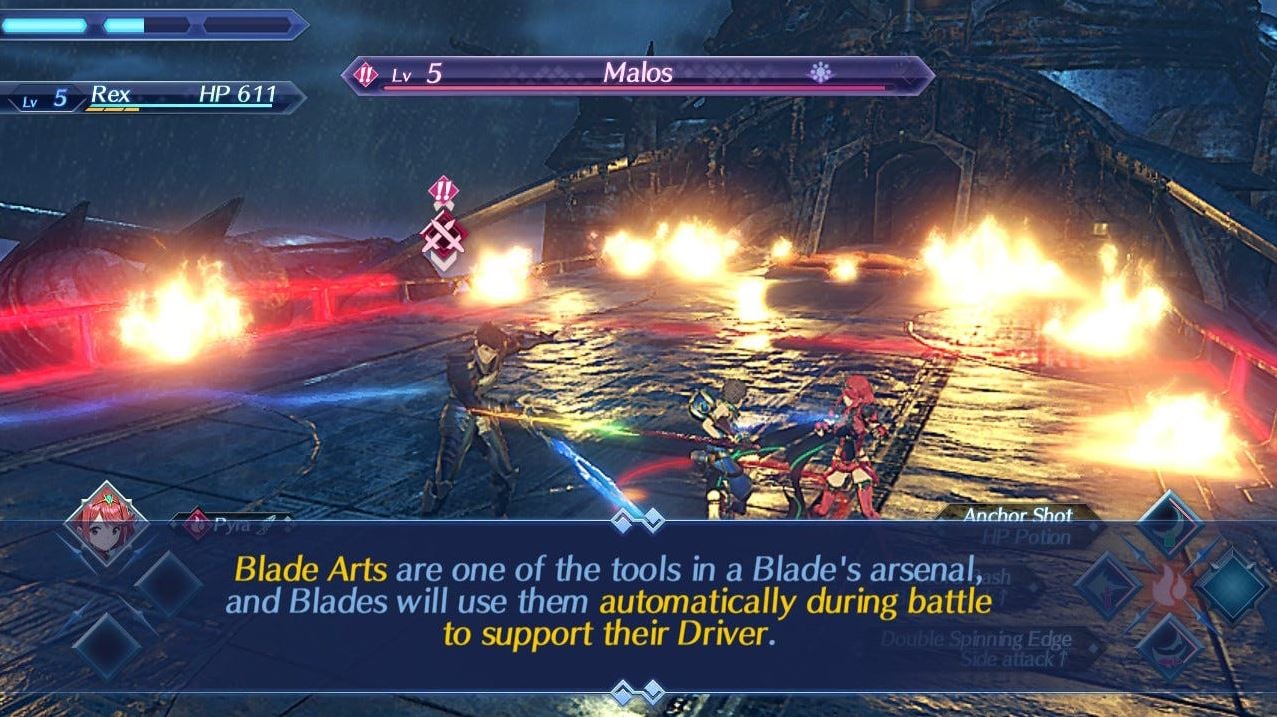
In response, game developer Shimaguni Yamato added, “People in management tend to say, ‘Add more explanations!’ but I’m always reluctant to do so. I think it’s better to give players that sense of thrill right away, rather than giving them instructions. Game systems are a pain, so players will prefer to learn about them after they’re already hooked.” Addressing criticism of Xenoblade Chronicles 2 – which, despite its popularity, is known for having pretty dense tutorial sections – they emphasize that tutorials are best introduced mid-game, preferably in bite-sized portions, with a clear distinction between core game rules and non-essential ones.
Hiroyuki Matsumoto, CEO of 3D model outsourcing company Flight Unit and character designer of well-known franchises like Atelier, puts things more bluntly, commenting, “Players just want to play the game no matter what, so they hate tutorials.” He backs this up with his own experience as a gamer. “I play all sorts of games every day, but honestly, even if they explain the basics at the start, I never remember or understand them. Even if I play like crazy, I’ll forget everything after stepping away from it for a while. All I really need is a red circle to guide me here and there and a quick prompt before I’m about to spend an important item.”
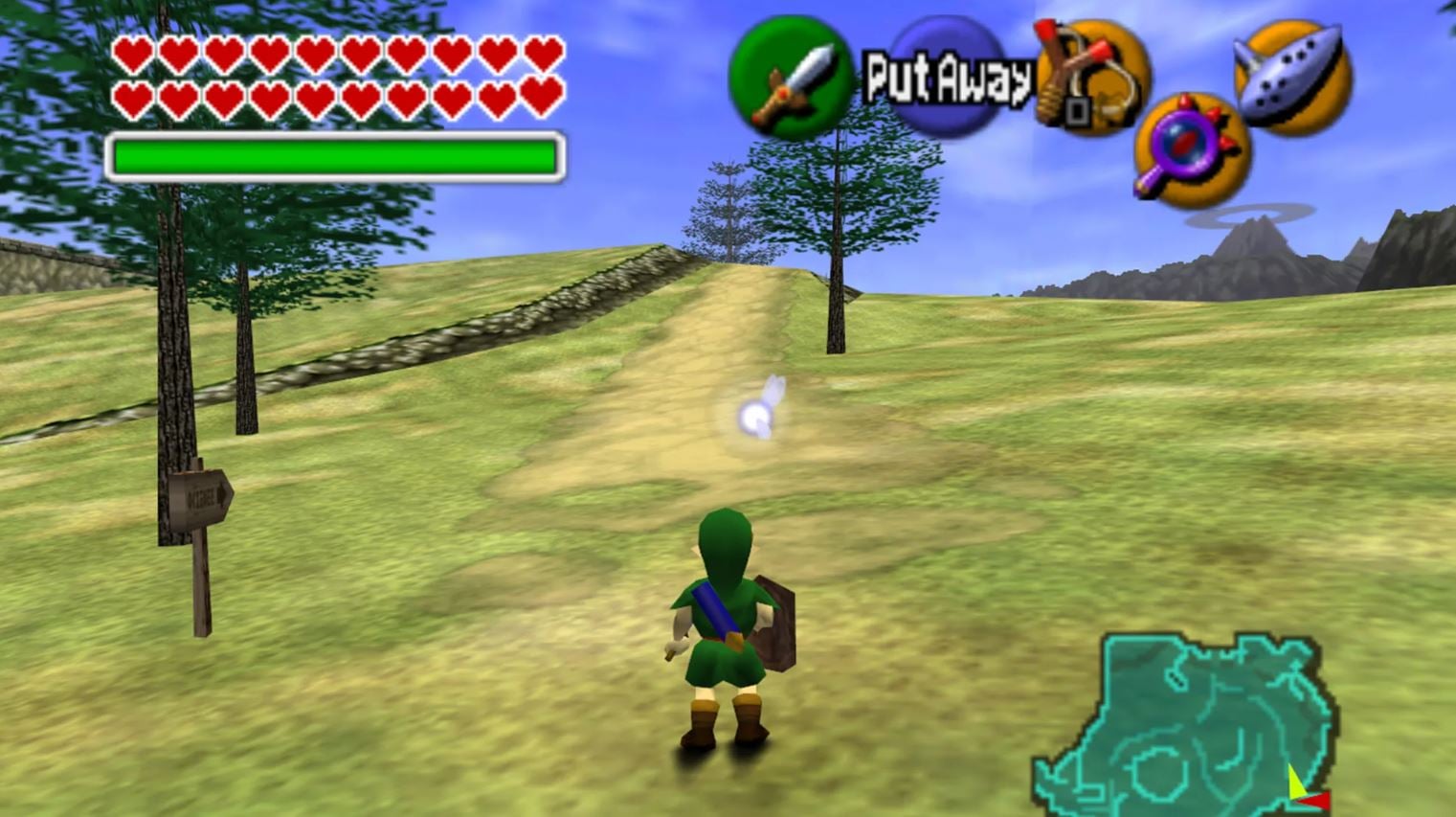
On the flip side, the discussion has prompted many to praise the ways of Nintendo when it comes to explaining game mechanics without dumping information onto the player. As Indie-us Games lead Alwei comments, “Based on my experience, the conclusion is that players don’t read manuals, skip tutorials, and won’t even try to look for instructions until they absolutely have to. Nintendo has been the best at this so far, introducing controls through gameplay in a way that doesn’t feel like a tutorial. And lately they’ve even gone so far as to omit tutorials altogether, like with Mario Kart.” In response, players have highlighted titles like The Legend of Zelda: Ocarina of Time and the more recent Donkey Kong Bananza as titles with the “ideal” tutorials.
Related article: Not-so-obvious things that make games fun, Vol.1: Breath of the Wild and Dragon Quest I’s masterful use of gating

I am the gamer in question. Some games I will delete if they have a mandatory tutorial at the beginning of the game. Or any kind of tutorial section before the actual gameplay. Even if I purchased it full price. Why I love souls like games that just throw you in there and let you play. Also why I enjoy some rogue like lites that just put you in the action. Games aren’t complex enough to need to be explained or they aren’t a game to begin with.
But to go further though I also hate objective markers and mandatory mini maps or compasses. Just let me explore and enjoy the scenery.
Nothing makes me lose interest in a game faster than a tutorial that removes control from me and forces me to do a specific action, especially if the game locks the main menu settings behind completing the tutorial.
Obvious sentiment is obvious. Infuriating that this is seen as a revelation by devs and management. It’s common knowledge.
Okay, joke website aside, comment time in regards to tutorials. Game devs, pay attention.
I cannot speak for all gamers, but I know this will resonate with a large section of the gamer community. I say it with some attempt at wit and humor. Hopefully it comes across as such. If not, may I suggest asking Santa for a funny bone.
Anyways…
We, the True Gamers you raised from childhood with your super marios and final fantasies and the Sonics, and legends of the Zeldas… we play games for the challenge, more or less. We play these games and more not to be held by the hand, told how to Hyah, or how to go fast, or save the princess of yet another castle. We can figure that out pretty easily. It is when ya’ll game devs start to get weird on us that we sometimes need the manual that mentions almost nothing usueful. That website full of know it alls who know nothing of use, except sometimes they do. Those manuals too. And your precious tutorials.meant for people who, frankly, should be doing something better with their time. Why?
Because gitting gud has never been just a Dark Souls meme. Dark Souls and Demon Souls prior to it, those were just more of the same we grew up with in the arcades and the blockbuster rentals.
We don’t need your stinkin tutorials. We are the ones everyone else goes to for help. We’re the ones fixing your games when they can be modded. Sometimes even when not.
So when you put these tutorials into your games, they tend to ignored by us. That manual? We set it aside for when someone else needs it. The game faqs, tips, tricks, full walkthroughs? We wrote them.
To point, I only have ever had a single brady games walkthrough in my entire life, and I got it simply because that game will sell better later on with it.
So. Game devs. Publishers. Indies galore alike. I ask one christmas miracle of you all.
Put the effort you put into tutorials, and funnel that time and effort into the rest of the game instead. The people who actually need that stuff can just play on beginner mode. Put that stuff there, where they need it. Frankly, I would prefer removing easy modes entirely, but we gotta give the “gitting gud still” players a bone sometimes.
The rest of us, we will appreciate that you have gotten out of our way, let go of our hand, and cut the apron strings so to speak. You made a masterpiece of your own liking. Now let us go enjoy it by making an absolute mockery of it by saving the princess yet again by launching ourselves with a time dilated tree towards the big bad castle with the pushover enemy that should have died about 4 entries ago. Right Navi?
Oh right, you took that tutorial away. Thankfully. And yet, we’ll always miss being told… hey listen.
Anyways. My 10 cents worth. Hope ya’ll enjoyed it. Merry christmas, happy new years, and remember that games sell better if they aren’t overpriced, which keeps you in business better than chasing the profit dragon like junkies.
Kooloo Limpah.
There is nothing more infuriating and frustrating than tutorials. I have returned games because of lengthy, unskipable tutorials. It’s even worse when it’s full of time wasting cinematics you can’t skip. Most of the time it’s all basic Here’s how you WASD, JUMP, CROUCH, etc…
Every single game should give you options to not do or exit a tutorial if you have the grasp on the game that you need. I want to play a game with the minimal free time I have and just be able to jump right in it and get going. If I wanted to watch a movie I’d open netflix.
I agree with this alot, tutorials tend to ruin my ability to get hooked onto a game. But also, starting a game with too much narrative does the same thing. I remember going into Wolcen because I like Diablo style ARPGs, but the game immediately barrages you with cutscenes, dialogue, and scripted on rail gameplay as a tutorial. Even if it’s only the first 15 minutes of the game, it still puts me off really quickly.
Excessive tutorials is what I bailed on Xenoblade Chronicles on the Wii.
I can’t any of these comments serious especially in the modern era
It’s best if the gameplay can be its own tutorial.
Gaming is now so mainstream and control schemes so standardized that the world has moved on.
It’s just another case which shows management doesnt play their own games and come from a different generation.
Early gaming before it became as accepted yes you needed the manual and tutorial. It wasn’t uncommon to see the same mechanic implemented with a very different control scheme and mechanic.
But I agree introduce it when its needed as part of using the mechanic rather than a wall of text I have no control over.
No just tutorials! For me, games, as opposed to passive media consumption (reading books, watching video/movie/…, listening to music, …) are all about active interaction.
Additionally, I love freedom and exploration and hate unnecessary limitations.
Therefore anything that sacrifices interaction and freedom, to force some stupid story on me or force me down a pre defined path is ruining games for me.
Freedom and interaction – that is, why it’s called “playing”, not “watching/listening/reading”, like in passive entertainment. Tutorials should also reflect that: help us enjoy our playing experience, not school us and force the games (often irrelevant) stories and background infos on us.
Just want to play.
And then that’ll be the type of player asking reddit communities “how do I do X?” because they skipped the tutorials. Yes, tutorials can be a long slog, and yes, they should be more compact, I agree. But oftentimes it leads to players having no clue whatsoever later in the game because “push, didn’t read the tutorials”.
I don’t think we need every game telling us how to move our character or the character. lol. It is a fine balance, if you ask me.
Speaking for my self, I want to know how to play. Show me once. Don’t take 4 hours, but yes. I’ll take a tutorial. Challenge? No I do not play video games for a challenge. I play to relax, If I want to do something challenging, then I will not game. I will just do something real. When I game, I want to turn my brain off and win. I want to enjoy my time, not swear at some mechanic that someone thinks is challenging. We all play different games for different reasons so stop saying “gamers”, you do not speak for me.
This isn’t exactly true. People don’t mind a good tutorial just most tutorials are annoying. Don’t believe me. Portal 1 entire game is basically a tutorial in discise.
Simple perspective: games (= play) are and should be very different, from passive entertainment (reading, watching, listening to pre-fabricated stuff, without much interaction).
So any limitation of freedom to play typically doesn’t make games better. Event triggered cutsceenes, endless dialogue or text click-through, “story modes” with extremely limited interaction, invisible walls, forced paths/strategies, etc.
Why not focus on free playing, when it’s games (exploration, learning on the fly, freedom of choice and strategy), not passive entertainment and mandatory stuff and forced paths/strategy?
Tutorials don’t need to exist at all and them being in a game is a sign of bad game design.
When I learned game design I was taught is integrating learning the mechanics to playing.
A good example of this is most SNES games, like mega man x. They don’t stop and give you a paragraph about how wall kicking works they just put you into a situation that requires it and after a short period most players figure it out. Or like with the dash ability they just show you it once and that’s enough to understand.
And yes there’s times game mechanics get complicated and require a mini tutorial but it doesn’t need to be in the form of walls of text.
Arknights: Endfield comes to mind as a recent offender. It’s a gacha game sure, but Gen Z and Alpha make such a big part of the gaming population it deserves its share of criticism.
Nevermind the cringey and bloated dialogue when characters talk, the game constantly forces you into tutorials as you progress through CBT2. The tutorials are already bad enough during battle and the overworld, but it becomes especially egregious when building your factory.
Imagine a game brings up a window to explain a game mechanic, but turn that up to 11 so that it does this for Every. Single. Step. Place down a factory part? Tutorial window afterwards. Place down the belt? Put up another tutorial window. Complete the next step? Another tutorial window. It pads out the intro of the game in an unnecessary and unnatural way, I’m not surprised people have voiced their criticism for it during feedback.
If this is a sign games releasing in the future will take this to the extreme, I wonder if devs are even playing their own games before asking for feedback from players or releasing them to the market.
Just let us play the games, and give us a tutorial option that we can read through on our own time.
A game presents itself poorly when it compulsively forces you to go through a tutorial instead of playing the game itself to figure things out. Worse is if it comes off as hand-holding.
This article makes me think of Arknights: Endfield, despite not being out yet. Its CBT2 is the very definition of egregious game design with constant tutorials. All its gameplay mechanics (battle, exploration, factory building, tower defense) are peppered with tutorials. Worse yet is how the tutorials are broken up into single screen windows that needlessly pop up when the game already forces you to read between single steps. It’s not even breaking the tutorials into chunks, the tutorials force you to read between actions, breaking the flow of the game.
Gen Z and Gen Alpha are its biggest target audience for it being a gacha/mobile game, and even if studies have shown younger people have poor attention spans, its copious utilization of tutorials is shockingly bad for a game slated to be released next month,
Late to the party, but I agree with what’s been said. It’s odd how many new games are harming their own gameplay by shoving tutorials at the least convenient times, or how many times this shows up.
Nintendo has been good about leaving tutorials as optional, the only recent games that come to mind for me are Xenoblade 2 and Mario & Luigi: Brothership. They’re probably the lest offending company when it comes to tutorials, that’s why I’m still a customer of theirs.