
For many indie developers, estimating development time remains one of the most difficult aspects of production. Projects that start small can easily expand in scope, resulting in timelines that exceed initial expectations.
In this week’s throwback, we’ll revisit a moment from October 2021, when a wave of Japanese indie developers took to Twitter to candidly discuss this persistent challenge.
One of the developers who joined the discussion was Atsushi Saito, creator of Giraffe and Annika. Looking back at blog posts from 2015, Saito revealed that the project was initially envisioned as a compact title with roughly 30 minutes of playtime, and estimated to be completed within a year. By the time the game finally launched, however, four years had passed and the scope had expanded to five to six hours of content. Even with prior experience at a game company, Saito admitted that accurately predicting the scale of a personal project proved far more difficult than expected, especially when it came to debugging.
Nama Takahashi, developer of ElecHead, shared a similar experience. Originally based on a prototype created during their student years, the project was meant to be completed within three months after graduation as a way to test life as a freelancer. Instead, the journey ended up stretching on for years, interrupted by roadblocks, detours into other projects, and the natural evolution of ideas. However, Takahashi emphasized that making a schedule is not meaningless, and that deadlines and milestones provide direction (and motivation), even if the final timeline shifts.
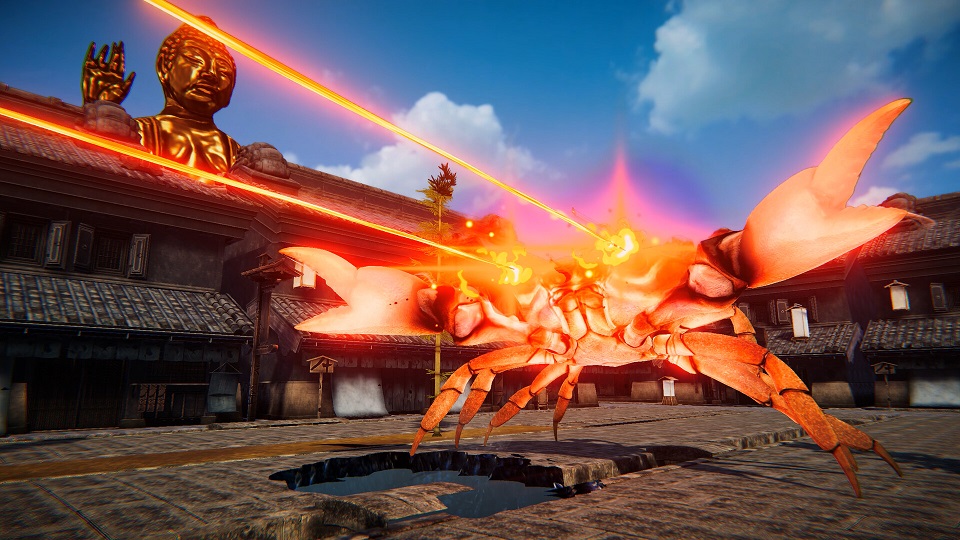
The developer of Fight Crab, known as Nusso, also described how development extended far beyond initial expectations. Although an Early Access version was released after two years, optimization, additional content, and console ports added several more years to the timeline. Nusso compared game development to other creative media, noting that while a drawing mistake in manga may not ruin the entire work, a single bug in a game can compromise the whole experience. Furthermore, improvements made in the final stages can dramatically elevate quality. In that sense, progress in game development is rarely linear.
Similar sentiments were shared by members of the Touhou doujin circle Neetpia, as well as developers such as Taro Masuda (SUPER UFO FIGHTER) and Yusuke Iijima (Parasite days), who also noted how small projects can quickly grow beyond their initial scope and how balancing schedules with creative ambition remains an ongoing challenge.
Part of what sparked this collective reflection was an announcement from Kodansha regarding its Game Creators Lab program. The initiative offered financial and editorial support to selected indie developers, with funding distributed over a two-year period. While there were no formal penalties for missing deadlines, the system rewards those who complete their project within the defined timeframe”. As it was explained on Kodansha’s Game Lab X account, a missed deadline may not affect the creator themselves, but it sure does cause problems for the editors (or publishers) in charge of the project.
What are these developers doing now, and how much have they grown over the past five years? Several of the developers mentioned in the discussion have continued to expand their presence in the indie scene. ElecHead gained international attention following its release, accumulating more than 1,300 user reviews on Steam with around 97% positive reviews and earning nominations at the Game Developers Choice Awards and the GameMaker Awards. What’s more, Nama Takahashi’s next game Öoo, released in 2025, also became a huge hit surpassing its predecessor, with a currently Overwhelmingly Positive score on Steam and over 5,000 user reviews.
Meanwhile, Fight Crab continued to receive updates and additional platform releases, and its sequel, Fight Crab 2, was later released in Early Access. Atsushi Saito and his studio atelier mimina are currently working on a new sci-fi RPG titled HARUKA: Beyond the Stars.
Related articles:
Death Stranding gameplay tips by Hideo Kojima himself? A paralell universe where Final Fantasy 7 Remake’s Tifa has long hair? Looking back on what we were doing on “Twitter” in 2021