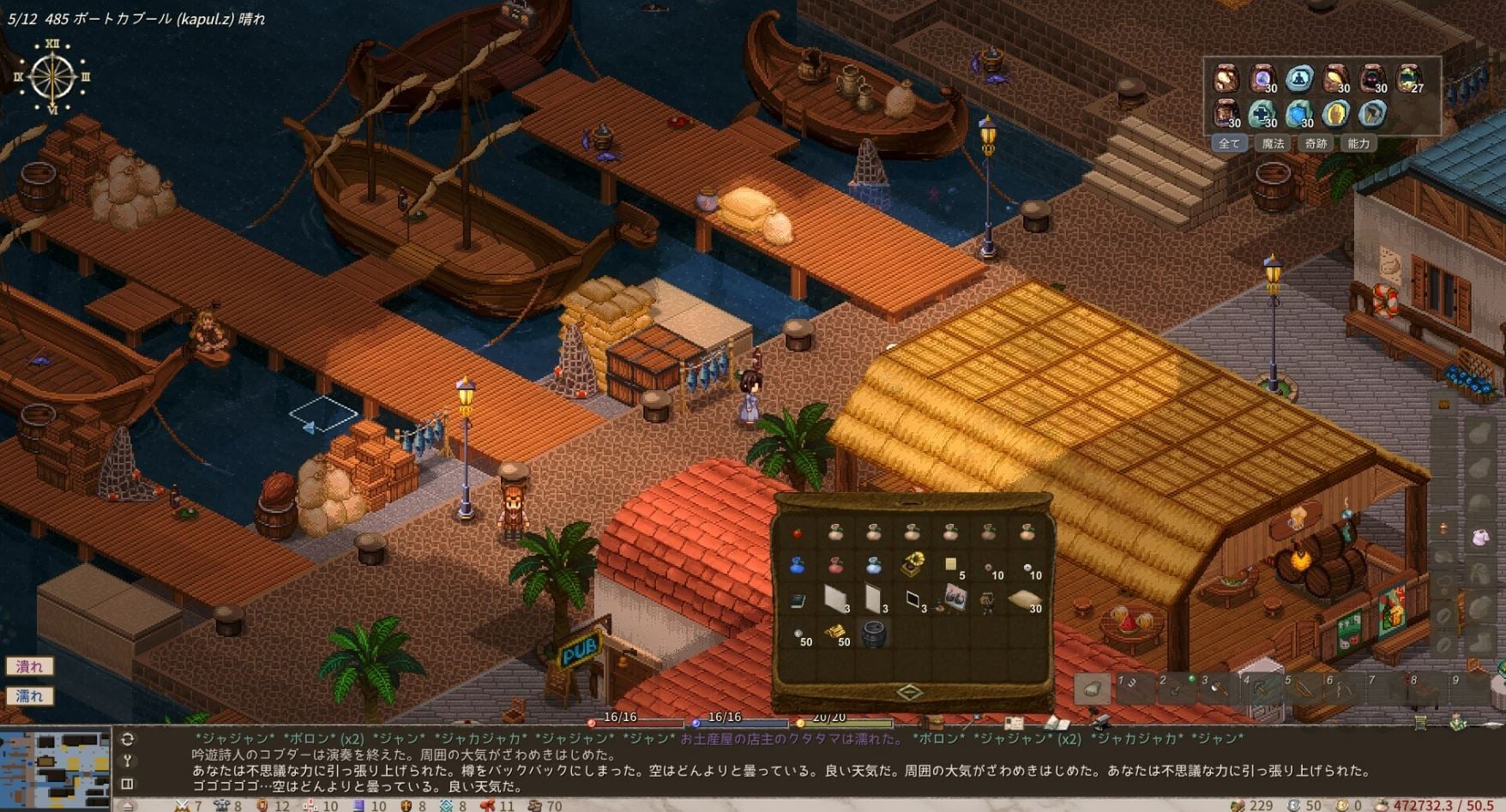
Released in Early Access in November 2024, Elin is a sandbox-style open-world roguelike RPG developed by solo Japanese creator noa, known for the acclaimed free game Elona (2007).
During more than a year of Early Access, Elin – the official successor to Elona – has steadily expanded through a wide variety of updates, which has kept its growing playerbase bustling. AUTOMATON recently sat down with developer noa to talk about the game’s development philosophy and what has made it so successful.
—Please introduce yourself.
noa:
I’m noa, a solo indie game developer. I’ve been involved in game development for about 20 years now, under the studio name Lafrontier. Before Elin, I made the free games Elona and Elona Shooter.
I’ve always been enthralled by epic fantasy and sci- fi stories with intricate worldbuilding. While I enjoy plenty of anime and games, I often pick up books too. I used to shy away a bit from D&D-style novels because I assumed they’d feel too “game-like,” but last year, I became completely engrossed in the Dragonlance series. I reread the series from the beginning, swooning over how adorable Raistlin is, all while waiting for the latest installments of A Song of Ice and Fire and The Kingkiller Chronicle. In fact, Elin is also filled with many little homages to these works.
Besides game development, I also enjoy writing stories and scripts as a hobby, producing music and videos, tinkering with AI and programming languages, and generally creating things.
—What kind of game is Elin?
noa:
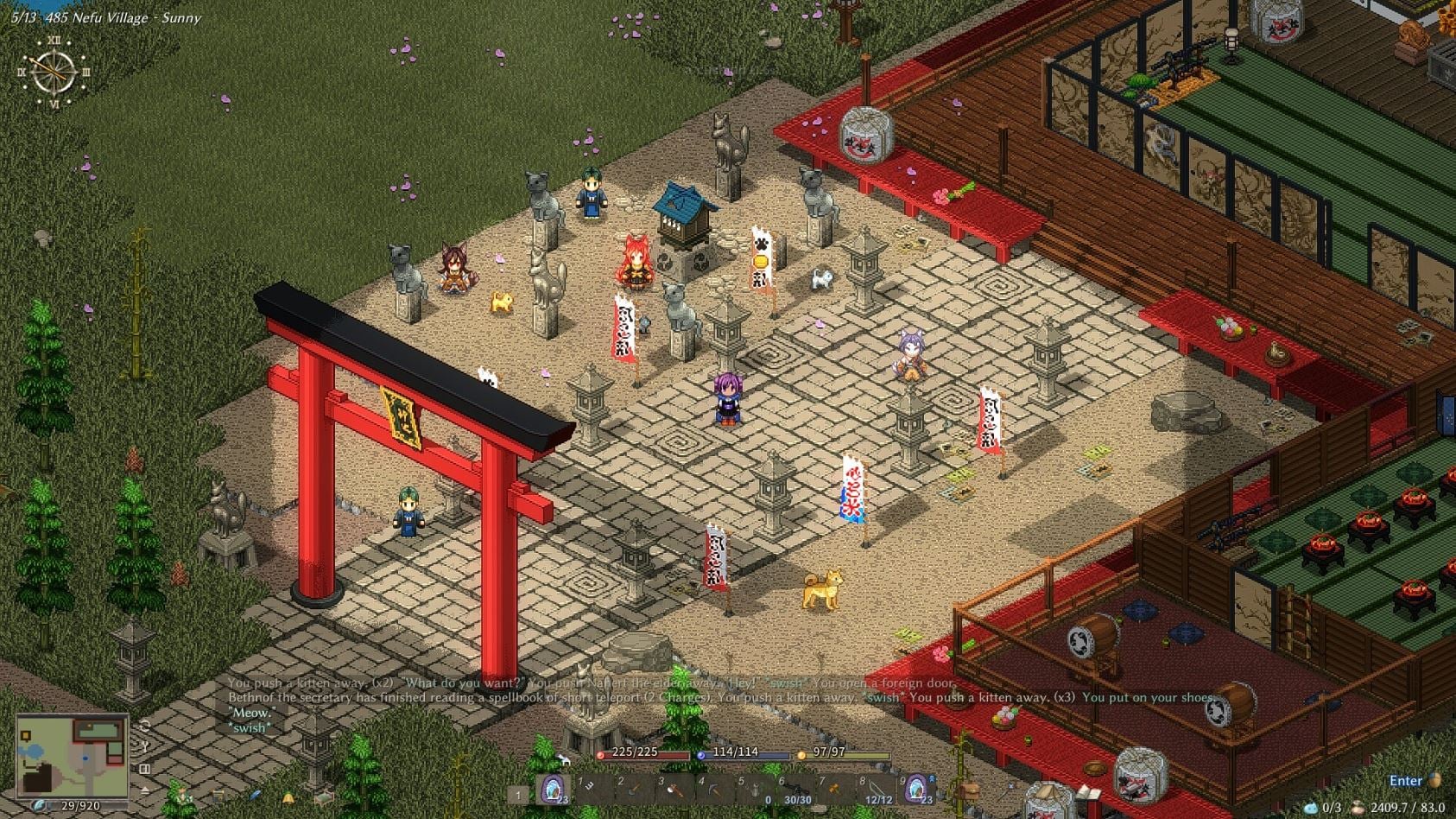
Elin is an open-world, roguelike adventure and base-management game. While inheriting aspects that were well received in its predecessor Elona, Elin evolves in a direction that offers more freedom and makes things even more chaotic.
Simply put, it’s the kind of game that’s made over an entire lifetime, driven by the obsessive passion of its creator. Elin received over 200 updates last year alone, and the content continues to grow every day. It’s a game where you can dive into a vast world and enjoy the random stories and chaos that arise.
Another characteristic of the game, unusual for a title built primarily around random generation, is the emphasis placed on worldbuilding and narrative expression. A colorful cast of NPCs and gods appear, and cozy, fantasy-style Home Quests set around the player’s base add warmth and flavor to the adventure. The game’s distinctive atmosphere, blending Japanese subculture with a hardcore roguelike sensibility, is very much intact – cute and moe elements included, of course.
Elin also introduces mod support, and close to 1,500 mods have already been published on the Workshop.
—It’s been a year since Elin’s Early Access launch. How are sales doing?
noa:
Elin sold about 200,000 copies in 2024, and then about 150,000 copies last year. That brings the total up to roughly 350,000 copies.
—That’s impressive.
noa:
Originally, I envisioned Elin as the kind of game where the playerbase grows long-term, with each update, instead of being fueled by launch day momentum. Because of that, I didn’t do any particular promotion, so the high early sales numbers really surprised me. I think the Kickstarter campaign helped spread the word, and the fact that there are so many dedicated Elona players was also a big factor.
After the post-launch sales momentum settled down last year, monthly sales remained fairly stable without major fluctuations. In terms of my original goal of achieving continued player growth, this stability actually feels more important.
I don’t know when it might happen, but I secretly have a goal of achieving “one million little sisters” (little sisters = players). This goal is less about business and more like something I personally aspire to. Having been saved by games since the NES era, I feel nothing but honor when titles I was once obsessed with appear alongside Elin on Steam, or when my game even slightly approaches the same level of recognition. And of course, I’d be thrilled if even one more person played my games.
—Could you give us a breakdown of sales by country?
noa:
Looking at cumulative sales so far, Japan accounts for 35%, the US 24%, China 16%, and then there’s a significant drop to Canada at 3%. However, if you look at the most recent months, the US is at 33%, China at 16%, and Japan at 15%, so overseas sales have been rising.
My previous game, Elona, already had a lot of core fans overseas, so I’m hoping Elin will be played in many countries around the world as well. Since the number of officially supported languages is still limited, I’m currently producing and releasing promotional videos aimed specifically at Western audiences.
—So that explains its popularity in the West. What aspects of the game do you think are linked to these numbers?
noa:
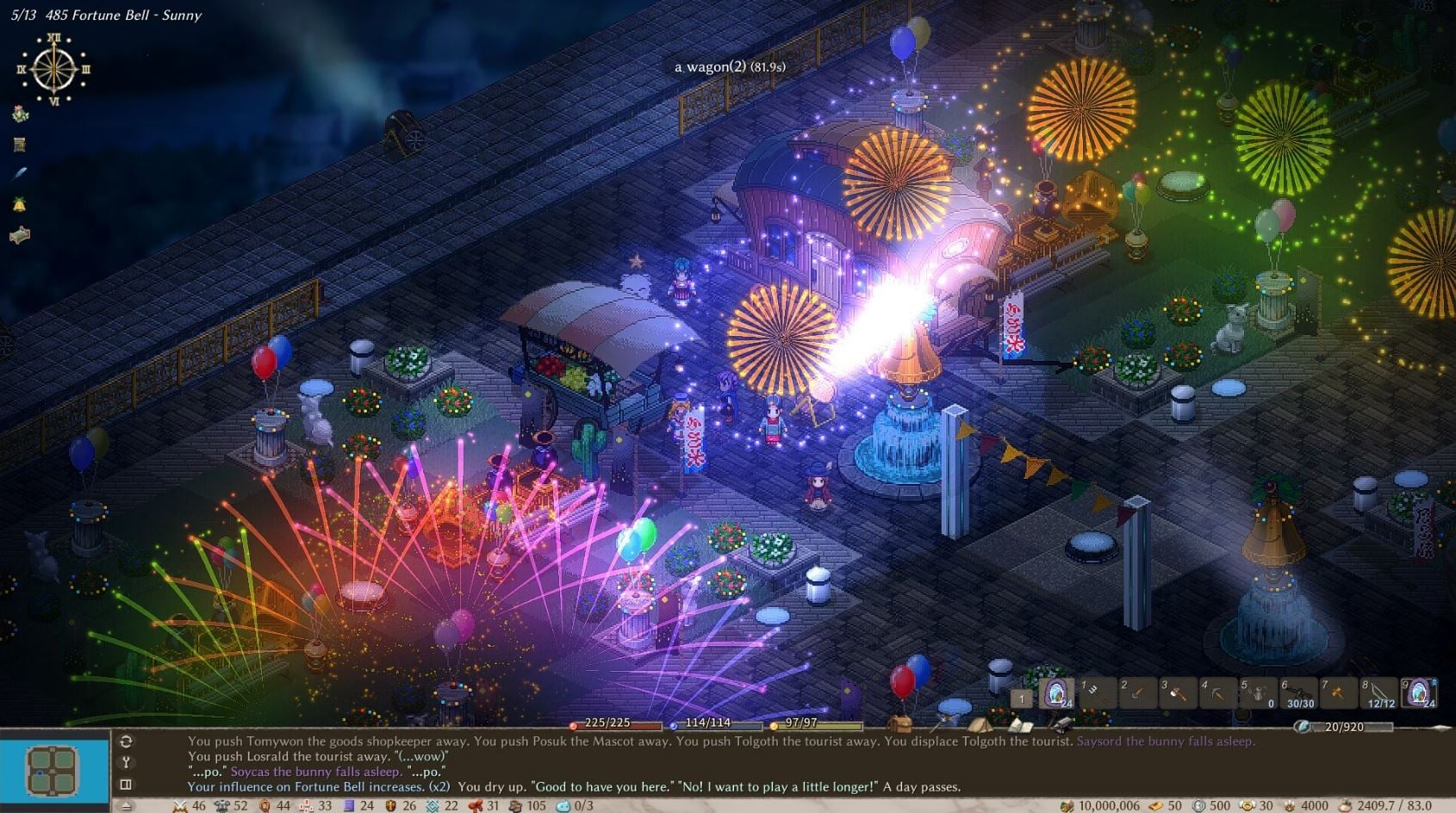
I think, first of all, the existing fanbase from Elona, the inclusion of popular mechanics like survival, crafting, and base management, and the nostalgic pixel art style are the biggest factors when it comes to sales figures.
On top of that, I also get the sense that people see it as a game you can stick with for a long time. Not just in terms of playtime, but in the sense that even if they’re not actively playing, they might stumble across some fan art or a meme and be reminded of their adventures, or chuckle at rumors of some bizarre update, and keep it in the back of their minds with a “I’ll pick Elin up again sometime.”
The recently launched Elin State of the Game (Elin’s official monthly newsletter) isn’t so much about delivering new information as it is a small beacon telling people, “This world is still alive and breathing today (you can always come back!).”
I can’t say for sure that these methods directly translate into sales figures, but I intend to continue my efforts to keep Elin players engaged for the long term.
To give a bit more background, I’ve always loved never-ending stories and worlds that keep existing, and with Elin, I want to keep expanding the world of Ylva indefinitely. I’d love to see what kind of scenery awaits me as the number of my little sisters multiplies across the Earth.
Actually, I approached Elona with the same mindset back then, but at the time, I never got to see any “change in scenery,” and I eventually gave up development in a state of near despair. What I mean to say by this is that social media wasn’t widespread back then, so there was almost no fan art, and feedback amounted to just a few messages a year. It felt like I was simply pouring time into developing a free game with nothing to show for it.
But now, nearly 20 years later, I think the seeds I planted with Elona never withered, and that they have finally sprouted in the era of Elin.
On paper, you could explain it as “having a fanbase from my previous title” or “the IP having matured.” But my personal feeling is that rather than commercial success, what was behind it was the deeply personal drama of being reunited with my sisters from long ago. That remains my main driving force for continuing to create Elin.
Surprisingly, it might be these kinds of motivations and stories, slightly removed from marketability, that define an indie game’s character and uniqueness, ultimately translating into numbers.
…That said, honestly, I have no proof (laughs). So I’d be grateful if you’d keep an eye on how Elin develops from here, including its figures.
—That’s a really touching way to put it. Thank you. Do you have any anecdotes that illustrate Elin’s chaos and high degree of freedom?
noa:
Since it’s a game where you can gather your favorite companions and build your ideal base, players’ personalities really come through in their parties and settlements.
Some players make paradises where they show off only cute girls gathered around a gigantic hot spring, while others make bases dedicated solely to bullying a specific character, meticulous reproductions of modern architecture, facilities where something is very clearly off, or exhibition halls that radiate sheer obsession and fetishism. The massive farms and power-generating bathhouses, which pursue nothing but efficiency, also end up looking hilariously hellish in their own way.
Some adventurers travel the world with tents on their backs, while others collect NPC panties, go around stealing the world’s finest furniture, and some build entire armies made up only of dragons or little sisters. I think one of the greatest joys of Elin is creating your own story, the way you want to.
—Looking back, could you reflect on Elin’s updates in 2025? What took the most effort to implement?
noa:
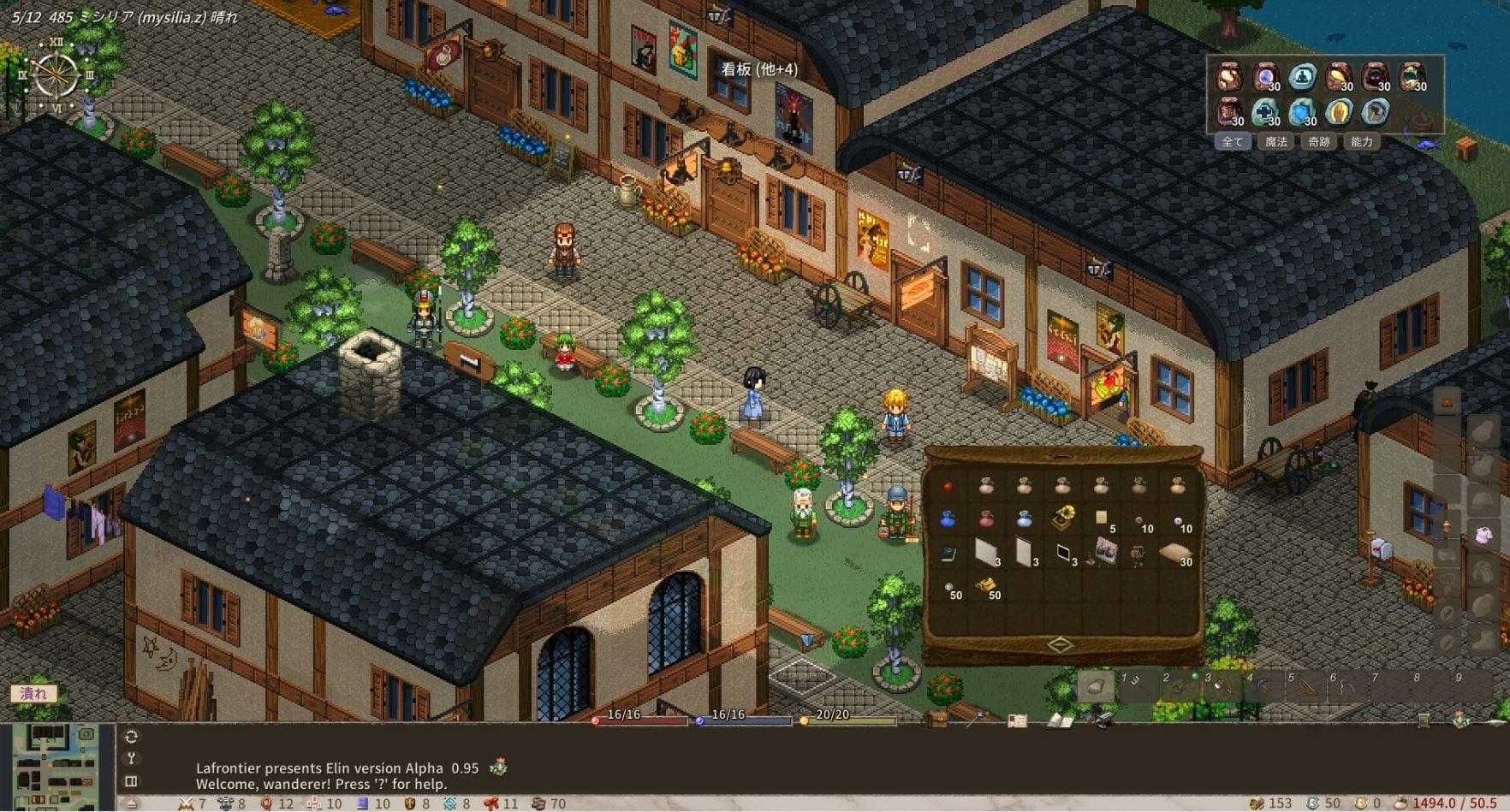
Implementing the Vampire race took much longer than expected due to how high players’ expectations were. Adding the underwater map, including the Sunken Temple of Lurie, was also quite challenging, but I’m satisfied with how the underwater atmosphere came together.
The update I put the most effort into was probably the dungeon, boss effects, and gimmicks for the latest Home Quest. In that update, I introduced the concept of “special actions” for boss behavior, as well as Field Effects that impose special rules across an entire map. I plan to make heavy use of these in future dungeons and boss battles.
Field effects, commonly seen in card games, can significantly alter the difficulty and depth of combat and exploration, so implementing them in random dungeons might be interesting.
—Which update received the biggest response from players?
noa:
In terms of direct impact on gameplay, additions like Rune Molds and Gene Engineering were the biggest, but I get the sense that features born from little detours or spontaneous ideas actually got bigger reactions from players.
A recent example is the ASMR Player feature. It lets a radio endlessly play ASMR-style text spoken by any chosen NPC. When I opened submissions, I got a huge amount of ASMR lines from players, so it looks like this will become a permanent form of bonus content added between major updates.
Other features that got big reactions include the “Compassionate Panty Wearing Ordinance,” which makes base residents wear panties, and the Whip of Egg, which makes anything lay eggs when hit. Even features that seem like complete jokes can end up having real uses. For example, recently it was discovered that the Whip of Egg can be used to obtain endgame materials. That kind of chaotic integration across systems really feels unique to Elin.
When players unexpectedly discover exploits like that, many of them need fixing, but whenever it’s possible, I try to preserve them.
—Were you able to develop the game the way you envisioned during 2025?
noa:
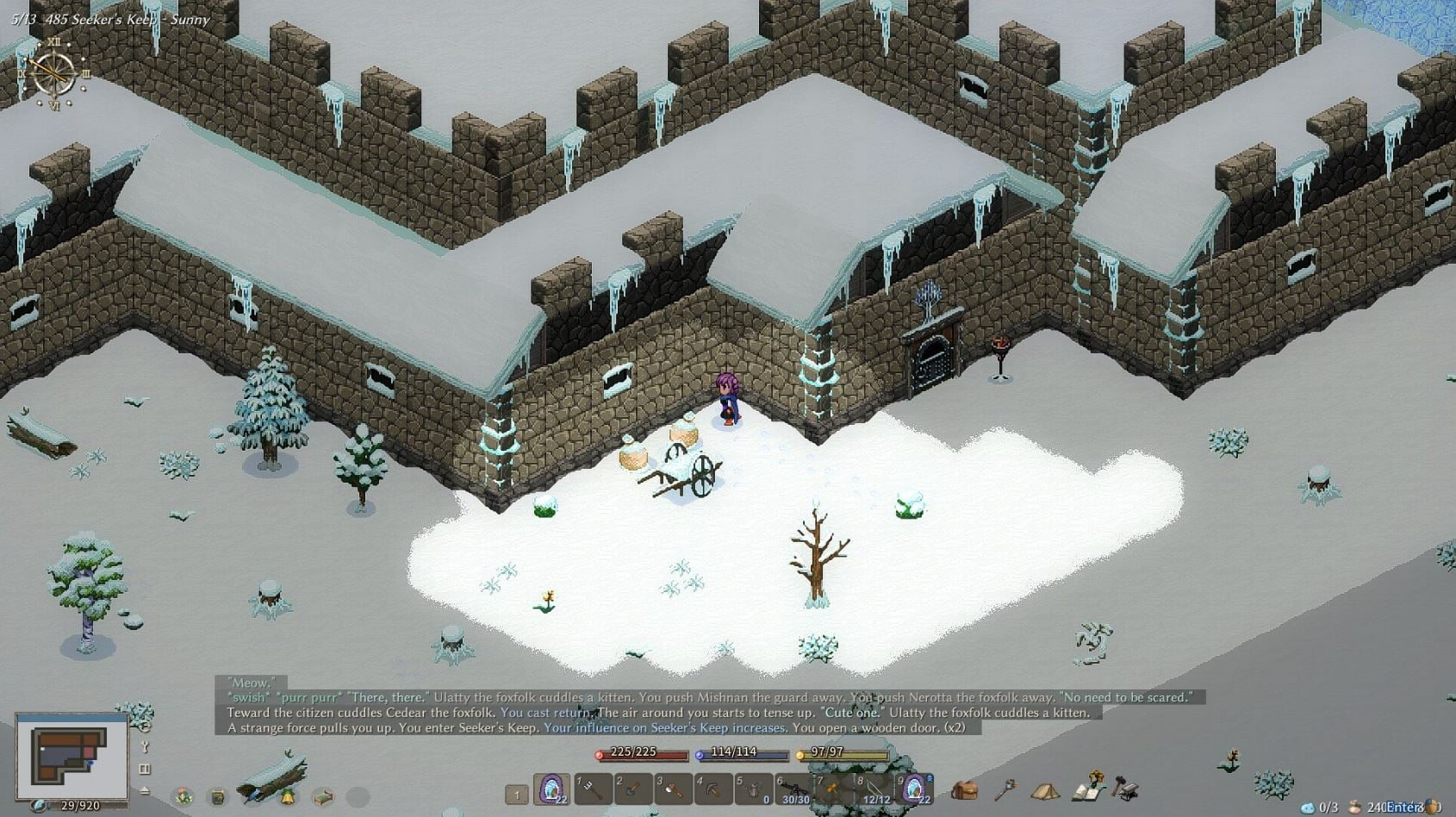
Right after Early Access began in 2024, the sheer volume of feedback was really overwhelming, which was difficult to handle. But once I set up a proper feedback management system and separated the Nightly build (development build) from the stable version last year, development became much more comfortable. I was also able to improve my physical work environment (= my old, dirty room), so overall, it was a very fulfilling year.
Rather than thinking of it as work, I’ve always done game development out of love, so it rarely feels like a burden. Someone found out that I was playing Monster Hunter Wilds in my spare time, but I’ve been secretly sneaking in other things too, like playing the Romancing SaGa 2 remake nonstop for two days straight or binge-watching Frieren: Beyond Journey’s End.
By the way, I usually refer to players as my little sisters, but this doesn’t mean I’ve developed any depraved tendencies. There’s a practical reason for it: in small-scale development, you’re always reading user feedback directly, without any buffer, so harsh words can really hurt sometimes. But strangely enough, when I imagine those messages coming from my cute little sisters, it somehow soothes my heart… Right? If any developers out there are struggling with feedback, I really hope you’ll give this a try.
—(Laughs) What would you like to accomplish in 2026, noa?
noa:
I’d like to continue maintaining an environment where I can stay focused on development without having my time eaten up by various troubles.
On the development side, there are still tons of features I want to pack in, and I’m constantly fighting the urge to add factory-style automation systems. That said, I can’t let Early Access drag on forever, so I’m planning to save those ideas as something to look forward to after the full release.
My biggest goal this year is, without a doubt, completing the Home Quests. By “completion,” I don’t mean ending the story cleanly, I’m thinking more along the lines of wrapping things up at a natural stopping point. I want to leave room for the story to start moving again (after the official release).
The characters introduced in Home Quests are very popular, and once the main story reaches a natural stopping point, I hope to add more lighthearted interactions and side episodes between them. For those who want to hear more of Corgon’s “Mokyu Mokyu!,” please look forward to it!
—Thank you for your time. We’re looking forward to another great year.
Elin is currently available in Early Access for PC (Steam).