

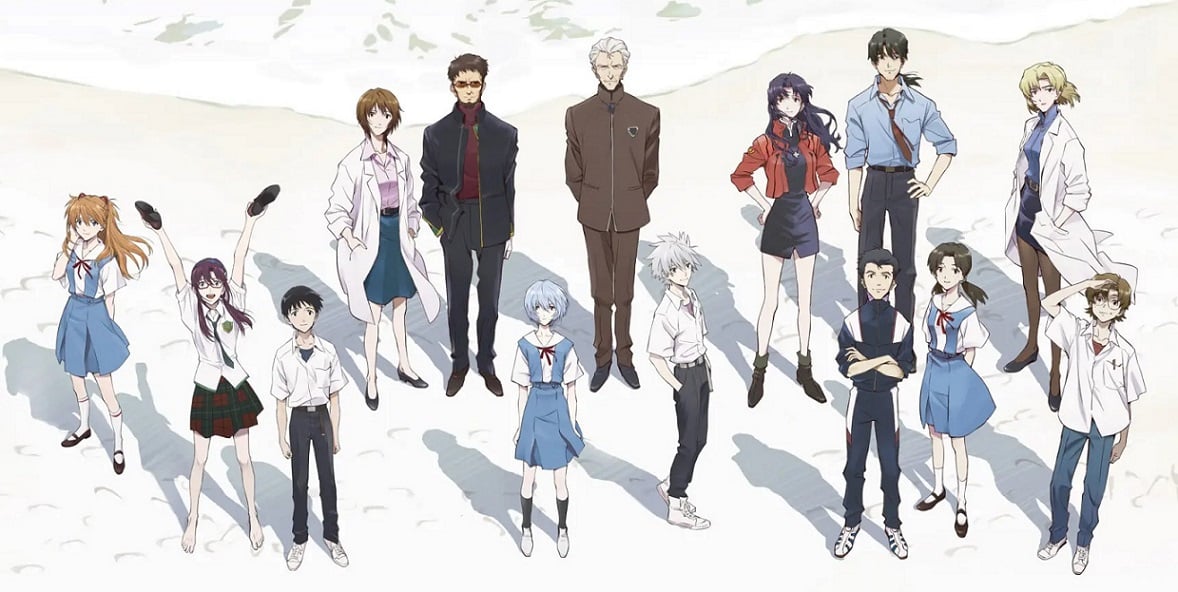
The Japanese content industry has been steadily going global over the past few years, and with increasing government support and a fleshed-out expansion strategy, it is estimated to reach a market size of 20 trillion yen by 2033. Recently, Neon Genesis Evangelion director Hideaki Anno sat down with Forbes Japan to talk about the changes this has brought to the industry as it further expands into the overseas market.
When asked how these changes are impacting the way Japanese content is made and distributed, Anno remarked that anime and film studios haven’t made any “conscious” changes in the past years, even though the environment itself has slightly changed. “I personally never made anything with the overseas audience in mind. I can only make domestic stuff. Production companies are quick to say Think about the overseas market, but personally, that’s not my goal,” he explained.
“My stance is simply – it first needs to be a work that will be well received and found interesting in Japan, but if by any chance people overseas also found it interesting, I’d be grateful for that.” Anno mentions that working on Evangelion: 3.0+1.0 Thrice Upon a Time, he “wasn’t considering the overseas market at all.” Apparently, he decided to produce the film independently because it meant no one else could interfere, and he was ready to take full responsibility for it regardless of how well it performed financially.
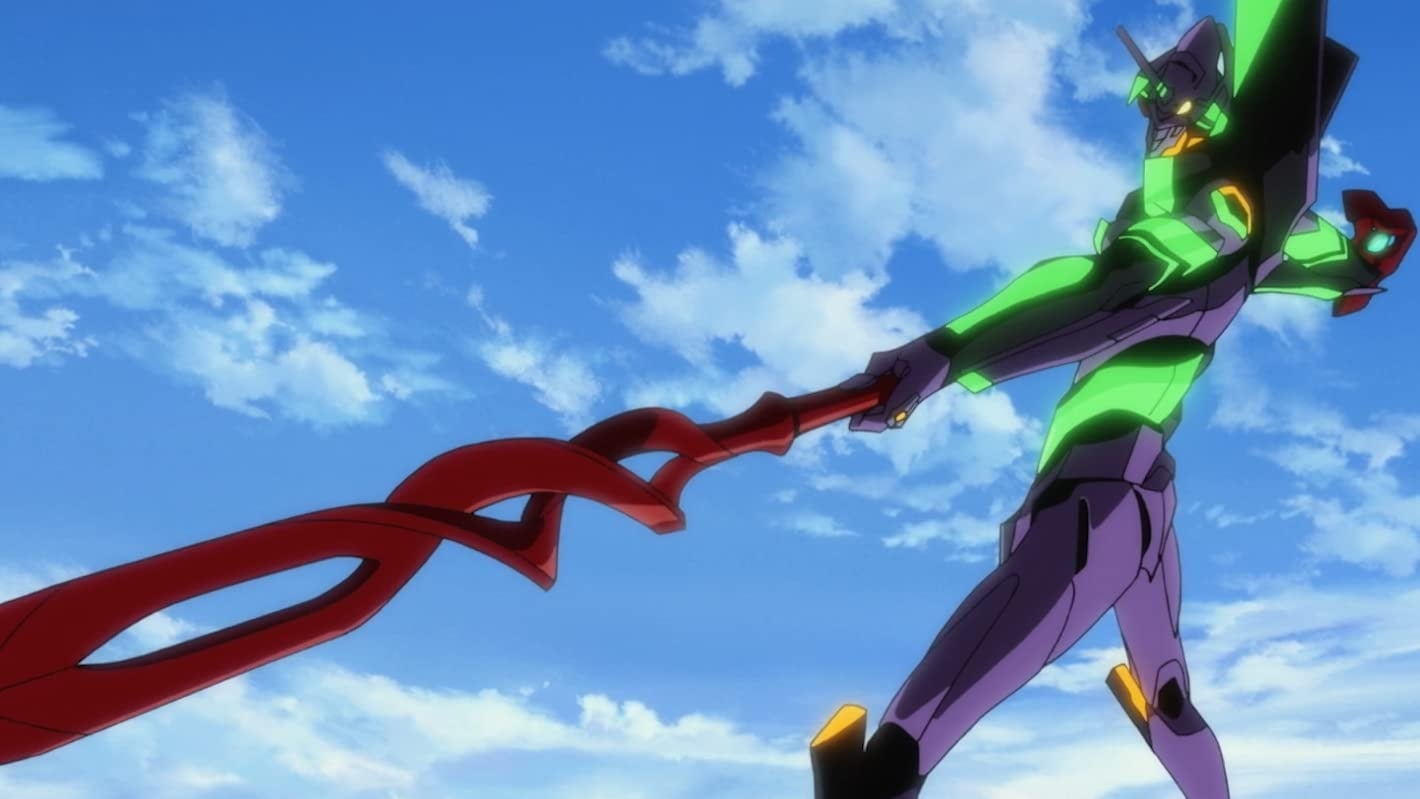
Anno explains that making a film for a non-Japanese audience comes with some considerable difficulties, especially the language barrier. “Works that are made through a Japanese thought process can only be understood in Japanese. Film has both visual and sound elements, so compared to other forms of storytelling, the language barrier is not that . However, lines in the script are still in Japanese, and the drama is achieved through the thoughts and feelings the characters experience in Japanese.”
The Evangelion director remarks that such works can be well received overseas as well, given that the audience understands the intentions and nuances of the narrative expressed in Japanese. However, he also says that as a creator, he can’t accommodate his work to the audience. “I’m sorry, but the audience will have to be the one to adapt,” he added.
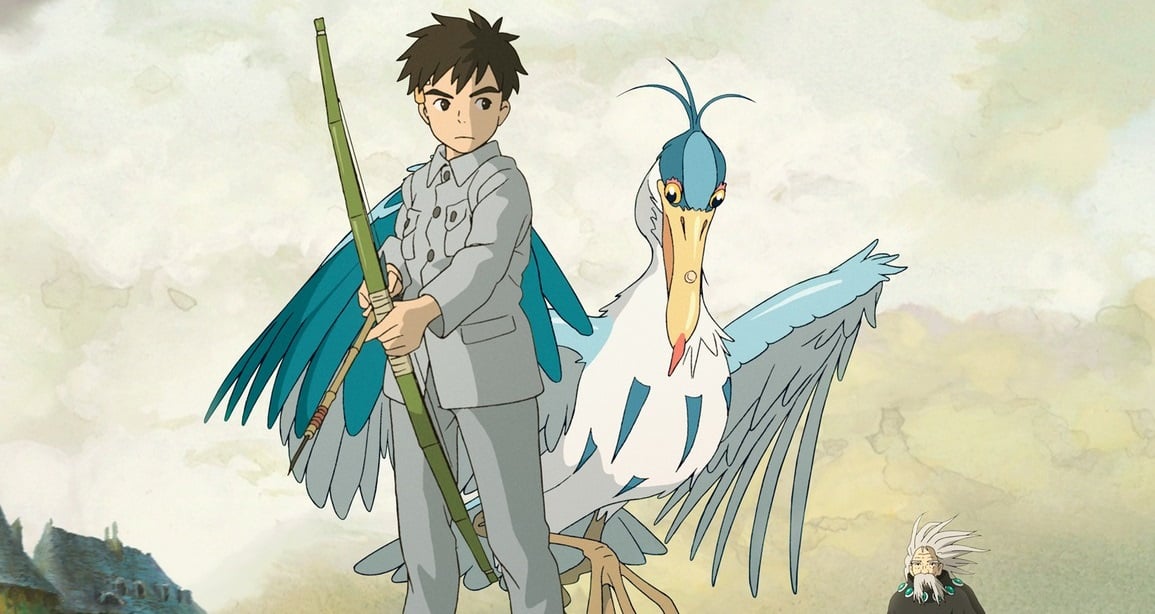
Compared to video games, which are interactive media, “film is a one-way road,” Anno explains. Even if the audience complains, that doesn’t necessarily mean that the complains are reaching the creators – film isn’t a medium that accommodates its contents for the viewer. “That’s why the audience has to trust the creators in what is interesting, and that’s why I think it’s completely fine to keep production domestic,” he says. “Even Ghibli and Hayao Miyazaki stick to domestic production, and I’m sure that they don’t even think about the overseas market.”
As Anno suggests, overseas promotion can come later, and that’s not something creators should be concerned about. “We should let the business people turn our works into products and sell them, that’s the best course of action,” he says. But a part of why Japanese works haven’t been able to make it to the West until now is because “we were kind of bad at selling them,” the Evangelion director remarks.
Related articles:
He’s right. Trying to tailor anime for a global audience would be a huge mistake. It would ruin what we love about Japanese anime in the first place.
Big words coming from someone who sold out gundam wing to be woke for a “larger audience”
The hell are you talking about?
I personally like this approach, because I like anime for the reflection of the Japanese media.
Watched my first anime in 1986 and there have always been some shows, which were influenced by the west, which wasn’t always the best way for the media but also great execution with cultural influences due to history.
The US animation also is usually more focused on the US culture and the French portrait their culture as well.
The media is kind of a mirror of the society where it was produced.
Germans also have their own media and sometimes they get fame abroad but it’s generally the story, which sparks interest to catch a wider audience.
As it should be. You can’t please everyone, and In attempting so you’re more likely to push everyone away then bring them together. To many artists of all avenues should put their foot down more in this aspect. Everything can’t be made for everyone, that’s how you end up with nothing for no one because you’ve removed any core ability for people to connect with the characters.
I agree. What mashes them special is not catering to the rest of the world but catering to their home audience. If it’s good the rest of the world will watch. Plain and simple
No truer words have been spoken.
He’s right
I completely agree with him.
Based Anno
To the likes that of metabots, it could become. Non-existent and foreign locked. Or the resurgence to that of digimon globally. Ignoring your market isn’t wise.
I can promise you that Medarot being on life-support has nothing to do with it not being American enough.
Wait he sold Gundam wing to be woke? What are you talking about the middle east pilot that is blonde and blue eyed? Gundam is about war and how bad it always is for humanity and since it’s talking about all of the human race in a couple massive governments; It’s one of the few stories where including all races would be completely fine with the lore. Note that I do not support woke slop but I don’t care about any tastefull inclusion.
My main gripe and I think the one that affects most of us with woke is they do sloppy work with characters being defined entirely by their race or sexuality.
We are attracted to anime because it’s different from Western animation, in both art style and story telling. It’s ok if anime creators get inspiration from Western media but if they tailor the medium to a global market, it all end up becoming the same as western cartoons.
Absolutely correct. This is also one of the things that people, actual fans really, believe in more: learning new things from other countries, interpret them, share them. A true global market is made BECAUSE of the differences and nuances between regional, local and cross-country cultural works of art.
💯 agree, as it should be. All the shows that cater to being inclusive to everyone usually suck, lack any good writing. The moment you try to take away the artists original concept, the work loses meaning. Sometimes you make a garbage movie anyway but the greatest films, shows or games made were made with a specific idea, a project of passion and usually a line of thought that cannot be recreated or reproduced. Maybe American artists and content creators should consider this. The anime market wasn’t necessarily made for us, but those who enjoy it do so for what it is. Most American content is also just made for Americans, most of our media doesn’t really translate either, situationally or literally.
Totally agreed – Artistic endeavors tend to be better when the artist is allowed the most free expression, trying to tailor it to anyone starts to lose that natural greatness. Eva is my long time favorite & I’m in the US – I am glad it wasn’t given westernization. It doesn’t need it & would have taken away from it to have tried
He is right. Anything that could entertain is always something different from the audience perspective. What could pique interest is a combination of familiarity and the uncommon. If anime will adjust for specific people (e.g. “modern audiences”)to be acceptable, it will be another slop of goo that only a few will satisfy.
Immense respect to Anno for saying it so simply. I think my customers are becoming trained consumers for the market, whether trained to accept mediocrity or desire endless remakes since nostalgia’s weaponization. I grew up adapting to something or accepting something wasn’t for me. A customer has the choice and creator provides for their target audience.
Admittedly, I’ve never like Evangelion lol! I’ve like a few things he’s done,but I think I like hoe big a fan of things he is and tried his hand at them.
we have a few insightful comments and then we have the typical “bluh bluh anime is woke now” nonsense.
Sean, is “woke” in the room with us? Typing Americans always saying crap like that.
I remember loving anime because it was a window to a different culture. I remember becoming aware of different styles of relationships like Kaworu’s pretty gay and Sailor Neptune and Sailor Uranus were a lesbian couple and there weren’t Trumpvangelicals screaming woke back in the 90s.
That’s absolutely correct. Damn near every form of media been doing that since 2017 and it’s been horrible. They weren’t creating for a global audience, just the annoying people on Twitter who have now migrated to bluesky
Everything looks woke to Trumplicans.
Woke derangement syndrome you could even call it.
I prefer Woke vision. First you just see woke in movies and videogames.
Then you start to see it in foreign TV shows with zero stakes or understanding of Western political and cultural wars.
At the end of the woke virus, virtually everything they look at and touch looks woke. It’s very unfortunate.
I don’t quite know why this ever needed to be stated. Is it tweeter crybabies being loud with their tantrums? No one ever said they had to produce content with any other market in mind. It’s what makes anime (and video games) their own. It’s what “otakus” desire lol. Make it for you, slap some subtitles on it, call it a day. I love Japanese media as it is.
Anime has to preserve its focus on Japan. It’s what makes it unique.
Let authors create whatever they want, don’t force them to comply with any sort of political movement or western market trend.
No forced inclusions or censorships, authors must remain free. I know that anime has also had censorship issues in the past, but it doesn’t quite compare to how things are currently going in the western industry.
He’s right, you know.
He’s not wrong. Video games went through this already in the late 00s / early 10s where some Japanese developers tried to Westernize their IPs…it didn’t work out there and I don’t know why it would work here. People gravitated to the medium because of how it was, why change that?
He’s right.
You either enjoy anime as it is intended…or you don’t. Homogenizing it will just make it like Hollyweird.
Hes so right the studio he worked for making Evangelion just shut down from bankruptcy 2 weeks ago. I get the sentiment, but thats also why Gainax dissolved into bankruptcy. That and all the plagiarized work they got sued for.
It won’t let me reply directly for some reason, but I agree with you @Cal
However yes, mostly on Twitter, people complain about anime and games and pretty much all Japanese media and how it “caters to weirdos” (replace weirdos with anything else you can think of for them to try to put down Japanese culture fans, like virgin, loser, even p*do, etc) and needs to stop with fanservice, characters who are smaller/have a “younger appearance”, regardless of this character’s age in the actual show or piece of content, and certain personalities, even voices (which are done to make the character sound younger and cuter), and all that, and thus they want them to cater to Western audiences. Look at the slop English-language localizers produce for the OFFICIAL “translations” of big Japanese games, like the Trails series even. There was a lot of drama surrounding that, a lot of NIS games’s NISA releases, even Paper Mario TTYD for the Switch (which while having a script that felt like it was written by a bunch of fucking toddlers, learning that they changed things even in the Japanese release, was the ultimate shocking moment for me). Mangakas, artists and other creators face a lot of harassment and abuse by unhinged freaks on twitter and elsewhere. Death threats, etc. Many Japanese artists have been bullied into deleting their twitter accounts. There was also the Uzaki chan anime/manga and everything else related to it, like various advertisements and things. It triggers a lot of people and they start lame ass pity party movements against this stuff.
And most of this seems to come from black spaces, and groups I’d only refer to as tourists in the negative way, who’ve never even visited Japan and probably never will. The type of people who celebrated anime being banned in Texas by a bunch of boomers who don’t know wtf anime even is, not realizing most of their favorite anime would be affected. Real geniuses, I know.
And I say this as someone who is Asian and Black, among other things. Mixed, basically. Seeing how majority of black people and in these spaces in general talk about anime and Japanese culture/media, is overall pathetic and makes me question why they don’t just pick a different fucking hobby lmao. My family isn’t like this at all, but most of my other black friends’ default is to be haters so maybe that’s part of it IDK. I could never understand it myself. Feels like a waste of valuable energy that could be used for something else, like focusing on the things you enjoy. But maybe that’s just me lol.
All it takes to trigger these mfs is say one word: “loli” and they all lose their fucking shit 😂
Do I need to remind you about the drama with the character Rebecca from Cyberpunk Edgerunners who is objectively a loli? And people on Twitter, and even a discord group I used to be in before peacing out, had literal meltdowns crying that she isn’t a loli because they like her. Supersize XXL copium and delusion. It’s definitely willful ignorance at its finest. Bc being a loli is first and foremost about a character’s size and build, and secondly can involve some mannerisms but it’s not like a requirement. Because you like a character who happens to be in a category of something you don’t like, they simply aren’t that thing. It’s crazy how they don’t see the logical fallacy, or think that no one else sees it, and calling it out from an argumentative standpoint and nothing else, is an invitation for being personally attacked and sent death threats. That discord group where I said somethin like “If you want to trigger someone on twitter, just call Rebecca a loli” or something and they threatened to ban me lmao. Like how soft can you be? 😂😂 Anyways yeah
Also. To close out of here. There are only 2 sexes. (and intersex is still male or female because it has xx or xy chromosomes only)
Can’t wait to see everyone cope and seethe over this factual statement by someone who actually knows real science and biology and isn’t swayed by some disturbed runaway mental hospital patient. 😂
Gender is a false construct and was pushed by known pedophiles. So actually, there are no genders. Not even 2. Two sexes, nd that’s all (: Have fun burning in hell if you disagree though! More power to you! You’ll find that Satan is very accepting. Hell is a very “safe space” for yall :333
Absolutely 100% agree, it’s how most of us came to love Japanese Works in the first place. Pandering to Global Standards and SEA Laws will ruin Japanese Anime in the long run and could potentially make it as bad as the Japanese AAA Gaming Industry in which has been losing it’s identity as a whole barely staying alive. When something is made for the love of things and individually everyone loves it, when it’s made for everyone it’s just another “product” that is on the shelf.