

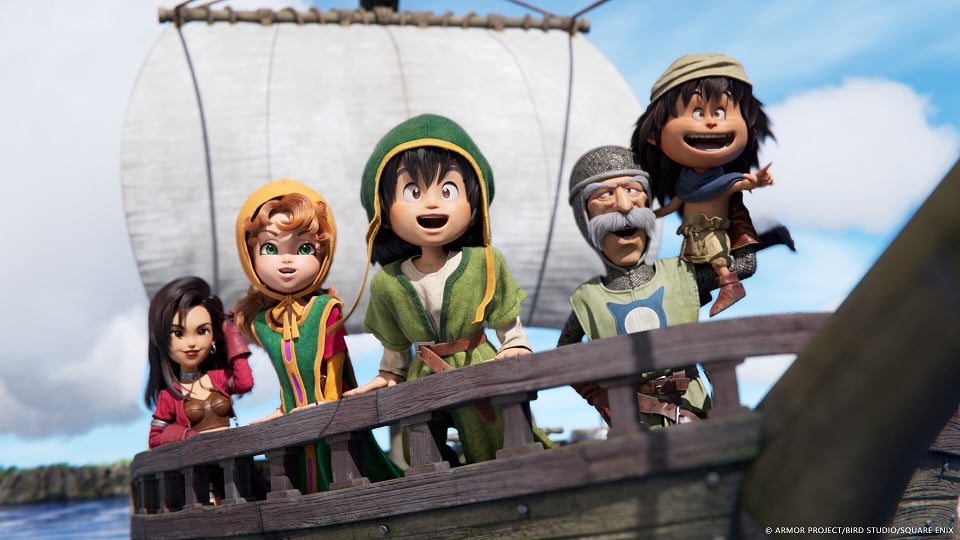
Thanks to the recent success of Dragon Quest I & II HD-2D Remake and Dragon Quest VII Reimagined, it seems that the popularity of the Dragon Quest franchise is as strong as ever. However, Japanese gamers and X users alike suggest that Japanese youth recently seem way less enthusiastic about classic JRPG franchises such as Dragon Quest and Final Fantasy, with some having never played a single entry in the series.
Post translation:
Me: “Dragon Quest has been getting a lot of attention lately with all the remakes. It may be overtaking Final Fantasy in terms of popularity. Come to think of it, which franchise does the younger crowd prefer, Dragon Quest or Final Fantasy? I’ll ask them.”
Youngster A: “Pokémon.”
Youngster B: “Pokémon.”
Youngster C: “Pokémon.”
Youngster D: “Pokémon. I’ve never played Dragon Quest or Final Fantasy.”
Me: “…”
Game artist turned manga author Noriba initiated the discussion on their personal X account. The post garnered numerous comments, with many speculating as to why older RPG franchises aren’t as popular anymore.
One popular theory focuses on how the relevance of the aforementioned franchises is affected by the development times of their mainline titles. Whereas mainline Pokémon games and their DLC have been releasing roughly every year since 1996, the last mainline Dragon Quest and Final Fantasy titles came out in 2017 and 2023, respectively. To be precise, Dragon Quest XI released around five years after its predecessor, and Final Fantasy XVI came roughly seven years after Final Fantasy XV. This does not count remasters or remakes such as Dragon Quest VII Reimagined and Final Fantasy VII Rebirth.
While the changes to some mainline Pokémon games aren’t as striking as those in Dragon Quest or Final Fantasy titles, yearly/semi-yearly releases combined with ventures to other genres and platforms have allowed it to stay popular (and profitable) to Japanese youths and their parents.
Considering the average wait between mainline Dragon Quest games ranges from five to ten years, children would have either graduated elementary/middle school before another title is released or never experienced one at all. No matter the case, the lull in releases wouldn’t allow either of the two series to leave a lasting impact on the childhood of today’s youths.
That’s nothing to say of the legacy that these classic RPGs carry. In addition to Dragon Quest and Final Fantasy titles carrying numbers in their titles (making it seem that people need to play earlier entries in the series), some veteran players notice that recent entries are more geared toward longtime players.
There are other theories, such as one that cites a recent survey by Gem Standard, saying that younger gamers tend to prefer more popular, twitch-based multiplayer titles such as Apex Legends, Fortnite, and Valorant. On the other hand, the research suggests that Dragon Quest and Final Fantasy series have more popularity among older users. Another theory talks about the availability of consoles, with systems like the Nintendo Switch and Switch 2 being cheaper and more accessible than a PlayStation 5.
While it isn’t fair to say that all Japanese youths are more inclined to play popular games than classic RPGs, there’s no denying that the number of overall video games available has dramatically changed in recent years, providing kids with more options than ever before. Despite this new environment, it stands that whatever media a person is exposed to during their childhood will likely stick with them for life.
Related:

Also because Final Fantasy hasn’t had a good mainline game since the PS2 era and younger people are playing things like Persona, Fire Emblem, Trails, Atelier, Fromslop games and even unfortunately modern day Pokémon games. Brands only stay relevant if the quality remains good.
This was common knowledge 20 years ago. Remember when you had DMC, Final Fantasy, Dragon’s Quest, Persona, SMT and everything all in 3 years alone and it was all on rotation like a Sushi Conveyor belt? That was because of solid management and the realization you had to have content coming out otherwise you would lose your spot and someone else would take it. Frequency, Quality and Priorities are the most important thing to think about. Sadly this generation of younger gamers are lost to Multiplayer, Live Services and Gacha with the occasional one time Indie Purchase every few years, and the yearly Pokemon title, before they click the play button on Steam into those Multiplayer and Live Service experiences again as their default. While only the 40+ crowd focuses on their legacy titles and holds the industry back with remakes and remasters without letting anyone do anything new at times.
They will need to do a huge directional shift for the next generation and beyond otherwise this will be the future and we will be living under a non single purchase system, but Multiplayer, Gacha and Live Services as a whole. I hope the suits in Japan wake up including the West to realize this is about survival due to demographics.
It makes sense. Games take way too goddamn long to come out anymore and too many big companies are badly mismanaging their IPs. Say what you want about Pokemon’s quality, but it releases frequently enough that you won’t have enough time to forget about it by the time another one comes out.
It also doesn’t help that Final Fantasy hasn’t made a new title worth caring about since the PS2. I love the FF7 Remake series, don’t get me wrong, but that’s still technically a title from the PS1.
Dragon Quest has been consistently great, but they still come out way too far apart. They need to pick up the pace on game development or they’re going to fade from relevance once the older generations of gamers die out.
Has anyone considered the fact that there are far more studios making RPGs, though? Even indie devs. If someone wants a classic Final Fantasy experience, there are games out there that aren’t made by Square Enix that fulfill that quota. There are so many choices now, and that’s a good thing. The old franchises (FF, DQ) are aimed at older audience. The issue isn’t the long dev times, there is no issue. You just need to embrace older audiences, stop going for live service and gacha, and acknowledge that there are TONS of other studios, big and small, who create games in this genre now. It’s not the same landscape from the 80s or 90s when this stuff was new. It’s widespread. Look beyond the big studios and you will find your games. Young people see that too. Many Japanese players are moving away from consoles and onto Steam, and guess what’s on Steam? Indie devs, small devs, and a lot of RPGs in that style. Dragon Quest and Final Fantasy are now aimed at people in their 30s. Of course children won’t play them. Adults do. Those are franchises for adults, and you should embrace that. Kids can find RPGs all over Steam and Switch stores. But those aren’t made by Square Enix. And that is not an issue at all!
I’d argue the only reason that it was Pokemon that the Youngsters played is because Pokemon stole Dragon Quest’s reputation since the original Red and Blue games.
All you have to do is look at Dragon Quest monster designs and look at Pokemon monster designs some are very similar.
All in all; Dragon Quest and Final Fantasy are the Superior RPGs to Pokemon because You’re the actual hero doing the fighting in most of them not you having your monster allies fight for you.
There is also the fact of the stupidest idea ever.
Digital only gaming, if that becomes the norm and the only way to get games. People who usually got the physical releases will eventually just stop playing all together.
The Gaming Industry is destroying itself due to the Industry decisions being Stupidly Focused on Digital only releases as the days go on.
When what they should do is have a balance of Digital and Physical releases
And I don’t know, have a freaking Reason for people to get the Digital version specifically.
Like “You download the game you get the DLC added as a bonus”
Making it so if you have the physical release you still have to pay money to add DLC.
Sounds scummy, but Nowadays that’s exactly what Companies are…. Scumbags who are out of touch with the consumers
And another thing, the stupidity that is the EULA laws system being most definitely flawed. How so you may ask ?
Well, let’s see…… People have recently started noticing (especially because of Nintendo now saying the Quiet part out loud)
“According to the EULA laws; Consumers do not own the product that they purchased, they merely have a license to use the product. If the consumer doesn’t comply to certain rules, they will than lose the right to use the product (Examples of these: The company threatens to lock up your console remotely. Ect, ect, ect)”
Dragon Quest may still consider it’s older audience until the next mainline, but FF certainly isn’t considering them with the direction the FF7 reimagining has gone. They have no issue with ports and varying quality remasters.
If kids are playing modern Pokemon and is their childhood, I’m glad I grew up when I did.
There are so many JRPG titles, just not from the big publishers as often unless AA titles
Article should have also addressed how Final Fantasy has drastically altered its gameplay in the chase of these younger players. It hasnt worked, and has only alienated many older fans.
What I have to ask is, in this article, you state Pokémon games “have been releasing roughly every year since 1996,” while with DQ & FF:
“the last mainline Dragon Quest and Final Fantasy titles came out in 2017 and 2023, respectively. To be precise, Dragon Quest XI released around five years after its predecessor, and Final Fantasy XVI came roughly seven years after Final Fantasy XV. This does not count remasters or remakes such as Dragon Quest VII Reimagined and Final Fantasy VII Rebirth.”
But Pokémon’s yearly releases HAVE been dependent on spinoffs and remakes, so why doesn’t Final Fantasy VII Remake, Final Fantasy VII Rebirth, & Dragon Quest VII Reimagined count??
Culture and memories. Don’t forget that pokemon did what Nestle did for coffee in Japan.
Pokemon is everywhere, every time. The main game, spin offs, physical games, cartoon, manga, food.
So of course pokemon is in the Gen Z and alpha’s memories.
I mean… Square Enix can’t even get a FF7 Remake out in one hardware generation. I absolutely agree that it’s harming franchises like Final Fantasy, Kingdom Hearts, and Dragon Quest. Even Tales Of has slowed down.
I am curious about devs like Falcom and Gust. It seems like Ys, Atelier, and Trails are keeping up a steady release schedule. I wonder if that’s building their audience in a meaningful way.
At the same time Pokémon games have gotten steadily worse year after year largely due to having such a short development cycle. There has to be a happy middle ground between 10 years and 1 year.
It boils down to how kids get into contact with games which is typically a nintendo switch, phone, or tablet. For the older generation we had exposure to only 1-2 console. Today now that the industry has grown from its infancy has grown into many games which its like a ocean compare to the pond we are used to. Too many genres and too many competitions fighting for your attention.
There also hasn’t been a good Final Fantasy or Dragon Quest since 2000, so there’s that…
That’s what I been saying, ff and dq are gen x. We’re getting older now. Gen x wants the remakes more than any generation. Hurry up before we’re all dead please lol
Dawg what do you mean “never seeing stark changes like Dragon Quest”? Dragon Quest games hardly change at all. Also Pokemon games haven’t been releasing new generations since 1996. They’ve never done that, Red/Green released in 1996 and Gold/Silver released in 1999 then Ruby/Sapphire 3 years after that. Also it seems to do more with the fact that unlike Dragon Quest and Final Fantasy, Pokemon is a multimedia franchise and isn’t just limited to games. Even if you don’t play games you could still be exposed to Pokemon through other means. Lastly, is Pokemon not also a “classic RPG”? It certainly is one of the big RPGs of its time and even now…