

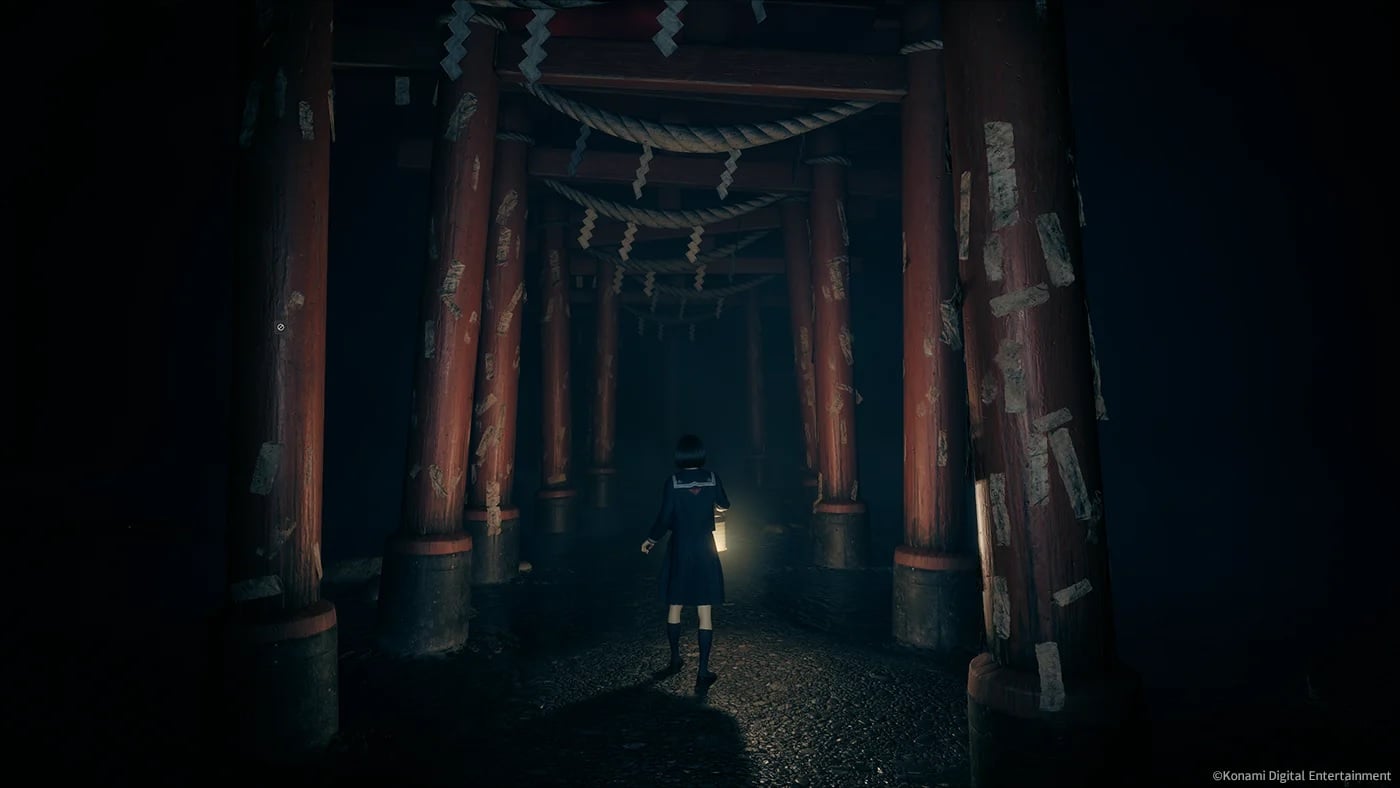
In a recent interview with Dengeki Online, Silent Hill f writer Ryukishi07 and producer Motoi Okamoto shed some light on the religious background of the latest series entry, and talked about a scrapped initial idea for the game’s lore. As Ryukishi07 explained, the development team’s initial plans for the story were to make it more like past Silent Hill entries, complete with a mysterious doomsday cult pulling the strings behind the scenes. However, with the latest title being set in Japan, the devs decided to scrap the idea in favor of a more “authentically Japanese” approach.
“One of our earliest ideas was to make a literal Silent Hill set in Japan, with a religious cult operating behind the curtains, just like in previous series entries. However, when I was working out the initial idea with Mr. Okamoto, we came to the conclusion that, rather than just setting the game in Japan, we should write a story that can only be written in Japan. So, I decided to go all in with the Inari mythos and all other legends unique to Japan,” said Ryukishi07.
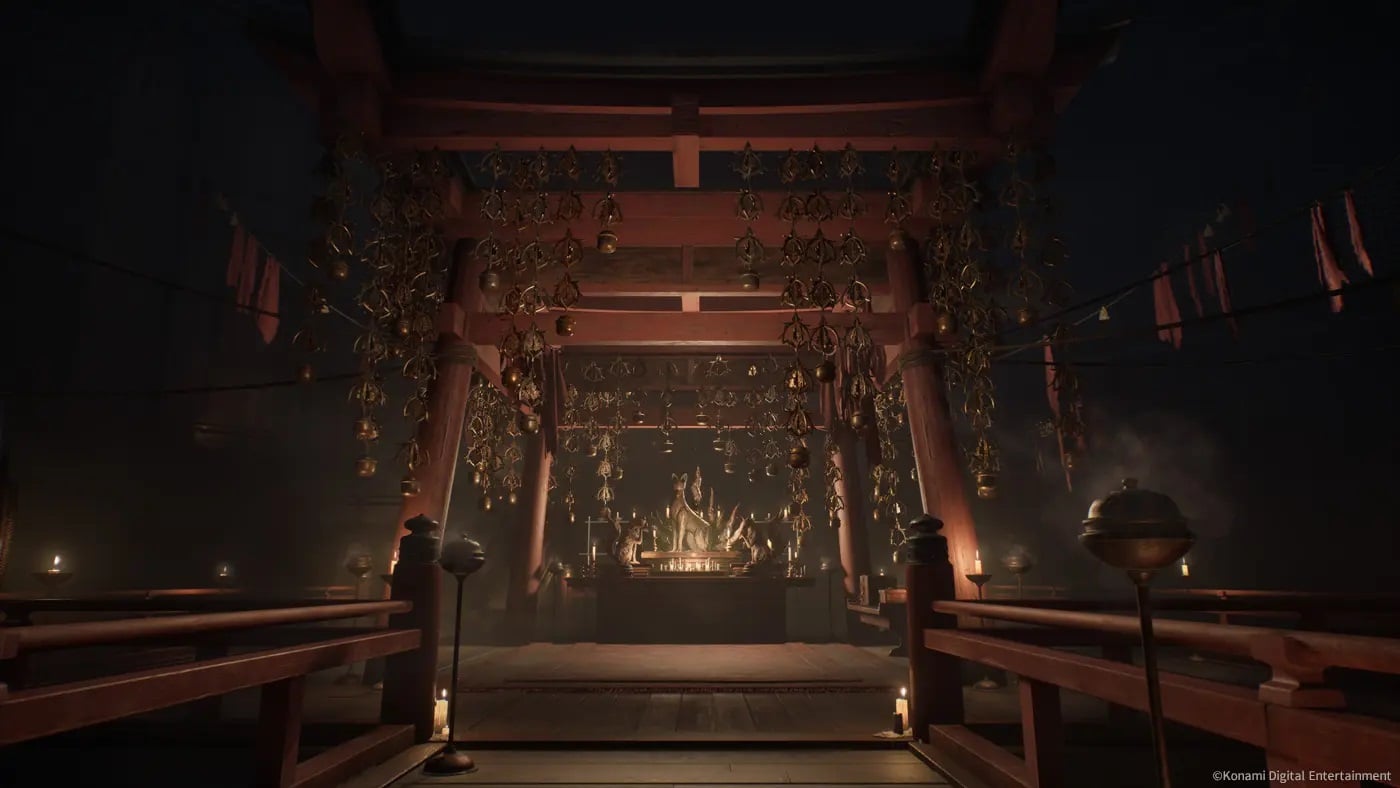
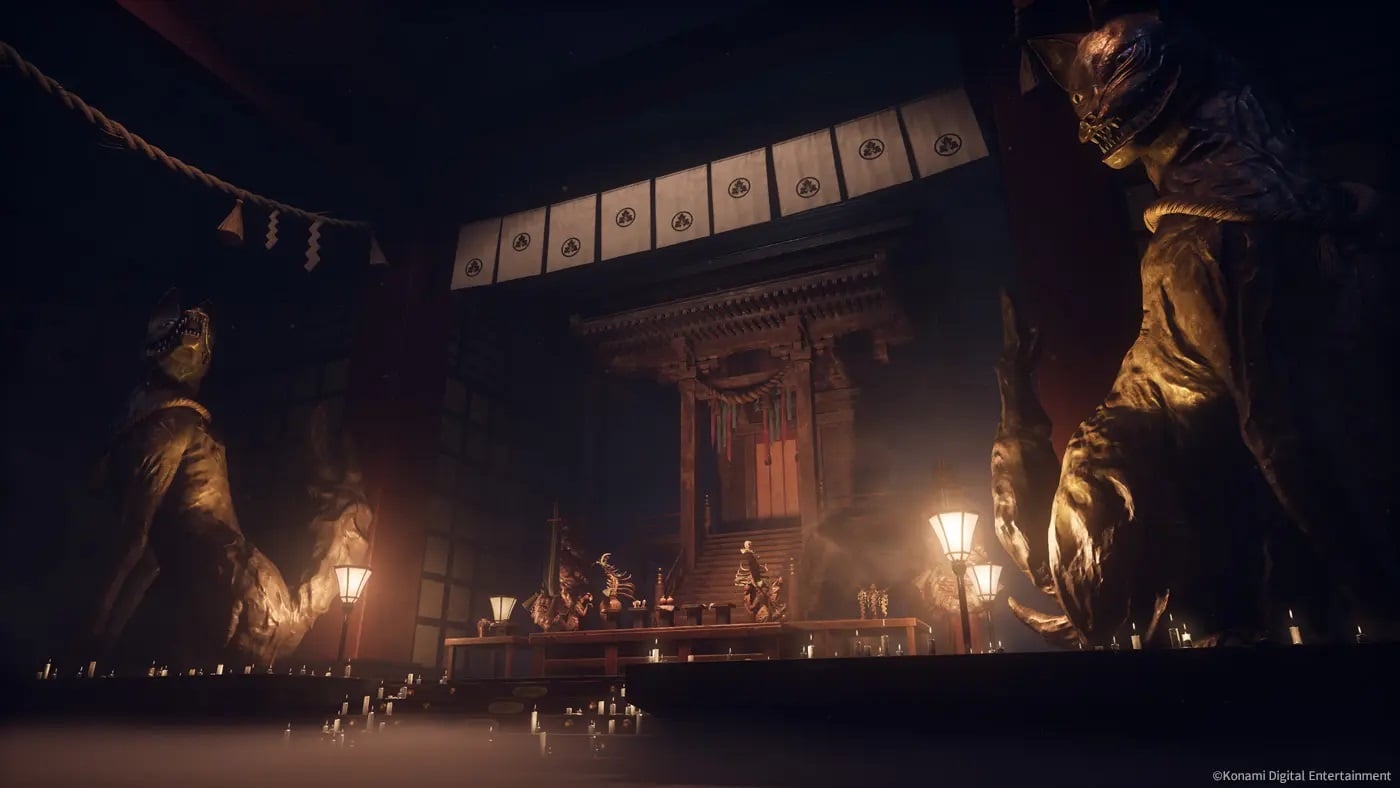
But despite packing the story with numerous motifs that would only make sense to Japanese people or those who are well-versed in Japanese tradition and mythology, the devs didn’t fear this would impact how the game performed in the West. In fact, Ryukishi07 says the team didn’t have any doubts that overseas fans would appreciate the switch of focus towards a Shinto-oriented worldview. “Of course, we were certain that overseas fans of the Silent Hill series would be able to digest the mythology behind it – we expected and trusted them to understand it,” he commented.
“The understanding of religion differs in Japan and overseas. Previous Silent Hill titles are based on the Christian world, a religious outlook which states that there is a so-called one true God,” Okamoto added. With the story taking place in Japan, the developers wanted to fully leverage the Japanese polytheistic mythology and religious motifs. “There’s probably a portion of people who have a solidified image of what kind of god is the God of Silent Hill, but remember, the Western and Eastern gods are different. Being created with the Eastern understanding of God(s) in mind, that might be one of the most distinct characteristics of f,” he explained.
Related articles:
No wonder the game was mid
Kinda sucks that the theming and messaging went over a lot of people’s heads. The have is fantastic and does well for the franchise
I was digging the story and theme. It was the fighting system on my ps5 that had me walk away
Suprise, surprise. Most people did not, in fact, “get” or appreciate it. Media literacy is dead and most of the people who were complaining about the game at launch didn’t even play it; they were basing their opinions off of tiktoks.
Pretty sure all but one Silent Hill was developed in Japan by Japanese developers. It’s inherently Japanese.
That’s why the game sucks ass. They should of left theat shit out of it.
We already knew that the right wingers calling the game woke were just too ignorant to get it.
thank god. by 3rd game i was already tired of the cult narrative that was overdone and also a ridiculous concept. it makes sense a cult like that works for a time but over time it becomes a trope how that kind of small group isnt stopped.
the games need the concept that evil spirits are strong in themselves and dont need mere humans to call them up every corner.
2 is the best game because the cult serves no purpose, or doesnt even exist really. its just a bunch of survivors with their mental problems
small clarification that i also liked how first game handled the cult and how they re-initiated the old folktale and caused monster uprising. but after that the series needed to let loose and just go with “cult released evil, now evil is roaming in this area and taunting people mentally, and you cant really eradicate them completely”. not more and more cultists who serve no purpose really except some pointless villain dialogue
I’ve platinumed this game on 2 different ps5 accounts bc it’s that good. Idk what this “mid” stuff is about, the game is great and gets better with each playthrough, each document collected, each puzzle piece put together. The ideals are great, nobody is actually “the bad guy” besides the gods you have to fight and the societal pressures/misogyny/abuse. Even kotoyuki admits he was forced into this, due to the tsuneki clan and their past with the shimizu family sacrifices and the magic spell produced in the shimizu clan blood that causes the inari god to obsessively seek out to marry whoever the “magic blood” carrying girls in the family are, and he states he would also like the chance to choose (this is in the “true ending” of the game). Shu just wanted to keep his bff, Sakuko and Rinko were just hurt and jealous and too young to express that healthily. And hinako just wanted the option to decide for herself and control her life with her own choices.
So basically, if you didn’t read all the documents and play all the ng+++++ for all the endings, then your opinion is incomplete and not based on all facts available and is, therefore, irrelevant. Or, dare I say, just flat out wrong lol
Also Japanese mythology is so much more interesting anyway. Don’t get me started on the fact that you ultimately fight a kurama and susano-o