

Former Sony executive and video game industry veteran Shuhei Yoshida recently attended WePlay Expo 2025, one of the biggest indie game events in China. In an interview with 4Gamer, he talked about his impression of the Chinese video game industry after seeing it up close, and pointed out some differences he’s noticed compared to the game industry in Japan.
“The development speed in China is amazing. They’re also quick at changing personnel, and all of the game development work itself unfolds rapidly,” Yoshida remarked. The large production scale of Chinese games has been a hot topic among Japanese creators, and even seasoned industry veterans like Yoshida seem to agree when it comes to specific fields like animation.
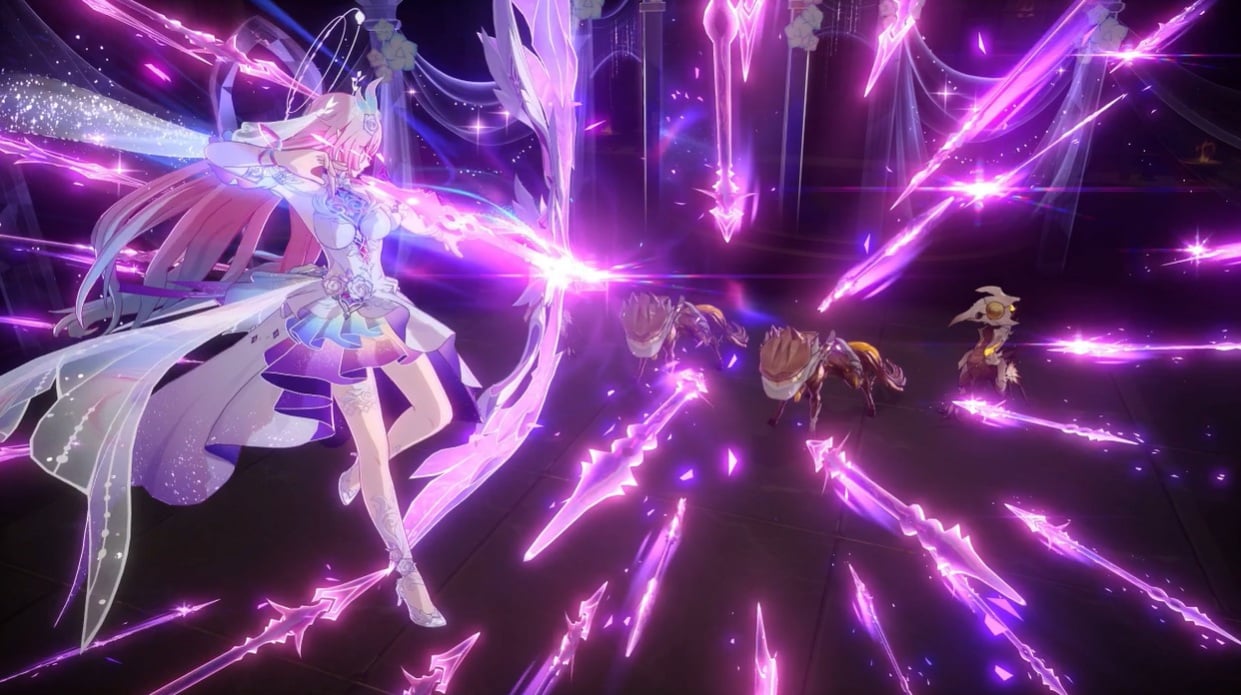
Reminiscing on his past encounters with Genshin Impact developer miHoYo, the former executive suggested that Japan still has a long way to go to match the scope and speed of Chinese development.
“Back when I talked to representatives of miHoYo, we discussed how it would be quite difficult for Japanese developers to make games in the same way miHoYo does. Not to mention the legal problems that would come with it,” said Yoshida. “I wonder if there are some aspects [of the development process] that Japanese game developers just can’t replicate. One reason why games in China are so strong is because they are made in an environment which allows for hiring a large number of personnel who can work long hours. Of course, you never know what might happen in the near future, but looking at the current state of things, I think that’s the biggest factor.”
Last month, HoYoverse announced Varsapura, their brand-new title built in Unreal Engine 5. Yoshida praised the company’s work, theorizing that this could be miHoYo’s attempt to see how far they can take a realistic, “high-end” title, breaking away from their tradition of anime-styled games like Genshin Impact or Honkai: Star Rail. He also suggested that business-wise, projects like Varsapura are miHoYo’s way of staying ahead in the industry. “Other Chinese developers and even Korean developers are releasing ‘miHoYo-like games,’ but it feels like miHoYo is aiming to be one step ahead of them.”
Related articles:


Quality over Quantity Yoshida, Quality over Quantity.
The usual Japanese inferiority complex and ignorance. The chinese have very bad working condition, basically slavery, worst than Japan. The turnover of staffs is not because they resigned, but died. Karoshi in japan.
What about quality and quantity? That’s what this article is about.
Take a look at Wuthering Waves, that’s the most cinematic anime-style game yet, even when compared to offline games. Or Infinity Nikki, which has done what every other dress-up game couldn’t. Even Mihoyo – a company that I love bashing on, by the way – is so much ahead of Japanese studios that are working on online games, from development to global publishing, the whole production pipeline.
The fact that Chinese online games are the only Asian online games that can operate globally without third-party publisher and region block speaks volume.
Shouldn’t be trying to replicate slave labor either way, fellas
What’s the point of having so many Mihoyo games if most of them are boring and lack substance?
What a strange take that can be interpreted different ways. He realized that the CCP has a great degree of control and how China’s industries work. They could crunch, be recycled out when can’t keep up and machine presses on. Japan I can see admiring having regulations on worker treatment and that’s not much as is.
Japan also spits out gacha games half-heartedly with the chance it won’t last long in mind, not investing in it like their best productions. That’s the big difference with Genshin, but could be also Korea and China are just better at manipulating consumers in how they approach gambling.
Japan is playing it safe, so of course they will look to others instead of doing what they did best. It’s just Yoshida’s take, yet many others feel AA isn’t worth it and keep pressing on with trying to replicate the West or holding back devs from growing. That success put Japanese games ahead and that was followed/alongside technology. They succeeded pushing ahead and with limitations. I’m not sure they promote their indie scene as much as they could,either.
Yeah im not playing Chinese games because they are crap. Hope the Japanese just continue as they are.
Quality is the issue with games. Too much focus on eyecandy and graphics too little on story and mechanics, games are bloated and impossible to run even on super computers…
With that said I will never support inhuman working conditions.
That comes with a cost though like too much competition for applying and worse working conditions . It isn’t a good formula to emulate unless you really want slaves not creatives working in the space
@RaidenEi
If miHoYo games are boring and lack substance we haven’t even gotten Japanese and Korean games on par with what miHoYo games does. You want to evaluate that opinion again?
Mihoyo is a case that can only be replicated with a significant fortune: they take most of their profits, and invest it back into their games. This includes hiring an entire team to work on upcoming titles. Honkai Star Rail was their last game to be worked on by a team that already had pre-existing games to work on, those being GunsGirlsZ and Honkai Impact 3rd. Even their Varsapura video was a Help Wanted ad for yet another dev team. And they never stop spinning off ideas, which they often test as event modes in their games, mostly in HI3. Small companies lack the capital to pull this off, and large companies that might be able to simply don’t operate this way, and may be slow to pivot. Mihoyo also doesn’t like putting their eggs in one basket because of when developing ZombieGirlKawai nearly bankrupted them. Do there’s a lot going in to how Mihoyo operates, not accounting for the governmental influence. And let’s be honest, the government let’s them get away with things they wouldn’t allow others to simply because of the money they bring in.
Kuro Games is probably the closest to Mihoyo, especially since some of the founders worked on HI3, but to do what Mihoyo does, Kuro would need a lot more money, and the ability to scale things way up. As awesome as that would be to see, every time Mihoyo foreys into a new genre, they grab more of the potential market. And they have name brand recognition to drive success. You see ‘Hoyoverse’ on something new, you likely go “oh good, I wonder the heck they’re releasing next.”
How do you know if you’ve never given them a chance? When Mihoyo made Honkai Impact 3rd, they redefined what a mobile game could be. And that game earned them enough to make Genshin a multi-language, cross-platform international release. That was when they only had 2 dev teams. Now whenever they want to make a new game. They go hire a new team. Look at the Varsapura video they put out. It’s a 30 minute Want Help ad.