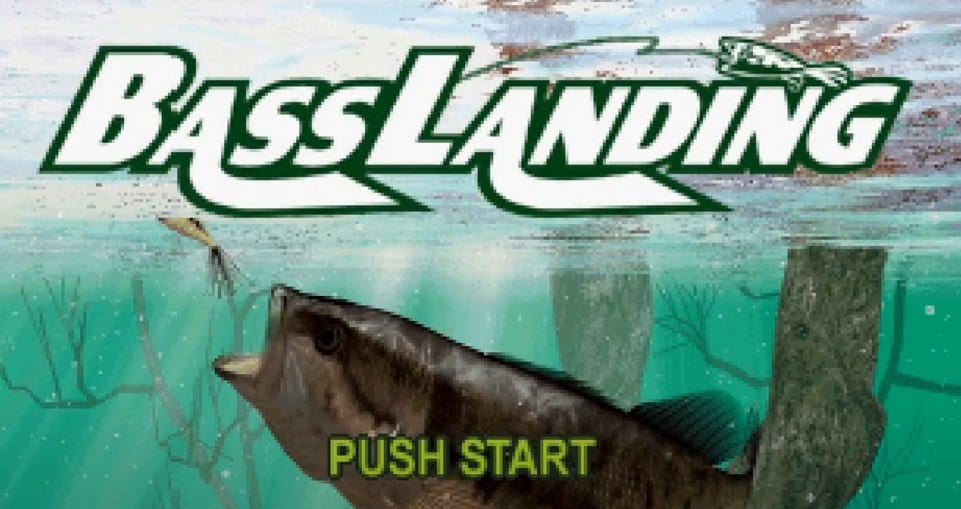
Bass Landing, developed by Tose, is a fishing simulator published by ASCII for the PlayStation. Praised for its realism and high attention to detail, the game managed to reach a somewhat cult classic status in the fishing games genre. In a recent interview with Game*Spark, former ASCII developer and producer Takeshi Kaneda shed some light on the creation of the game and the development process behind its dedicated PlayStation “fishing reel” controller.
Apparently, Bass Landing was pitched by one of Kaneda’s coworkers, who was, coincidentally, a hardcore fan of fishing, and the high level of realism (including the implementation of the fishing reel peripherals) was achieved thanks to ASCII’s meticulous approach to game development.
“Back in the day, one of my friends, Nagano Atsuya, an ex-developer at Cybertech Custom who worked on Metal Orange and Carat, was super into fishing. And he tried to convince me that a game about fishing would definitely sell. At the time, I wasn’t really that into fishing, but he basically forced me to go fishing with him (laughs).”
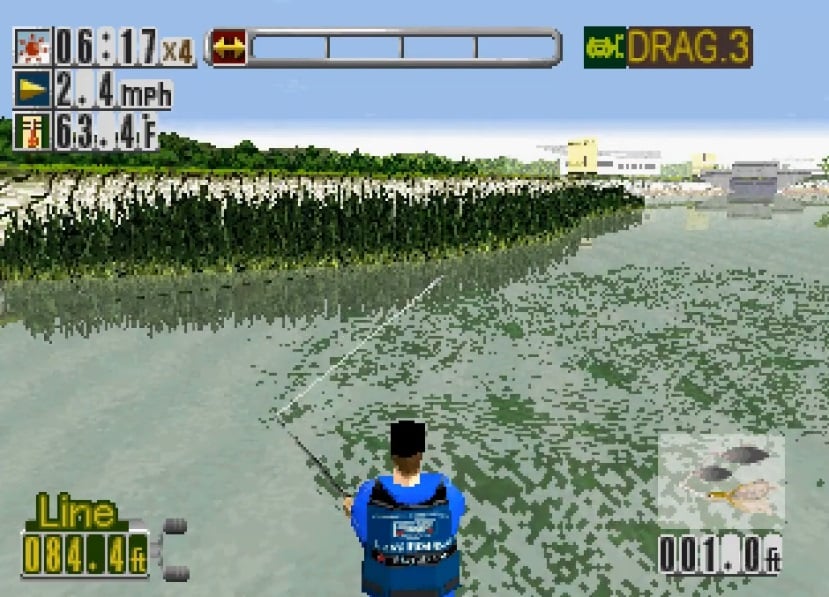
However, Kaneda admits that Nagano had a keen eye for games, “and from that passion, Bass Landing was born.” At the time, ASCII didn’t have a team that would be able to tackle the fishing simulator genre, so development was handed over to Tose, with supervision by Kaneda. Like Nagano predicted, the game sold pretty well at the time of release, but as Kaneda reveals, “it wasn’t only the game that sold.” Due to its ingenuity and rather intriguing concept, the dedicated “fishing reel controller” also sold really well. Dubbed the “tsuricon,” ASCII developed the bizarre peripheral not just for the PlayStation, but later also for the Nintendo 64 (“tsuricon64”).
“I only just casually proposed that it would be fun to make a controller that looked like an actual fishing reel. And thanks to my fishing-obsessed friend Nagano who suggested stuff like ‘It’s pointless if it’s not as heavy as an actual fishing reel! If there’s no weight, that’s not fishing,’ we managed to create a controller with some really interesting features,” Kaneda explained.
Having actual hardcore fishing fanatics on the team, Kaneda had to make sure that everything about the game, including the reel peripherals, was made as realistic as possible. He remembers visiting numerous fishing equipment manufacturers during the development of the controller, which is how he got to test out different kinds of equipment to use as a reference. Apparently, he also compiled detailed data on the lures, and even ordered maps of lakes, measured them, and took actual pictures to base the game on.
Discussing this kind of meticulous approach to game creation, Kaneda highlights the importance of developers being particular about even the finest details, which is what makes ASCII’s games so unique. “This also goes for Mr. Sonobe’s Bestplay Baseball and Derby Stallion, as well as Bass Landing, but the creators’ dedication and attention to detail is crucial. Games which don’t have it usually fail to stand out.”
Related articles: