

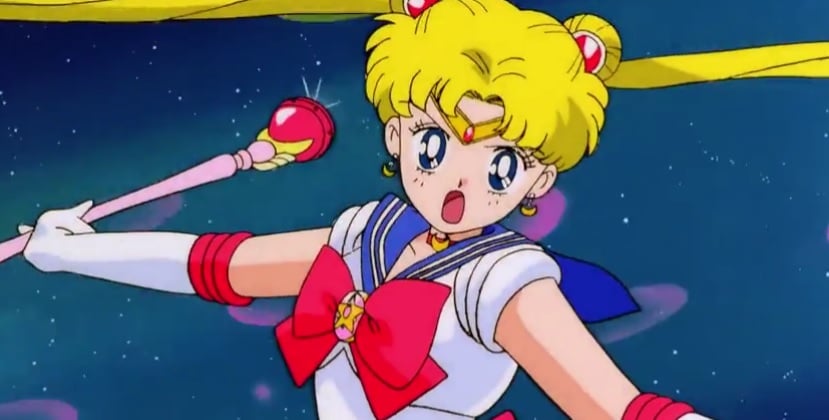
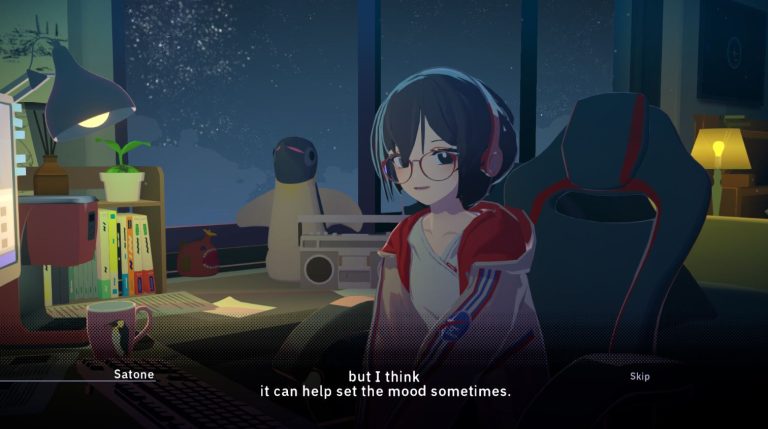
One of anime director Kunihiko Ikuhara’s most recent projects that many fans may have missed is Ikuni to Unmei no Cinema Snack (The Cinema Snack-Bar of Destiny With Ikuni), a cosmic cinephile podcast in which three aliens gather to talk about film, exploring the themes and symbolism behind both mainstream and more niche corners of cinema culture and history.
In one of the earlier episodes of the podcast published last year, the “three aliens” analyzed the themes of Suspiria (1977) through the lens of Japanese witch and magical girl tropes. And when talking about magical girls in a broader sense, Ikuhara’s works like Sailor Moon and Revolutionary Girl Utena are often brought up as some of the more iconic examples. However, in the podcast, the director himself stated that he doesn’t consider any of the anime he’s worked on to be in the magical girl genre – not even Sailor Moon.
But how do they define the “magical girl” trope? To give a brief rundown, Ikuhara traces the roots of magical girls to the American fantasy sitcom Bewitched, which turns the “dark” concept of magic into a more light-hearted slice of life story. An attempt to make a similar story for a younger demographic resulted in Sally the Witch, which is considered the starting point of the “majokko” (little witch) trope. From there, there have been many different variations on witches and magical girls throughout the past 5 decades.
In comparison to Madoka Magica, which is practically synonymous with the word “magical girl” in Japan, Ikuhara defines the various approaches on the genre which were derived from Sally as “light, casual and fun works aimed at girls.” However, he also acknowledges that the original concept of magic/witches which the genre is based on is inherently dark (so, as the co-host Gami-chan suggests, Madoka could be considered a “return” to the genre’s roots). “But what’s so great about the magical girl genre is that in it, girls can use otherworldly powers and take the spotlight in a similar vein to Superman,” Ikuhara says.
“It’s about young girls being able to use mysterious powers, and the almighty feeling of possessing powers which even adults don’t have. Nowadays, there’s way more diversity in what kind of life path a girl can take on once she grows up, but in the ‘60s and ‘70s, when Sally the Witch and the magical girl genre started, I don’t think that was entirely the case. So from that point of view– the idea that they could use magic was thrilling to young girls back in the day.”
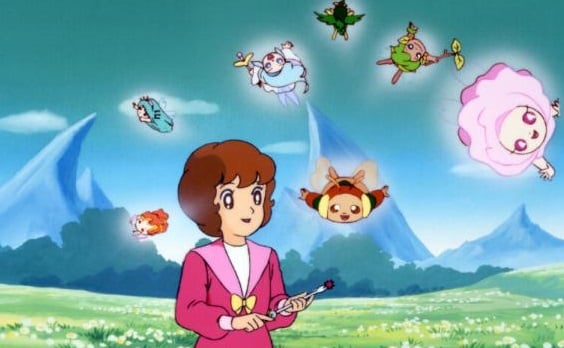
However, when asked about the Sailor Moon series specifically, Ikuhara explained that he doesn’t consider it to be in the magical girl genre, and that it’s, in his opinion, closer to the “henshin hero” genre (The Kamen Rider and Super Sentai series, for example, fall under this category). “I often get called a director that’s good at making magical girl anime – but listen, I actually haven’t worked on a single one. It’s a pretty rough generalization,” Ikuhara says.
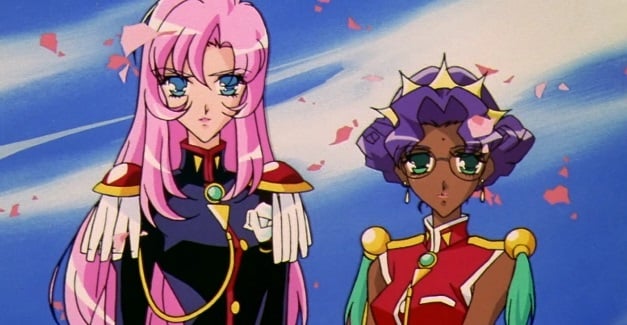
Furthermore, Revolutionary Girl Utena is often cited as a subversion or a more dark take that plays around with the genre’s tropes, however, according to Ikuhara, even though Utena does feature a “magic wielding” character, it’s not really a magical girl anime, per se. “The theme of witches appears in Utena as well, so I assume that’s why they often call it [a magical girl anime]. Though I don’t really think Utena is a magical girl in particular,” he explains.
Most of Ikuhara’s original works, including Mawaru Penguindrum and Yuri Kuma Arashi, feature iconic female characters, transformation scenes, and have a unique surreal/fantasy vibe to them – which is all reminiscent of magical girl tropes. However, given the director’s explanation, none of them are technically intended to be interpreted as magical girl anime.
Related articles:
His definition of magical girl anime is wild, I can’t imagine many share that view. Sailor Moon is practically a staple of magical girl anime…saying it’s not one at all is insane.
He’s seen Bewitched 😁
This is Essentially correct. But also Incorrect.
Sailor moon… Bishoujo Senshi Sailor moon. It’s literally a Sentai Series, with Magical Girl Elements. Just ask it’s creator, Naoko Takeuchi.
Utena… Is Definitely NOT a Mahou Shoujo. Definitely not.
No, The Following, However, are indeed Mahou Shoujo, and were intended to be. Compare these to Sailor Moon or Utena, and you’ll see a huge difference, especially to the latter(Sailor Moon kinda Toes the line, slipping back and forth between two genres, which is exactly the creators intent)
Mahou Shoujo: Cardcaptor Sakura. Magic Knight Rayearth. Tokyo Mew Mew(Like Sailor Moon, Kinda Toes the line), Ojamojo Doremi, and of course, a certain Famous gag series About the Twintail hairstyle.(Not typing out it’s long name)
Now, what do they have in common: a girl/team of girls/Dumb Guy(it happens)/Team of guys/ Mixed gender group get magic, transformations/Costumes, and fight Evil. This is true of both genres, Mahou Shoujo and Super Sentai.
What they do not have in common: stakes. Generally, magical girls are dealing with personal problems and Worries with the World/Universe ending threat as a subplot.
Sentai Heroes are the exact opposite, with the interpersonal Issues and Personal Worries being the Subplot.
In all other aspects, they are Literally the same Genre.
In other words… Kamen Rider? Essentially Magical Girls/Boys for a primarily male audience. Rayearth? Sentai for a primarily female Audience.
As for Utena… It fits in NEITHER category, Belonging to the Fairy Tale Genre instead.
As a westerner I was one of those people that regard Sailor Moon as a magical girl genre. But over the years I kind realized what drew me to it as a kid and that is how much in common it actually has with super sentai show I grew up with like power rangers or my personal fav masked rider (Kamen Rider Black RX).
Anyone who actually does studies on anime would agree with him. Magical Girl as it was originally doesn’t really seem to get made anymore.
But the counter to this is that it’s acceptable to just say Magical Girl is just a more femme Henshin Hero series.
Figured they would classify it as Sentai/Power Rangers after reading the headline. It essentially is. But they also fail to give themselves credit in redefining a genre. Mahou shoujo often defined by the aesthetic nowadays rather than themes.
Nah, man, that’s cap.
He’s right about what magical girl is, but Sailor Moon and Utena are both examples of it. He says the theme is a magical power fantasy for girls, of girls more powerful than even adults, so that the audience can imagine themselves able to accomplish extraordinary goals even against the limits of sexism. In an interview, Naoko Takeuchi says this is her motivation for Sailor Moon: that girls imagine contending successfully w/ supernatural and extraterrestrial evil, so that actually facing patriarchy seems more doable. And w/ a roster of potential ways of being a girl, demonstrated through the Sentai team elements. Granted, the anime targets a broader demo than the manga. Utena, likewise, uses magic to foster girls’ ambitions in the face of patriarchy.