Welcome to our weekend segment, where we showcase recent or upcoming Japanese indie games that share a specific theme. This week, we’re partying up for some multiplayer games, because everything is more fun when you have some friends tagging along for the ride.
Pritto Prisoner
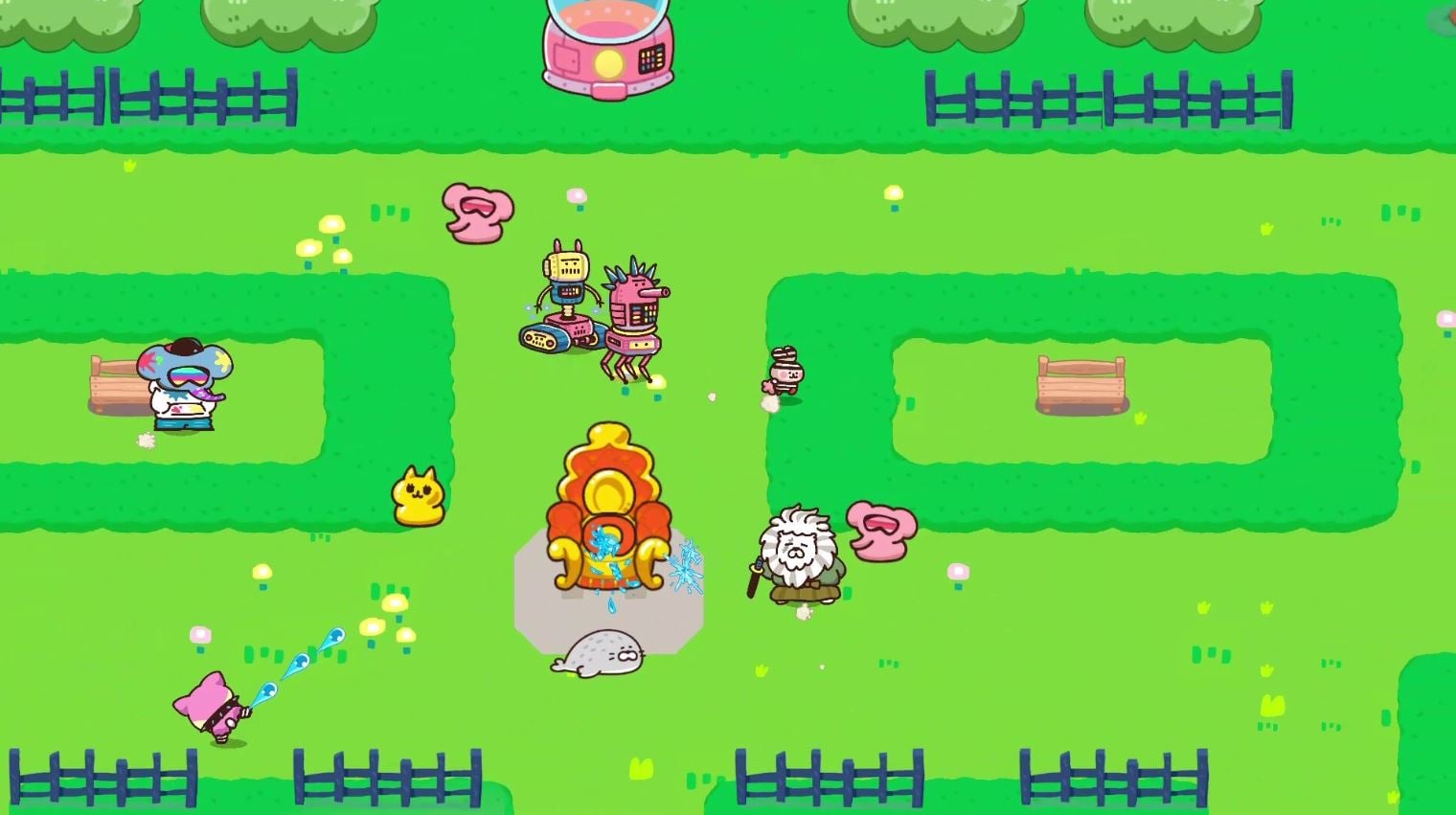
Kicking things off is Pritto Prisoner, a 4V2 party game developed and published by PinCool, a Japanese studio founded by former chief producer of the Dragon Quest series Ryutaro Ichimura. In this upcoming title, players must either escape Prison Island as an animal inmate or capture the felons as a robot security guard.
While the game’s art style is rather cute, both gameplay loops involve using pee and poop to your advantage.
It all begins with the four animal inmates. After consuming food pickups strewn throughout the level, animals must fill several toilets with their Poopie. Only when the toilets are filled does the exit gate open and the animals can make their escape. Apart from serving as a core mission item, Poopie can also be used to activate mechanisms and lay traps for the robots.
Aside from Poopie, Peepee can be accumulated by drinking from water receptacles. Animals can use Peepee to short-circuit chasing robots (marking their locations for fellow teammates) and to destroy surveillance cameras.
Different animals have unique skills which contribute to Pritto Prisoner’s mayhem. For instance, the cat can climb walls, and it gets a temporary speed boost after dropping a Poopie.
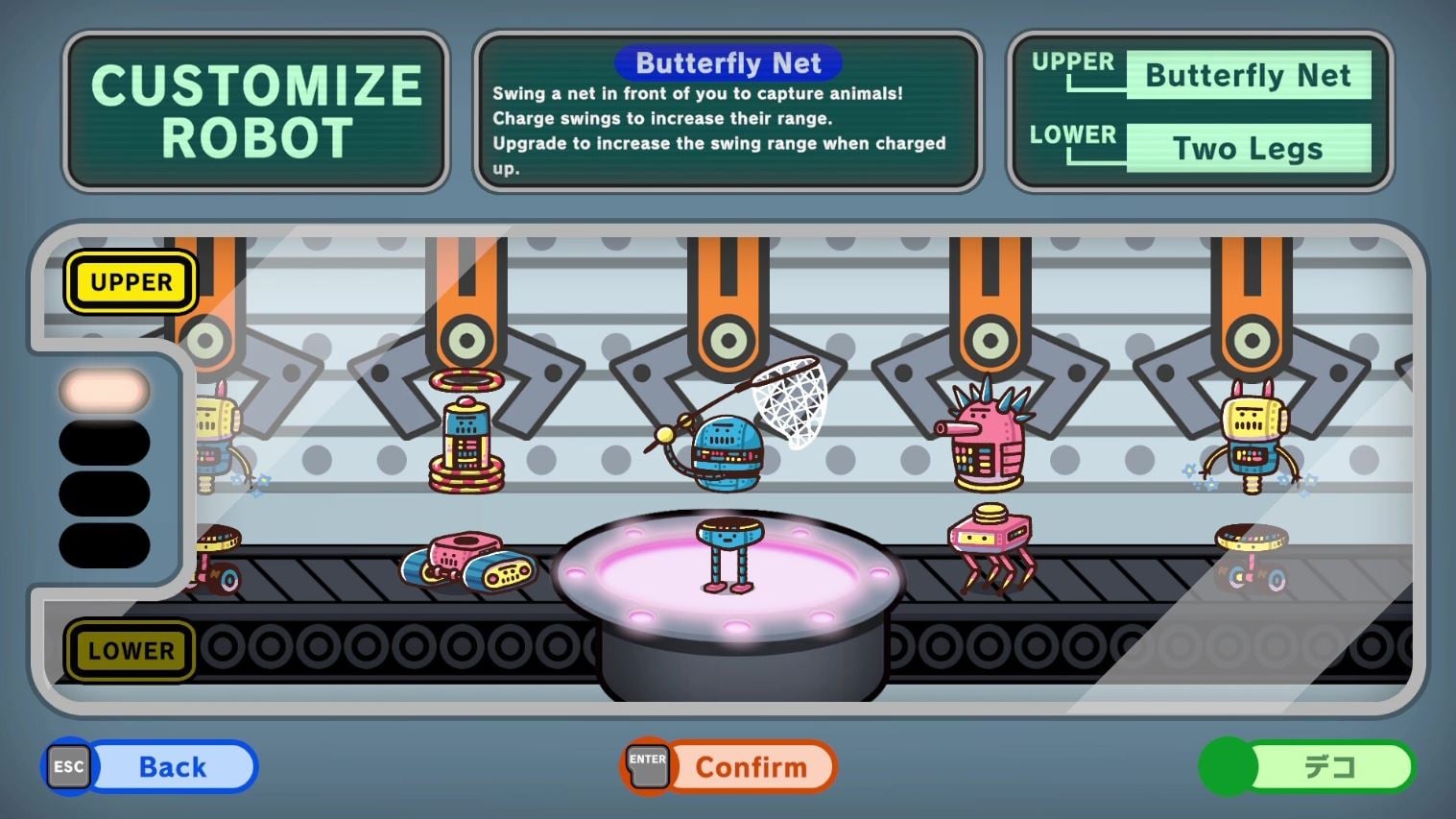
On the other side are the two robots. Unlike the animals, robots are created by mixing and matching parts that provide unique abilities, such as a Stun Gun that stops animals in their tracks or Tank Treads that trade speed for increased resistance to Peepee. In addition to swappable parts, robots can also level up by collecting Poopie left by the animals (this helps offset the fact that the robots are outnumbered 2 to 1).
When a robot catches an animal, the latter is sent to the Nap Room, and a timer counts down until they can rejoin the game. The robots’ objective is to capture all of the animals and simultaneously send them to bed.
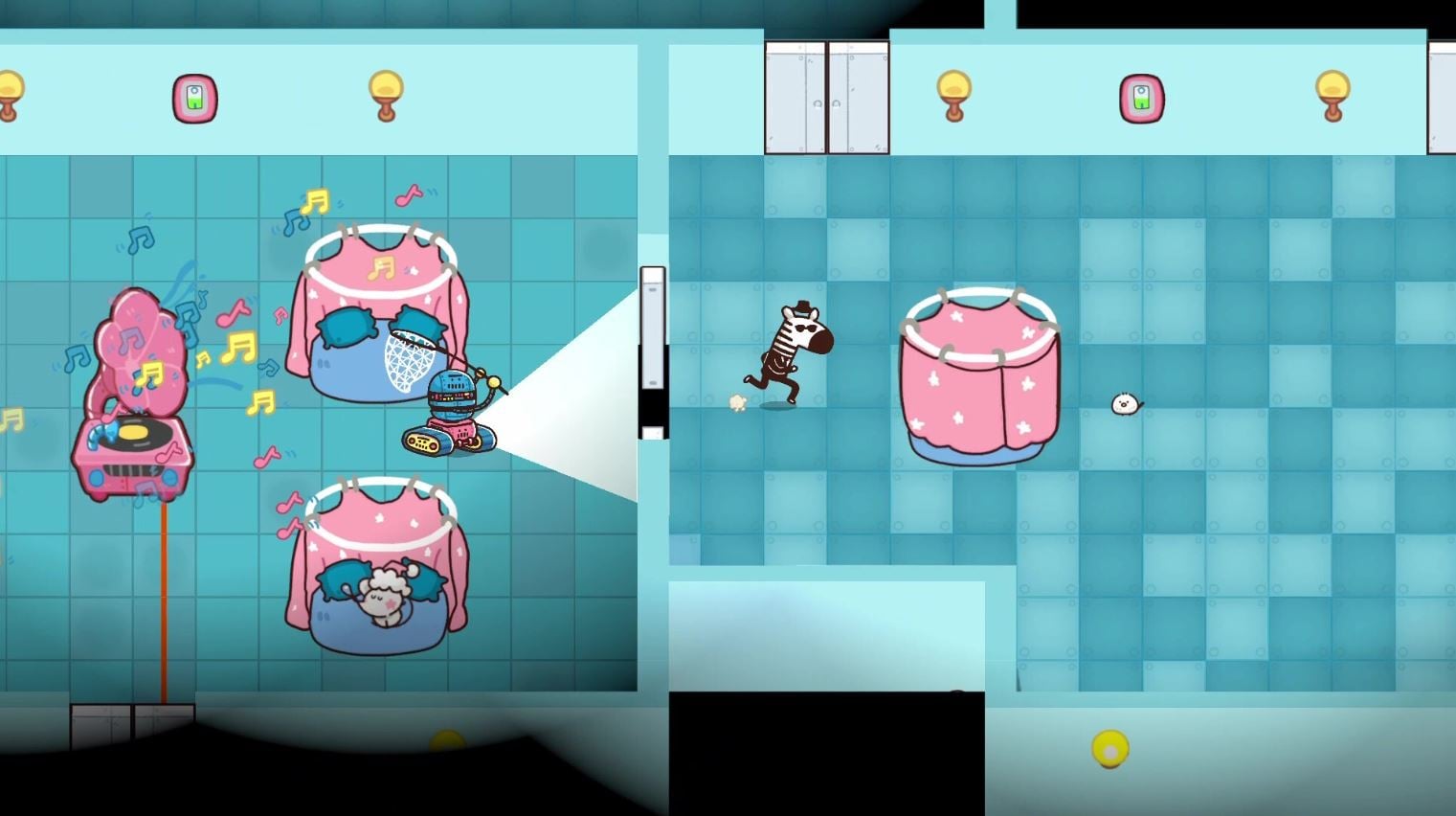
While this may seem like a lot, Pritto Prisoner matches last only ten minutes. Gameplay is fast-paced and easy to pick up, making it ideal for spontaneous game sessions in online coop or private matches with friends. If you don’t have anyone to play with, a single-player campaign lets you delve into the lore of Prison Island and its inhabitants. Pritto Prisoner also features challenges that you can complete for currency to unlock customization items.
Pritto Prisoner is set to release on December 24 for Windows and macOS (Steam), as well as Nintendo Switch and Switch 2. A free demo is also available on Steam.
Deviation Game
If you’ve ever wanted to get back at the frowned-upon uses of AI, then Deviation Game lets you do just that. By pitting yourself and friends against an image recognition AI in a drawing game, you can discover ways to circumvent its thought process and prove that humans are still superior.
Similar to Pictionary titles like skribbl.io, Deviation Game selects a human drawer at the start of each round. The drawer chooses from a series of categories and tries to draw the word they are given.
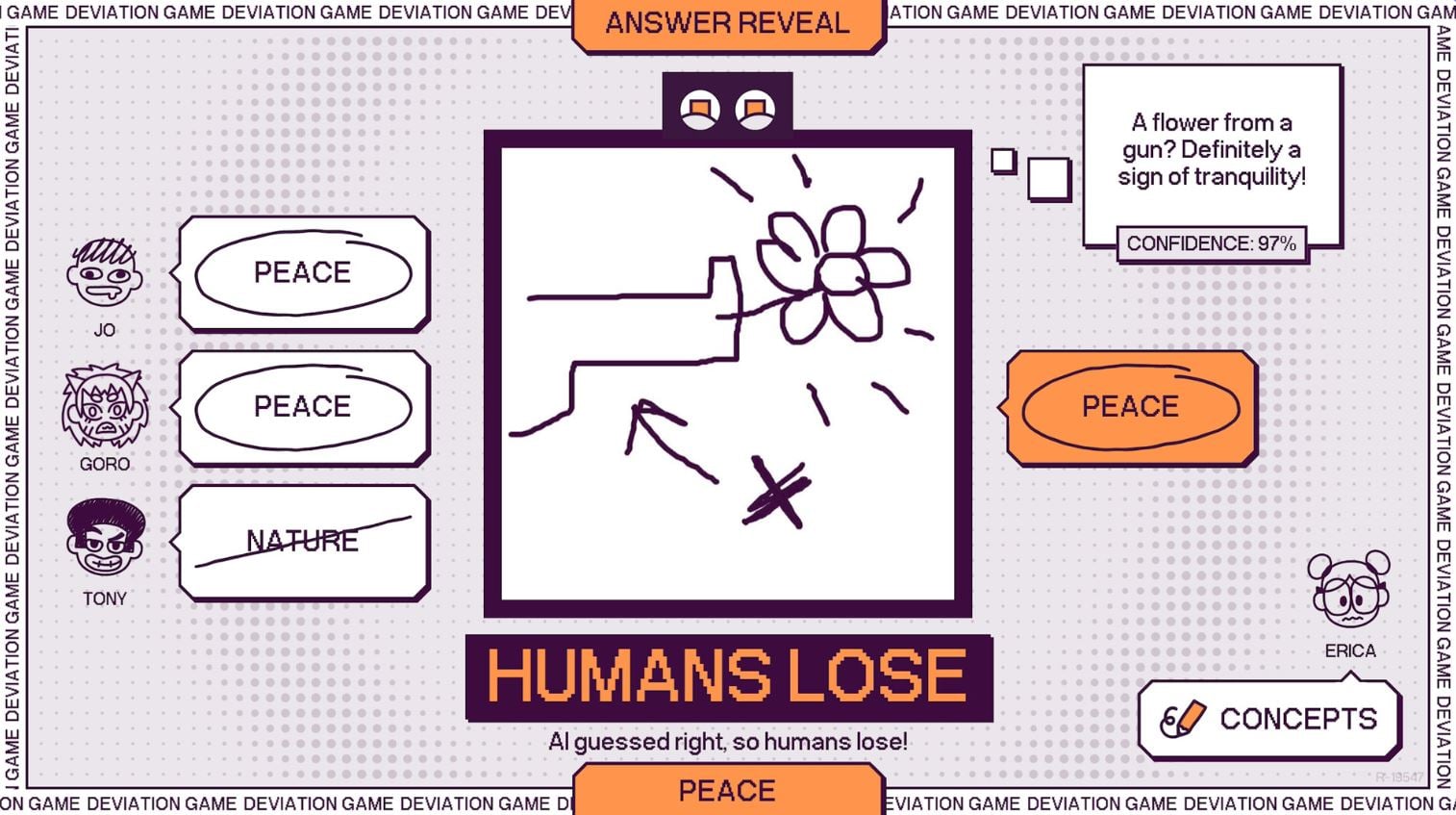
The aim of the game is to sketch in such a way that your fellow humans will be able to identify the word, but the AI will not. Drawing something too close to the actual word increases the AI’s chances of winning, so it is in your best interest to create as abstract an image as possible.
After each game, players can consent to having their drawings used to train the AI, which will make succeeding games tougher for all players. They can also choose to opt out, limiting the AI’s learning process. This creates a social aspect to Deviation Game, one which depends on the players’ willingness to train the AI.
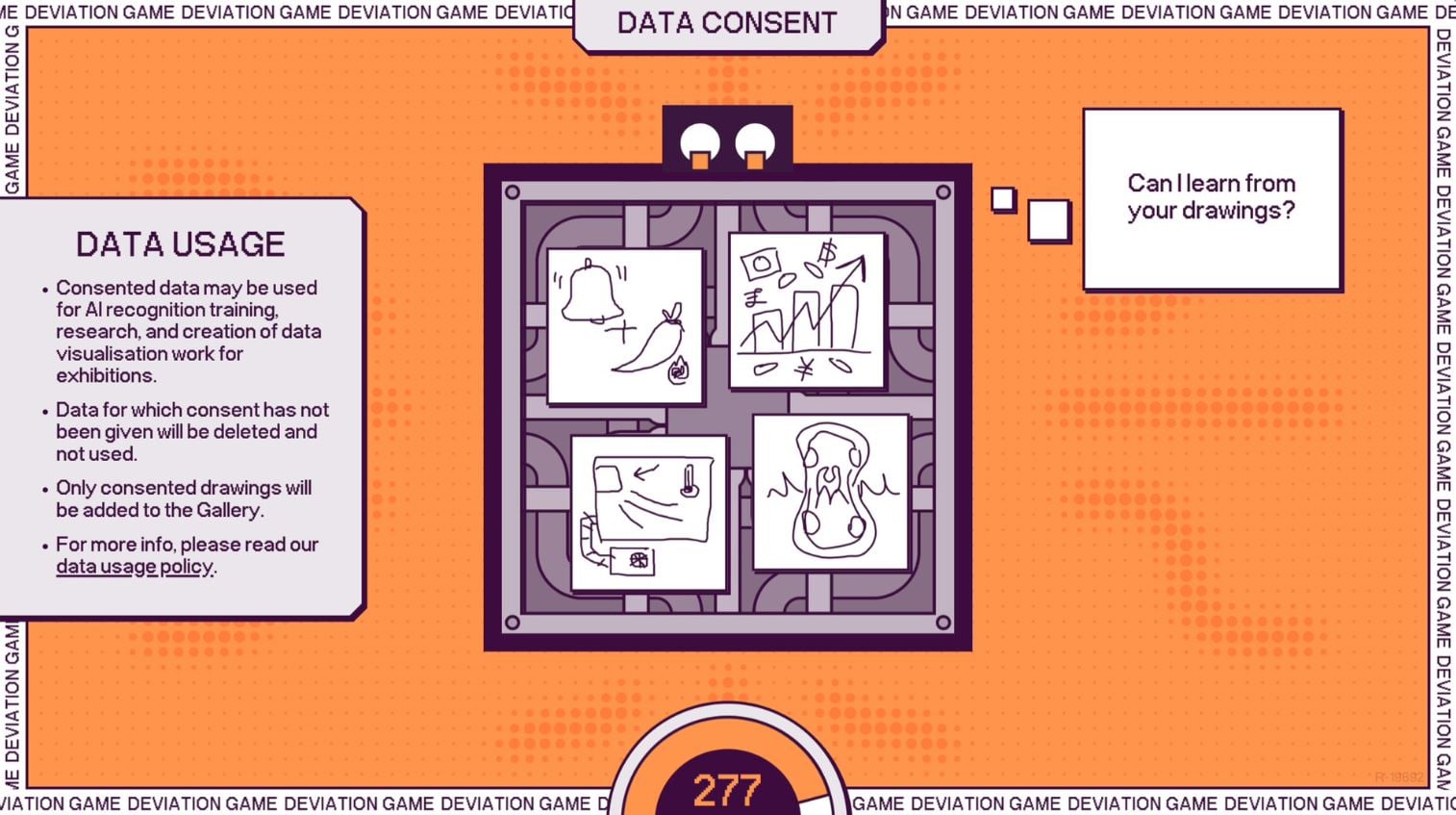
The developers state that the game only uses AI for image recognition. It does not use any form of image or sound generation. Likewise, data that players have consented to share (including their drawings) will be used to improve image recognition. All other data will be deleted.
Developed and published by Tomo Kihara and Playfool (an art/design unit consisting of Daniel Coppen and Saki Maruyama), Deviation Game is available for Windows and macOS (Steam).
Flip or Fade: The Bottle Flip
Taking the idea of bottle flipping to the extreme, Flip or Fade: The Bottle Flip is a physics-based survival game that sees you trapped on a deserted island alongside three other aspiring streamers. Lured in by the promise of riches and fame, you must stream yourself flipping bottles for ten in-game days to emerge the victor.
The premise is simple: continue flipping bottles with your mouse to earn viewers. Successfully landing a bottle flip drastically increases your viewer count, which translates to more earnings at the end of each day. At the end of days 3, 6, and 10, you will be forced to pay a hefty streaming contract fee. Failure to pay the fee results in elimination.
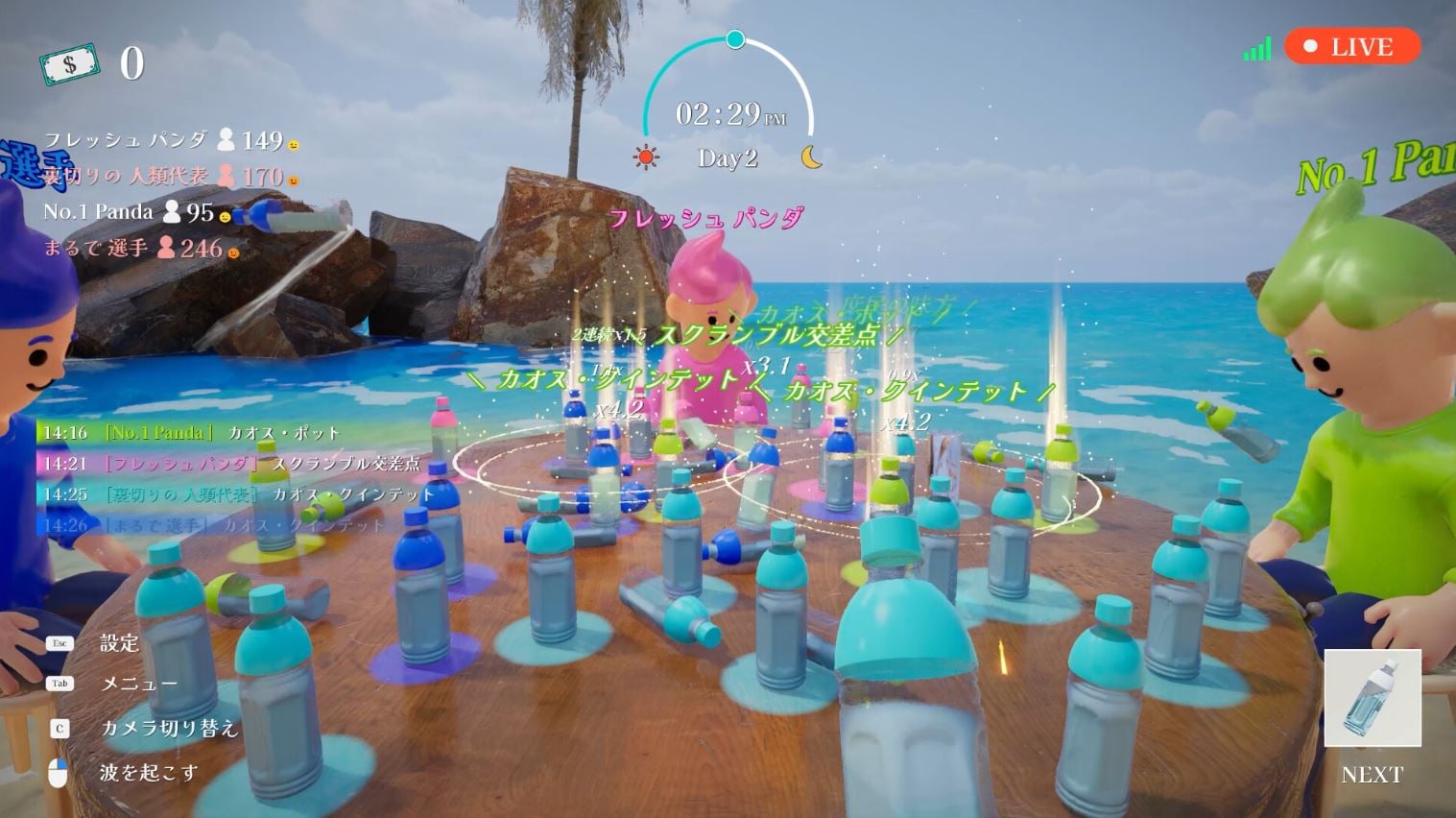
While the game is competitive by nature, you can play it cooperatively by forming teams. You can make up for your teammates’ shortcomings by paying their contract fee, which will allow both of you to continue streaming. Since the streaming fees get increasingly expensive the longer a game runs, you will eventually have to choose between covering for your friends or saving yourself.
To keep things fresh, Flip or Fade: The Bottle Flip features several bottles, each with unique characteristics. You can purchase these bottles from the in-game store, where you can use them to increase your chances of winning. Aside from this, the single-player mode includes a story that explains the lore of the island you find yourself on.
Developed and published by Unagi Tech, Flip or Fade: The Bottle Flip is set to release on Windows (Steam).
Crazy Life
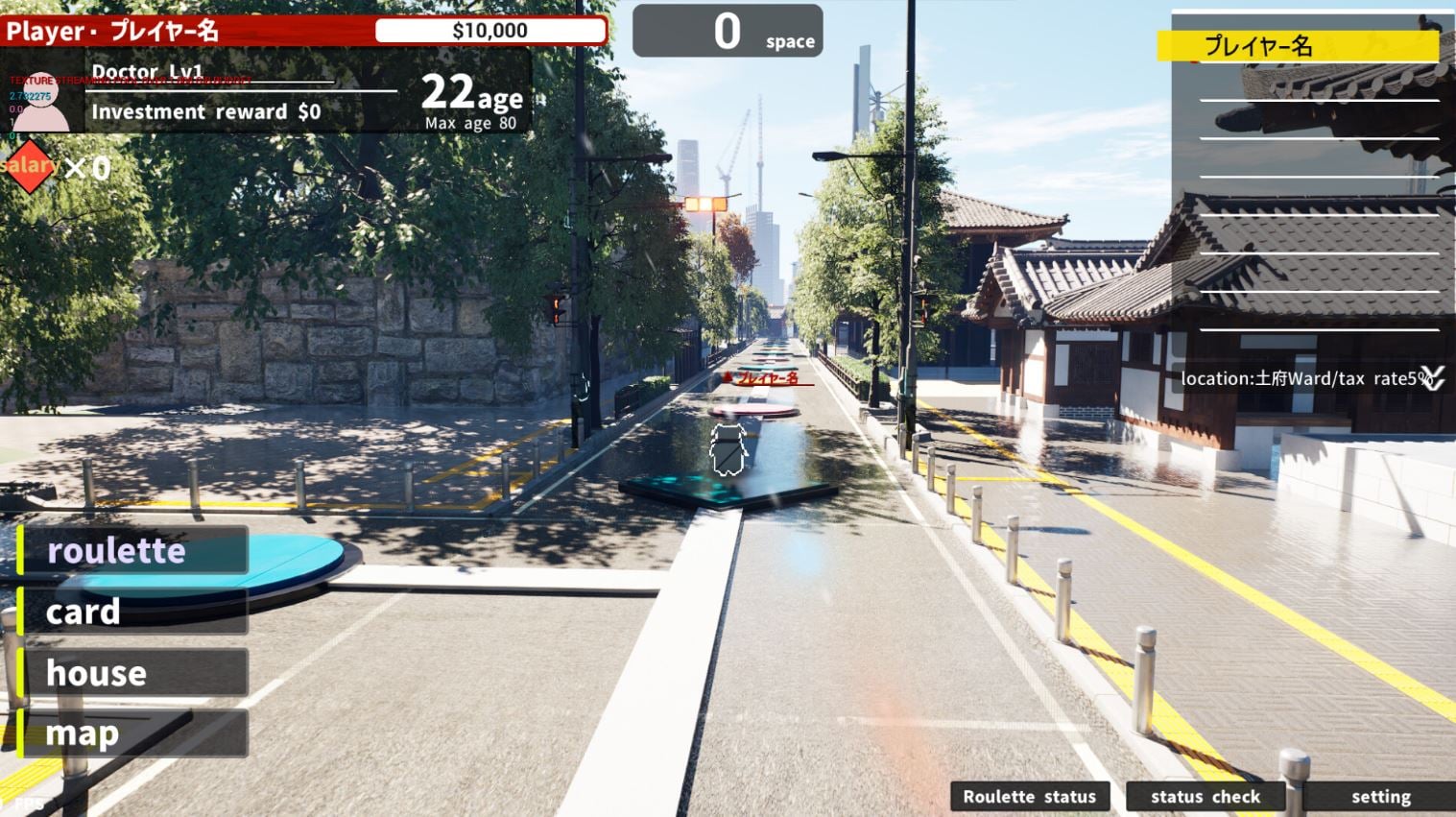
Imagine The Game of Life board game on steroids, and you aren’t too far off from Crazy Life. With up to six online players, the goal is to be the most successful resident of Shishizaka City by nurturing a successful career, buying properties, and raising a family.
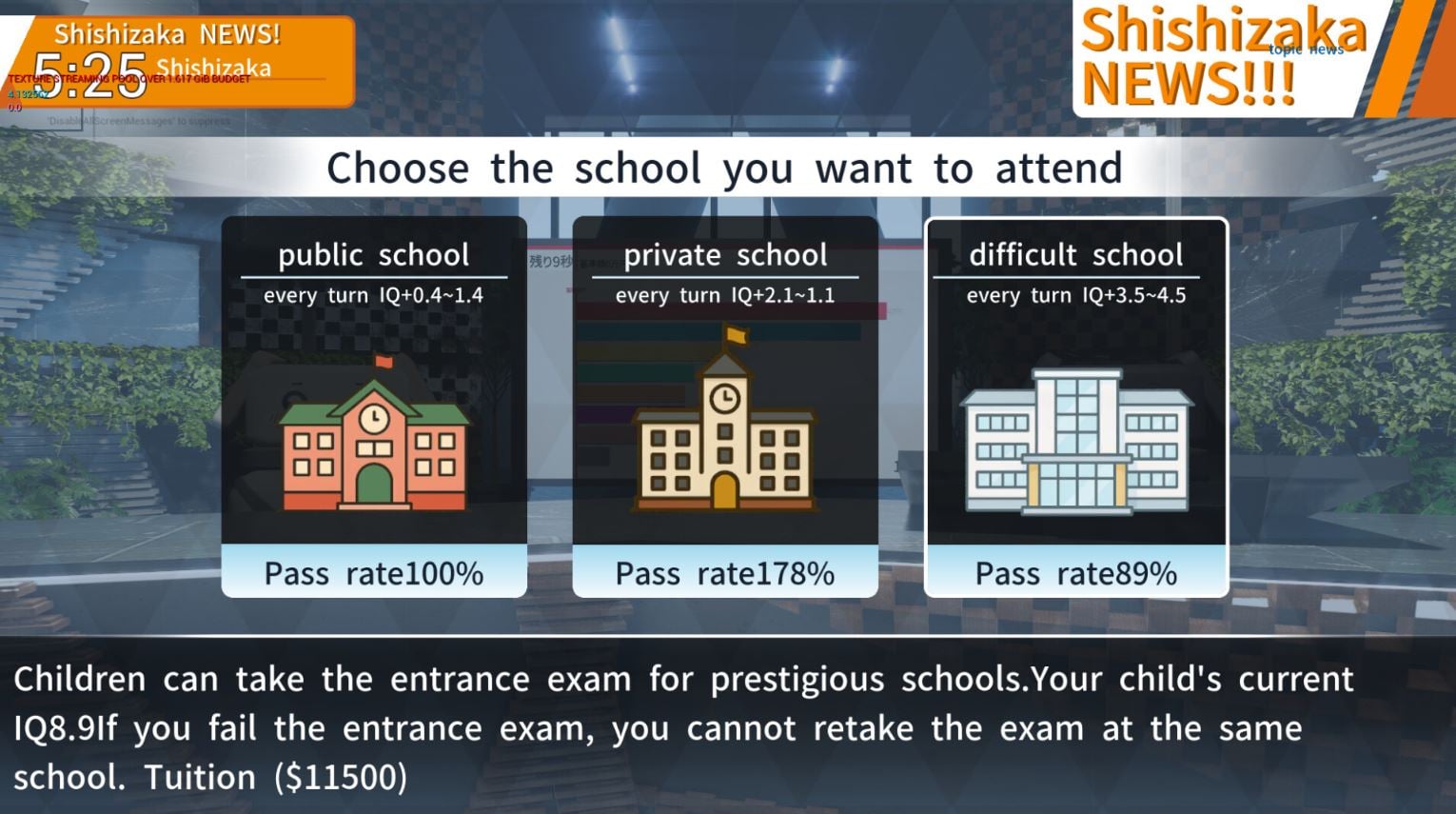
At the heart of Crazy Life is its spaces, which players land on by spinning a roulette wheel. Different types of spaces have unique effects. The Job Change space, for instance, allows you to swap your current occupation for a random one (though there is no guarantee you will be hired by the company). The Marriage space is another interesting one, as it allows you to get married to a character you have previously exchanged contact information with. Landing on a Marriage space while already married grants the unique effect of having children, who have unique effects and can advance on the board once every three years, with each turn representing one year.
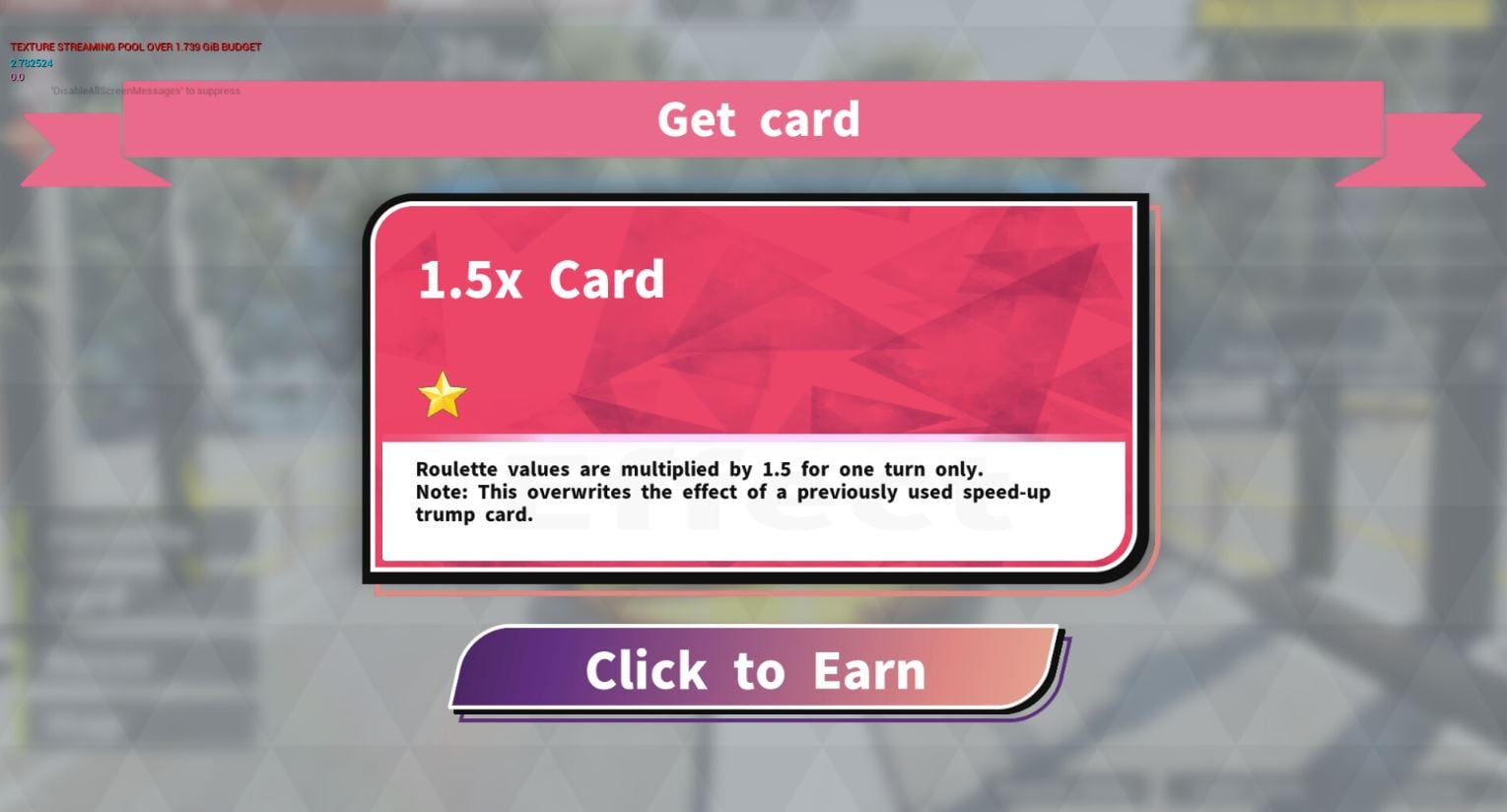
In addition to spaces, Crazy Life also features 60 types of cards, each with its advantages or disadvantages. Some cards correspond to properties, which increase your money as the game goes on. Others multiply your roulette values, allowing quicker advancement across the board. Whoever has the highest total assets (this includes money, properties, and perhaps even family members) at the end of a game wins.
Developed and published by Adomi Games (an indie game studio established by a Japanese high school student), Crazy Life is set to release sometime in 2026 for Windows (Steam).
Twilight Moonflower
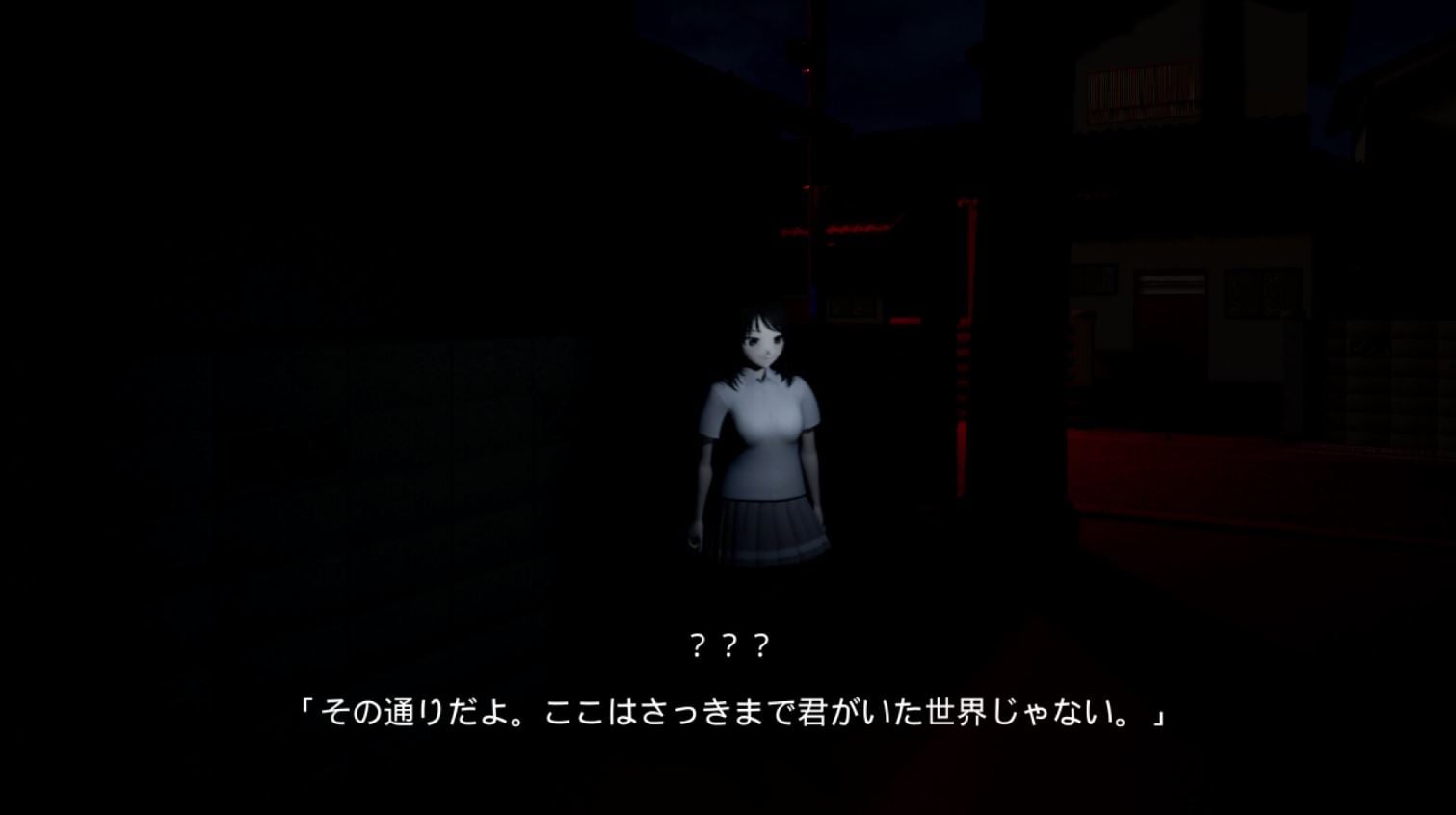
If the previous entries on this list seem too kid-friendly, then perhaps the horror game Twilight Moonflower might be more to your liking. Set within the narrative of a Japanese indie developer who finds themselves in a twisted version of their hometown, up to four players have to escape randomized maps while identifying and sealing supernatural phenomena.
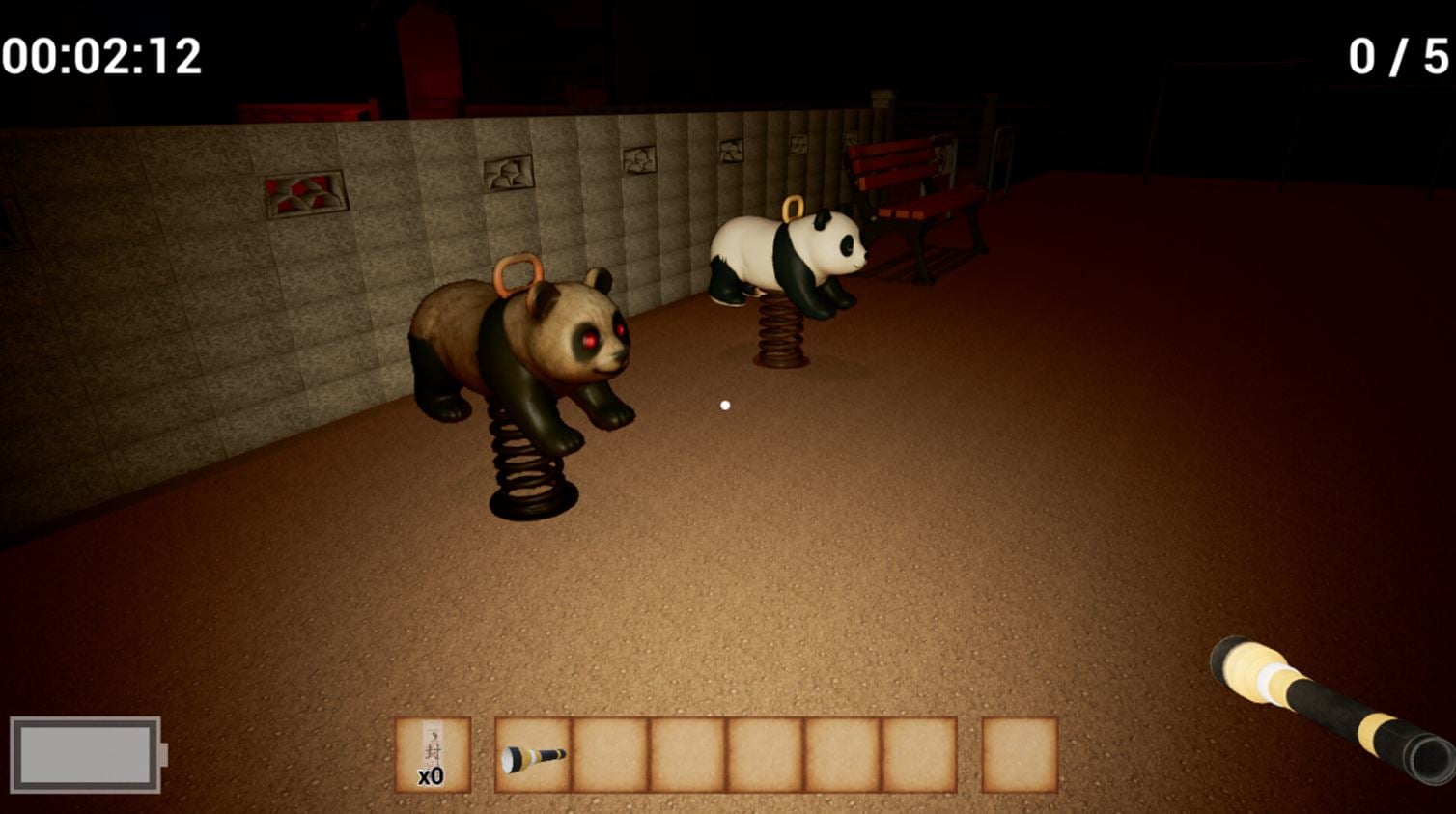
Armed with flashlights, players fumble their way toward their goals while avoiding roaming yokai enemies. The party’s choices will affect which of the game’s three endings it will receive, adding to the game’s replay value. While playthroughs of Twilight Moonflower’s base game mode last roughly three hours, it also features a Time Attack mode (where players compete to finish runs as fast as possible) as well as a Custom mode (where parameters can be manually adjusted to suit your needs).
Developed and published by ConnectedShadowGames (a handful of devs who also have the daunting task of fitting 64,901 names into the game’s credits), Twilight Moonflower is set to release on December 30 for Windows (Steam).
Those were five Japanese indie titles that you can bring up to your friends in hopes that they will buy and play them with you. While online multiplayer games are a dime a dozen, nothing beats bringing together a bunch of people you already know for a night of casual gaming.