

The Japanese anime market has reached the size of over 21 billion dollars in 2023, and continues to expand at a rapid pace. However, as reported by ITmedia Business via Yahoo! Japan News, among all TV anime titles in the Fall/Winter season of 2025, 85.7% were based on existing source material like manga, novels, games and other IPs. On the other hand, original works made up only 14.3%. And while it seems like the market is walking the safe and profitable route – the lack of talented workforce, and with it, frameworks to support the creation of original content – are what could end up setting the industry back in the long run.
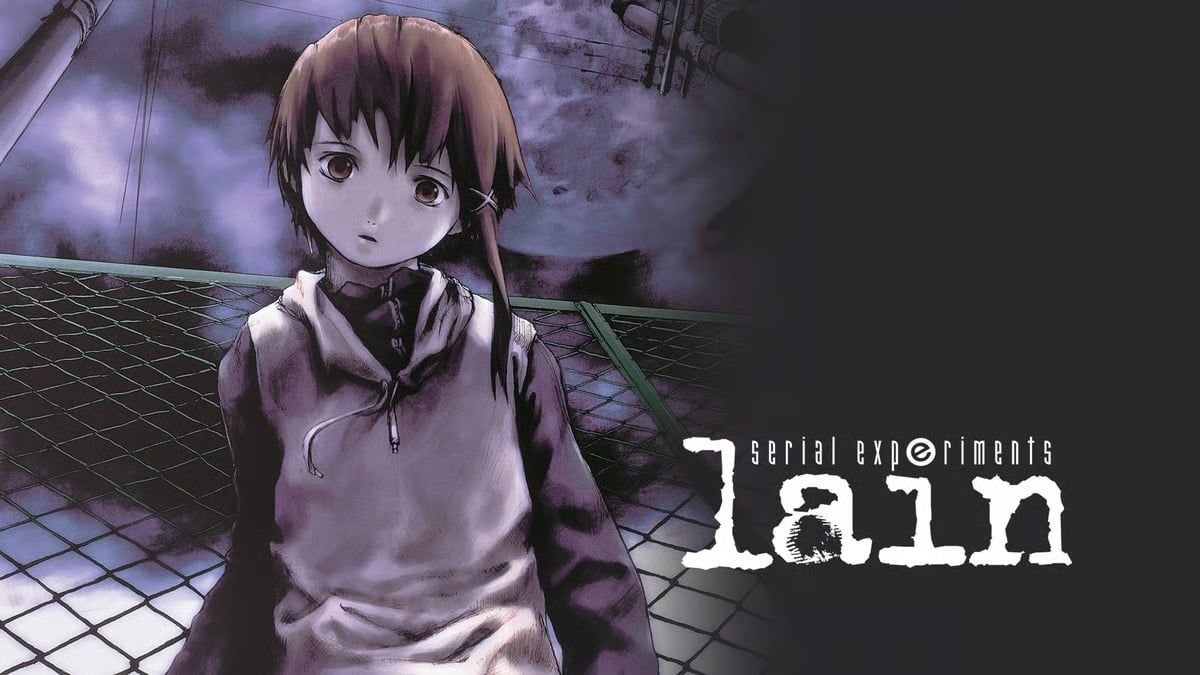
Talking to the outlet, Taro Maki, veteran anime producer known for his work on Tokyo Godfathers, Millenium Actress and Serial Experiments Lain, reflected on the problem, pointing out Japan’s “businessman producer” culture of playing safe as one of the main causes.
As he explains, Japan is witnessing a “lack of producers” who aren’t led by safe business decisions and profitability. “There are many ‘businessman producers,’ and in Japan the system of evaluation basically focuses on minus points, rather than plus points. “In other words, not making any mistakes ends up being their main priority.” Maki explained that, in such an environment, there is no concept of taking on new challenges. “That’s why, as a result, only safe projects and hit genres are the ones circulating,” he added.
As suggested by Maki, this kind of corporate mindset is what might be holding Japan back from creating more original works, and why the industry is oversaturated with “safe” adaptations. “Nowadays, ‘original works’ like manga or novels become hits, and then they get an anime adaptation which would tie into the business of the publisher – almost 90% of the whole industry is built around this kind of framework. This leaves no room for new anime creators to thrive. Ideally, I’d be fine with around 70% of new titles being “safe,” but I think that the remaining 30% should be turning towards taking on new challenges. We can create a ‘healthy’ anime industry only if we manage to find this balance.”
But acclaimed films like In This Corner of the World, which Maki personally worked on, didn’t just appear as immediate hits. It took director Sunao Katabuchi around three mid-performing original works before he “hit it big” with In This Corner of the World. Even Hayao Miyazaki had to go through some trial-and-error before producing his first hits, Maki says, and the role of a producer is precisely to create room for those kinds of challenges.
That is why Maki suggests that there should be more spaces that encourage experimentation with unconventional, “difficult-to-understand” anime that doesn’t completely conform to what’s the most profitable. “The truth is, reactions from the audience are not something that can be predicted, and the ‘difficult-to-understand’ works are there precisely to foster an audience. Back in the day, there was a culture of watching ’slightly complex films’ at small arthouse theaters, and that’s what gave us some room to take on new things ourselves. But now, there are no such spaces, and I feel everything has become a bit shallower.”
Related articles:
Yep it’s all the risk aversion going on I loved many anime originals and darker, hot button, controversial series. Now they are trying to stay away from thrm
I feel like there were more originals in the past 5 years than there were between 2015 and 2020. That period was very empty, they didn’t even want to take the risk of giving somewhat successful shows a second season, focusing on adapting one season of every novel that was crazy.
Yeah. Its nice to see some originals coming back into the mix. Sonny Boy and Vivy and Yrain to the End of the World were some standout hits in this category. Kyousougiga which also came much earlier than those
This is exactly the path all mass media follows. The only outliers are when creators can democratize the process which means lowering the barriers to production so people can get by while putting their time into creative independent works. As long as making an anime requires a massive production team, marketing team, finance team, artist team, then the decision makers will have to stay risk averse to protect all those people. UBI would solve this in tv, anime, music, theatre, and even politics.
I’m sorry but “I this corner of the world” is based on a Manga by the same name. The film is great and so is the Manga, but it makes this article look a bit silly.
Was telling a coworker this exact same thing. I remember when there were mangas created after anime were released and the few that were bassed off mangas but had their own stories. Now a lot of this stuff out there are based off light nicels that don’t even have real titles
The golden age of anime has come to an end.
And the lack of original productions is not a cause, but a symptom.
Streaming made anime massively available, particularly outside Japan. The foreign market has skyrocketed in the last years, triggered by the pandemic lockdown and the creativity crisis that the western movie and TV industry is facing.
People, mainly the youth, found their heaven in anime streaming.
But, it came at a huge cost, artistically speaking.
The most popular and profitable works are not the most innovative or with an intriguing plot, but those with the most appealing characters and animation.
Generic shounens and isekai became the thing, while other works became neglected, even the most iconic classics. New generations, raised by fast colourful media, don’t like complex, dark or slow paced content.
The anime industry has already realized sich a situation and they chose to play safe.
Business-wise, it sounds reasonable, but this is gradually choking authors and studios that dare to present something different.
Not surprised. This has been the American Hollywood method for decades. There are no more risk takers. Only check the boxes that are proven successful and reap the rewards of a safe product. After reading Delicious in Dungeon and Frieren I was thoroughly disappointed with the anime adaptation mainly because they rushed through 4-6 entire volumes of good material just to fill 8 episodes of tv. We need risk takers and original content more than ever.
There is so much anime today that feels same-y, that I don’t get invested in many any more. If the anime is basically like any other in its genre, I drop it by the 2nd episode. Take some risks, try some different angle, etc.
I prefer original anime because I’m getting too fed up with the “it’s not like in the manga/ln” negative comments.