

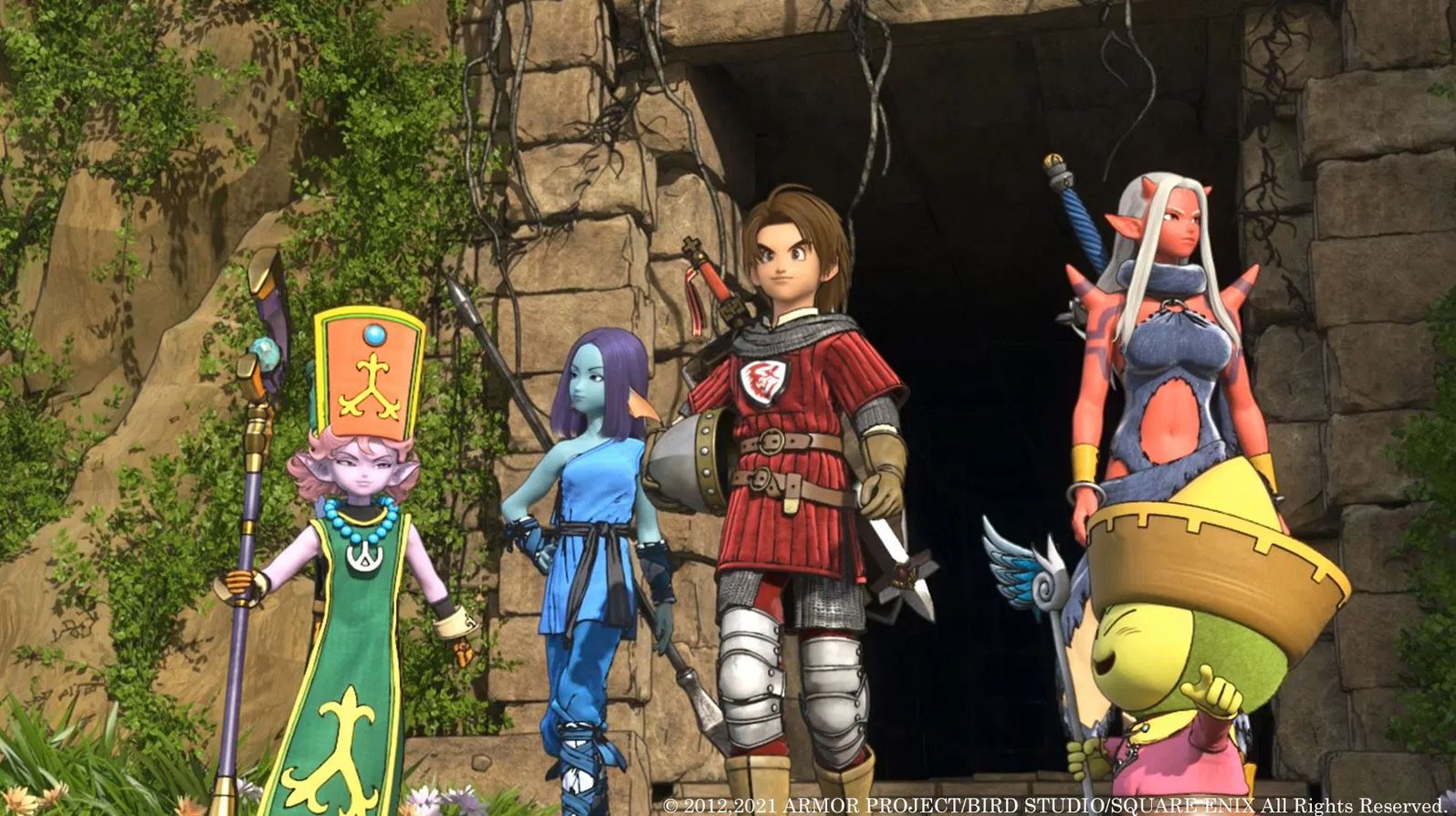
In a recent interview with Famitsu, Dragon Quest series creator Yuji Horii and Paranormasight series director Takanari Ishiyama (who also worked on DQX) had a “master and disciple” discussion to commemorate the launch of Paranormasight: The Mermaid’s Curse.
With both creators being prolific storytellers and writers, much of the discussion was dedicated to their know-how and peculiarities when approaching a game scenario, like Horii’s manga-inspired technique of almost completely abandoning narration in favor of dialogue.
Interestingly, the topic of localization also cropped up, with Ishiyama expressing concern that his obsessive pursuit of the perfect word choices and phrasing in The Mermaid’s Curse may end up being for naught when translated into other languages (the game released with day one English and Chinese language support).
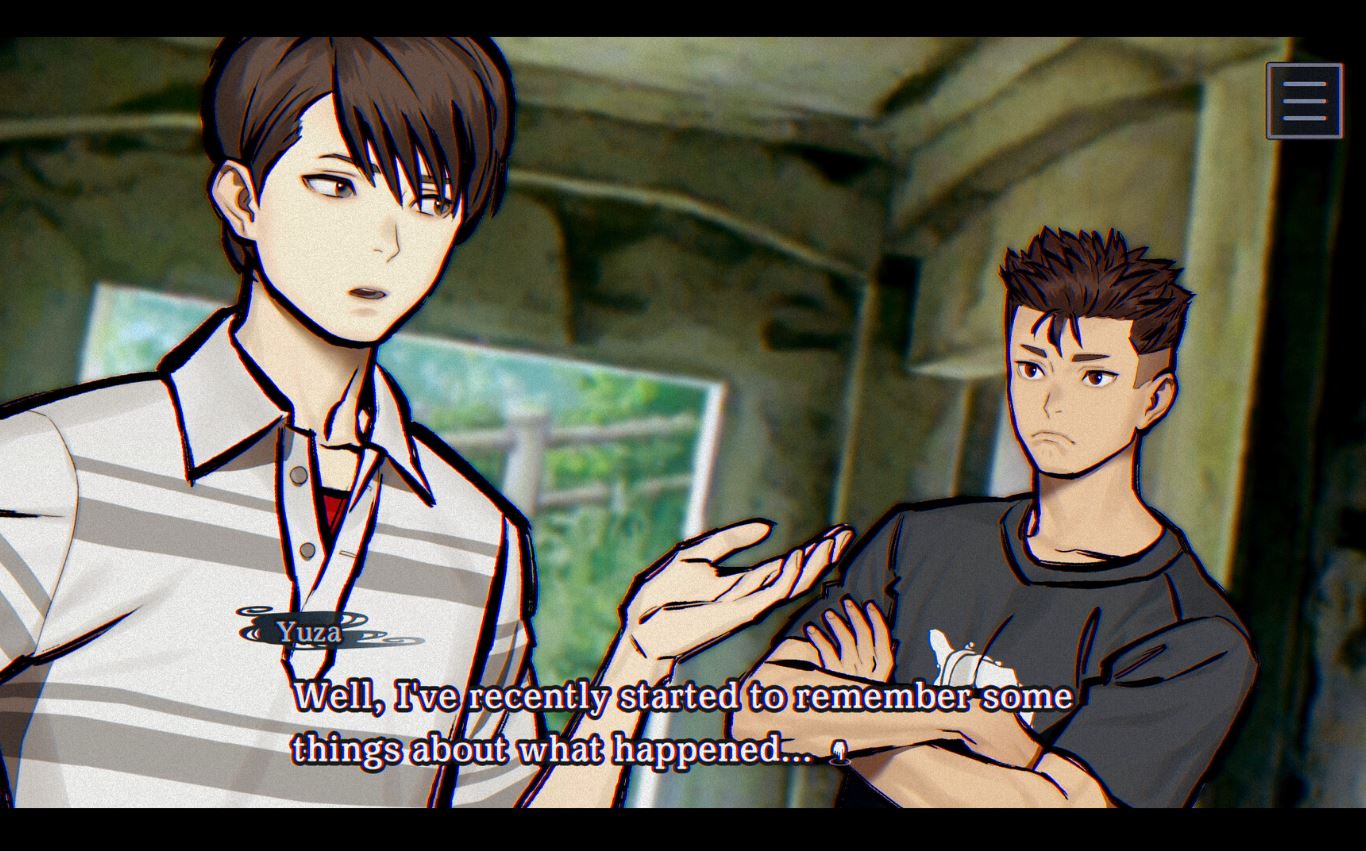
In response, Horii commented, “When it comes to English, the flavor tends to get lost in many ways. Things inevitably end up sounding simplistic.”
As one example, Ishiyama brings up the variety of first-person pronouns available in Japanese – like ore, boku, washi, watashi, etc. While each of these can reflect the speaker’s gender, age and even personality traits, in English, they all become simply “I.”
Horii seems to consider the shortcomings of Japanese-to-English localizations a result of inherent differences between the two languages, commenting, “I’ve come to accept that English is a simple language, so there’s no helping it.” On the other hand, he feels that this issue has been somewhat improved with the introduction of voice acting in games, given that voiced lines create extra room to convey a character’s traits through tone and delivery.
Paranormasight: The Mermaid’s Curse is out now for PC (Steam), Nintendo Switch 2, iOS and Android.



I think a lot of people would make the same complaint about the Japanese language. I play all the Yakuza games with Japanese voice acting, and it’s so clear that the English localizers are bending over backwards to come up with lots of different context-sensitive translations for the same constantly used generic Japanese phrases, from “Ah” to “Souka.” It’s given me the impression that Japanese lacks verbosity, but I’m probably wrong, just like Horii is clearly wrong here. Each language has its own nuances.
In summary “Arrogant Japanese writer obtains crappy transliteration to language with different structure but larger vocabulary instead of a translation, blames it on simpleton English language”. All of those traits have descriptions in English, but we use adjectives for them instead of cramming them all into different pronoun forms.
To be fair he’s also a raging nationalist. 🤡
Sounds fine to me.. keep Japan for the Japanese.. EN translators have been ass for decades
Yeah, his going to think everything about his country is superior no matter what. It was foolish to get one of your main buying base mad by calling their language simple. That means he thinks we’re simple minded. Because only a simple minded person would use a simple language. Unlike the more advanced Japanese language 😡 what a slap in our faces
Why raging?
I have to disagree. While it’s true that there are inherent differences, certain pronouns being one of them ofc, there are also plenty of ways to circumvent those and/or account for them in different ways. Any good translator will be able to do it.
The problem lies in “localisation”. Localisation should cover those particulars that can’t be directly translated, to find equivalencies between the original and target language, to give the intended meanings back as best as possible. Sadly, this has been largely “expanded” in recent years to the point where studios decide to change things not due to any of those inherent differences, but to pander to specific audiences (by proxy, corpos). Especially true for NA/US, which sadly does cover too many games. Sugarcoating details, “editing” or outright omitting them, just to avoid potentially hurting some would-be player’s feelings is where a lot of nuance gets lost, where a lot of the original becomes “simplistic”. Original authors need to put their foot down and keep a much closer eye on, much tighter control of their works, otherwise this will never change. English can be incredibly rich, even if not the same ways as, say, Japanese; it’s up to the people working with these things to decide to utilise it in appropriate ways.
Does Horii even speak English? He has no clue what he’s talking about and no clue of the gibberish in Japanese game writing. Don’t blame hack translations on English.
Pfft. “English is a simple language.”…. English might not have 8 different ways to say “I”, but we sure in hell have more than one way to say something is “hot” or “delicious”…
“Manga-inspired technique of almost completely abandoning narration in favor of dialogue. ”
That is absolutely not unique to Japanese devs and I would argue its presence in western games isn’t inspired by Manga at all
I don’t know if I’d agree with him on the more “one language is simplistic vs deep” matter, but I will agree that things can undeniably be different via translation. When you play or watch or read a translated work you gotta remember you’re not actually getting the original thing, just a version of it. Reading multiple different English translations of Don Quixote and finding the differences in them and their flavor really made this hit home for me
Room temperature levels of IQ take.
The issue isn’t with English, it’s with shitty localizers.
Yep 🙄
The thing is there’s different kinds of nuances to every language some parts will inevitably seem simplistic to one person while a native speaker would find out how to portray same meaning through different avenues. No language is simple. Being Ukrainian I for example can be disappointed often at the lack of adjectives in English but English is much snappier and it’s easier to make poetry and find different synonyms.
(Huh, this is my third time trying to post this comment, and the site keeps telling me to verify I’m a human.)
———
Ah, yes. Just like how in the Ace Attorney games, Phoenix, Edgeworth, and Apollo all have the exact same personality and vibes, since they all use “I” instead of “boku,” “watashi,” and “ore.” 🙄
I think it’s cool this Japanese writer apparently puts effort into his dialogue, trying to convey personality and personal characteristics with each line and word choice.
However, it’s pretty ignorant to think English has no way of conveying those traits merely because we do it differently. From my perspective, English has fewer shortcuts, (“I have my character use this defunct pronoun and the audience will know this list of things about him,”) and instead holistically uses word choice and sentence construction to convey characteristics like age, education level, confidence, background, and personality.
Some English writers don’t differentiate much between how their various characters talk, and other English writers, like Charles Dickens, go all in on their dialogue being distinct. Writing in English provides a huge toolbox of vocabulary and sentence structure to work with, although admittedly, writing quality can vary widely. But that’s not indicative of the level of simplicity in the language—merely showcasing different levels of skill in wielding it.
But if you don’t understand Japanese everything is lost and not only “a lot of flavour” if there’s no translation at all. So it’s better than nothing.
Language also reflects culture. In most English speaking countries there’s no need to tie personality, age, or gender to the first person pronoun. If that’s important to you, as a writer, you have to add these information in another way: “I, the cunning and only male successor of Emperor Nintoku, (…)”.
Depending on how you do it and how much information is given this can be a bit convoluted for Westerners but total ok for the Japanese speaking community. It’s more of a question of how much of the culture do you want to convey with the use of language. And if that’s important to your game’s story/writing.
I do agree with him that many small nuances can get lost in Japanese to English translations.
However, I disagree that English is a simple language. There’s plenty of other places where English can help characterize characters, it’s just done in a different way than in Japanese.
This is dumb. You can overcome by using word choice, like how some characters call others guv’nors in some games to convey the same as the personal pronouns.
Yuji Horii as noted Nationalist? Not so. I believe our are most likely thinking of Koichi Sugiyama. Now he IS noted for his severely nationalist views. Undoubtedly, he was becoming ever more of an anachronism in his old age. As for stuff getting lost in translation from Japanese to English? Yeah, no shit! It would also work in the converse, English to Japanese. This is why “lost in translation” as a phrase, exists. This is true for basically any translation from one language to another. There’s no “like-for-like” replacement for every damn thing. I’d argue that no language is “simple”. Just different.
In any case, if I wrote something, and it got translated to Japanese, I’d be well aware that some aspects of my wiring cannot be quite so adequately conveyed to Japanese as I had originally intended it. It’s no fault of the Japanese language in and of itself; only that my possible usage of idioms, or words conveying feelings and sensitivity inevitably loses some of its zest or vigor when translated to Japanese. No big deal. Regardless, the main points, the most important points, will be maintained. Yeah, it’ll lose some of the original English flavor. Whatever.
As a trite example, Japanese makes no distinction for singular and plural things, much less the English madness of ” a murder of crows”, “a pod of dolphins”, or whatever plural zaniness for the varied animals English likes to delineate. Yeah, some flavor will be lost. That’s just what happens
Please forgive the typos from my prior post. All errors are mine alone.
If you don’t choose to forgive my typos, alright then. Maybe I’ll just translate it to Japanese next time next time.
Save myself the hassle. No option to edit posts afaik
Well, he’s not wrong, japanese is a particularly hard language to translate.
Wow.. a lot of people super hurt and upset by.. one man’s opinion that actually has some basis in truth AND he listed examples. He’s not wrong and he has the right to find that English lacks the complexity he is used to in Japanese, his native language. And English DOES lack the things he likes about Japanese. Those are all facts. And it’s a fact that translating from one language to another, some meaning and nuance will likely be lost. Add in that Japanese can be a language with a heavy emphasis on nuance, slight differences, and words having multiple meanings or readings at once.. Then yeah, for him English may not appear as complex or may not convey what he means properly because the languages are.. extremely different. So.. no he’s not wrong. And getting upset about it or trying to pretend this is some “localization” issue is stupid. It’s not. It’s fundamental difference in the language and even the best translations and translators can TRY to bridge that gap, but it requires extensive notes and explanations that most media doesn’t have the place for.
No one here is upset or hurt. People are allowed to disagree with Horii just as he is allowed to voice his opinion. Remember passion is hard to measure through text alone and try to give people the benefit of the doubt.
However, I also disagree with what you said. There is a fundamental difference with the languages, yes, but that is why the fault is on poor translation. Both Japanese and English are very complex languages, most languages are, but they are obviously complex in different (and similar) ways. In translating, you can either try to translate as closely as possible while still making grammatical sense (as opposed to direct translations, ie. all your base are belong to us), which is easier and what most localization teams do, but good localizers are willing to stray from word to word accuracy to instead capture the spirit of what’s being said, which is admittedly way harder and if done poorly can be worse than a direct translation or misrepresent the text. Think of it as translating the complexities of each language into each other, rather than just words or meanings.
Mr. Horii is saying that isn’t possible at all though because English is “too simple” which is I also disagree with. It is possible if he lets go of direct comparison with things like the pronouns. Him saying things like that unfortunately goes to show his ignorance in the matter. Just because he’s a writer doesn’t mean he’s an expert on translation or language as a whole.
Then he should take Konima’s approach and take direct control of the localization. A lot of things the English language does are annoying, but a lot of ways that Japanese does are also annoying. “A certain place/That place.” What? Is that culturally significant if you aren’t from Japan? (Or maybe Asia)
No, it’s just annoying to translate that one literally.
Quit your complaining and take direct artistic control of your work in every language. DQ is huge enough you could get away with it.
i am not native in english or japanese but even having my grampa teaching me japanese, and learning english after, japanese still looks very more complex and hard than english based on sentences, however i feel english has more freedom in the pronunciation whats really makes sense voice acting are able to give more personality, just by watching youtube in english is hard to find 2 people speak a word in the exactly same way while in japanese really rare to someone speak in different way.
You can have the same nuances jn English if you actually put in the effort of your translations.
You should see the other comments more, they do not criticise. Using a fallacy to attack the director’s character.
How about stop making games only available in your country. Japan’s racist bullshit is starting to wind me the fuck up. Also no I’m not going to apologize for my language when the only games you release to the world when I was a kid were games like metal gear solid and final fantasy.
He just wants to make the games cheaper by only having one language option. And just having subtitles 🙄
Reminder that when Undertale was translated to Japanese, Japanese fans had a bitter war over the 2015 fan translation vs official 2017 translation… it’s not just a JP-to-EN thing.
Gotta love how these Japanese devs love to bash the language of huge portions of their fanbases. Crap like this is why I almost never touch Japanese games. Whiny children don’t deserve your money.
Shut up eugene hori what a mamaluke. up in here jive talking about the english language like a new jack. I got news for you eugene come to queens and talk that jive and you gonna learn about the mean streets. we don’t care if you make that fire dragon quest game if you put here talking smack on our culture you be tripping you bowl cut knucklehead. stay in school, peace!!! 🇺🇸🇺🇸🇺🇸🦅🦅🦅
Even so it let’s your game be seen by a wider audience.. Not everyone is going into it for a accurate translation most people just want something to do lol
Wouldn’t it be funny if calling the language “simple” wasn’t his intention, but it came out that way because the English translator missed the original subtlety?
Still, commenting on the qualities of a language without any actual fluency is a great way to look ignorant. He didn’t do himself any favors with those remarks.
There are a few things Japan has words for we don’t. They also have keigo.
On the other hand English sentences can be written in literally dozens of ways while japanese is quite rigid.
After studying Japanese, living in Japan and teaching English to Japanese students it’s fairly clear Japanese is more “simplistic” when it comes to sentence structure and form.
Japanese is more technical in writing, but not speaking.