
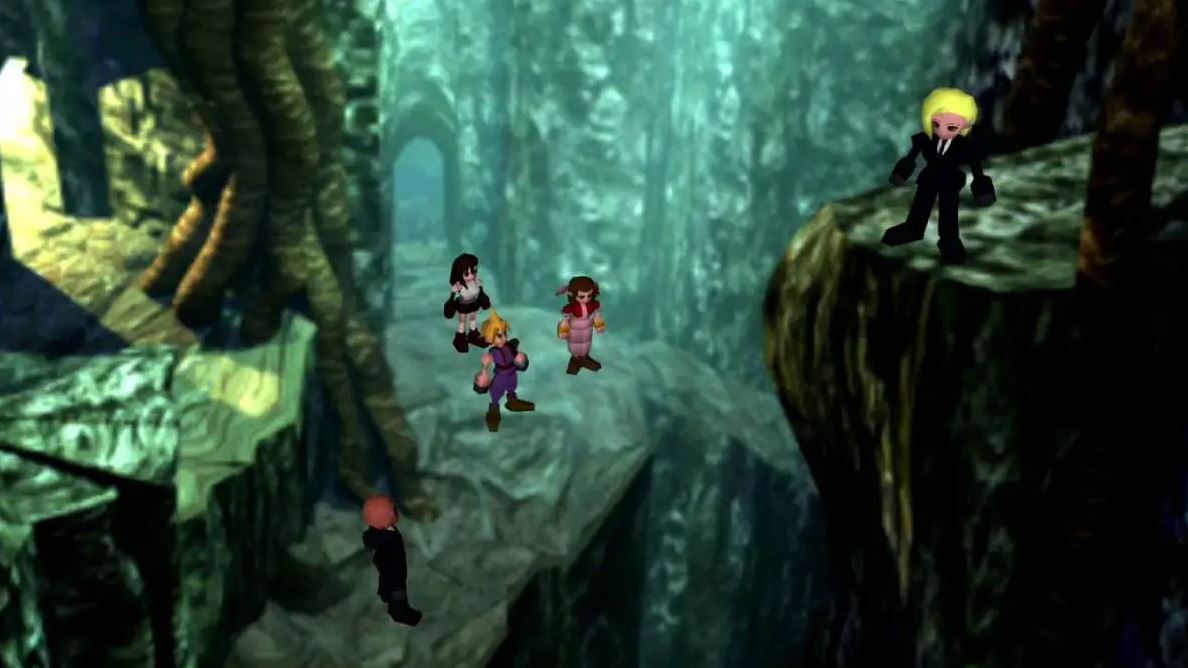
A significant barrier for Japanese gamers was partially lifted this week as Square Enix released a new version of the original Final Fantasy VII on Steam and finally made the title purchasable in its home country. For years, the game was a prominent example of “Omakuni” – a slang term that means “We won’t sell to your country” and is used by Japanese gamers to describe the unusually common practice of domestic publishers’ region-locking their games in Japan while making them available in other countries.
The update replaces the 2013 PC port with a version that includes modern features like 3x speed, battle enhancements, and autosave. While it had a bit of a rocky launch and still maintains a “Mixed” rating due to blurry textures and other issues, the “omakuni” being lifted is still a big thing for Japanese Final Fantasy fans.
On the other hand, as Japanese media outlet Game*Spark reports, the series’ region-locking problem is far from resolved. Several key entries remain blocked for Japanese users. Most notably, the 3D remake of the Final Fantasy IV sequel, named Final Fantasy IV: The After Years, as well as the MMO Final Fantasy XI and the original version of Final Fantasy VIII, all remain unavailable on the Japanese Steam store.
“You’d think you could finally complete the FF series on Steam… or so we thought, but there are actually still some titles you can’t get.” Game*Spark wrote.

Historically, Square Enix has sold domestic versions of their PC games through their own Square Enix e-Store, but after the company announced it will adopt the “Reboots and Awakens” initiative in May 2024, the company shifted to a focus on a multiplatform strategy through Steam and other storefronts.
That said, the reason why the original 2013 Final Fantasy VII PC port was region-locked, as well as the reason why it has been delisted and replaced with the new version is still unknown. One Japanese user (@All_WeekDays) theorized that it might be “due to a consolidation of sales channels following the end of support for a security tool related to digital rights management (DRM), and added that “copyright protection laws differ from country to country, which could have led to region-based restrictions arising.”
Related: Final Fantasy fans in Japan hope FF7’s “new version” on Steam means no more region-locking