Following February 5th’s Nintendo Direct and last week’s Sony State of Play, there’s been ongoing discussion among Japanese gamers and developers about rising levels of negativity in the community, especially towards companies and individuals making games. Surprisingly, the name of Masahiro Sakurai – creator of the Smash and Kirby franchises – has cropped up as a major point in the discussion, primarily due to how often his quotes and game dev advice are used as a means to “put down” other developers, particularly the creators of Monster Hunter Wilds.
To give some background, the recent showcases by Nintendo and Sony saw really rowdy comment sections on the Japanese side of the Internet, so much so that a good number of domestic gamers on X are in favor of comments simply being closed going forwards. The chief complaint is, of course, the sheer amount of flaming and nitpicky comments spoiling the fun of each game announcement.
Japanese game developer Koji Murakami joined in on this discussion, garnering a huge response on X for his perspective on how Japanese users differ from overseas gamers. “Recently, I’ve become aware of how little tolerance Japanese users tend to have,” he wrote. “For example, one of our released games had a bug. In response, overseas players wrote reviews like, ‘There was a bug. But it was fun, so ️5 stars!,’ and would even email us videos of the bug. Meanwhile, a Japanese user who encountered the same bug wrote in their review, ‘There was a bug. What a waste of my time,’ and then also sent an email saying it had been a waste of their time.” Murakami went on to say that his attempt to apologize and troubleshoot with the user just earned him another rude email telling him to “figure it out himself.”
“If this kind of thing keeps happening, it’s no wonder more and more companies decide to stop supporting Japanese,” Murakami concluded.
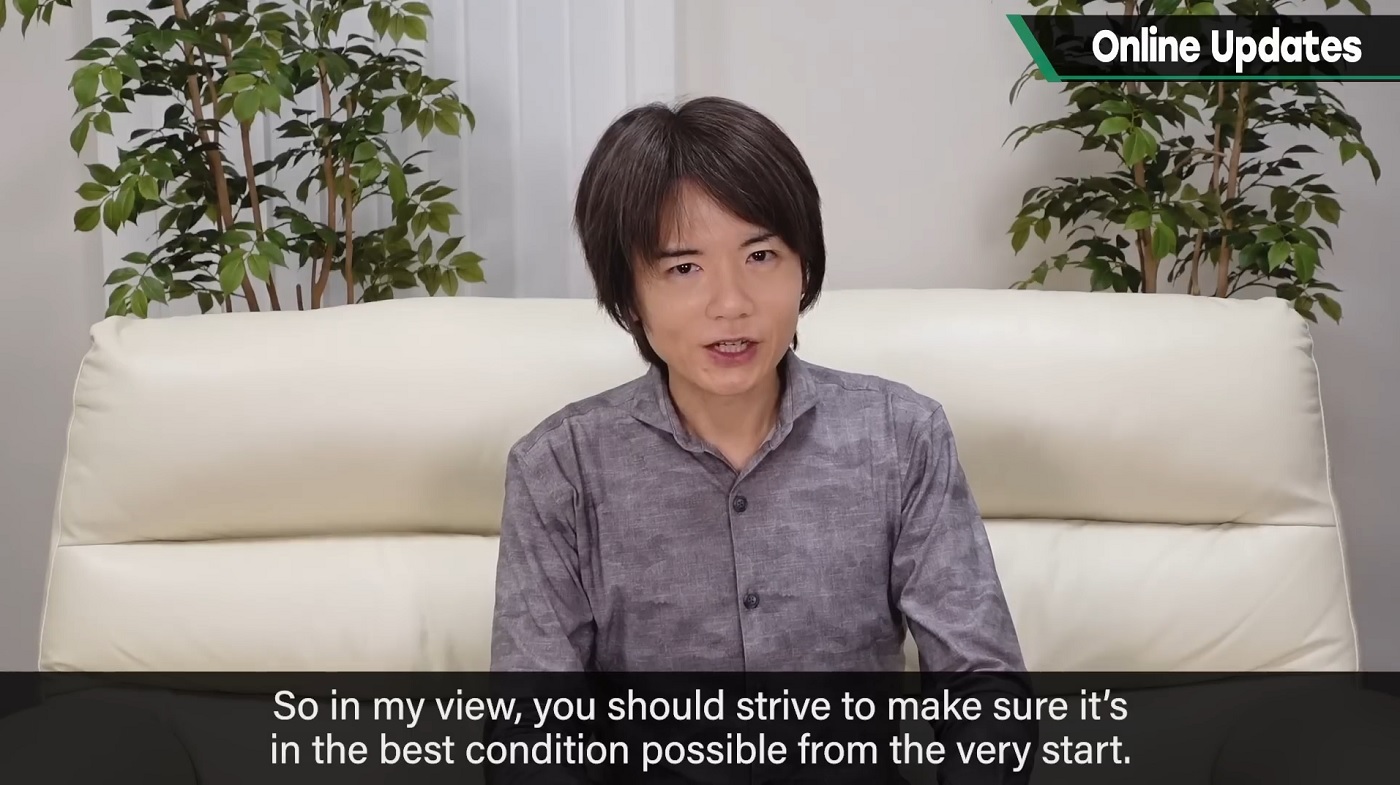
While many gamers and developers alike agreed with the sentiment, Murakami also received criticism implying he was in the wrong for releasing a game with a bug in the first place. “Masahiro Sakurai had something good to say about this,” one user responded, with an image quoting Sakurai’s “Online Updates” video from his educational YouTube Channel.
In this video, which was published in July 2024 and recorded even earlier, Sakurai tells fellow developers and aspiring creators, “No matter how much you improve your game through patches, it won’t mean anything if your players have already given up on the game. So in my view, you should strive to make sure it’s in the best condition possible from the very start.”
Now, aside from being stripped of its context somewhat (Sakurai actually prefaces this statement heavily by acknowledging that modern games have become so complex it’s practically impossible to release them in a bugless state), this quote has become almost infamous in Japan for how much it’s been used to criticize other games, especially Monster Hunter Wilds (given the poor state it initially launched in on PC).
Murakami criticized this behavior, commenting, “It’s nothing but a negative for the industry that more and more people are starting to use Sakurai-san to shout ‘Why don’t you learn from him?’ at developers. What he’s saying is sound logic, but the people he’s trying to reach are game creators. There’s no way he’d wish for his words to be used as a means to attack others.”
This sentiment seemed to resonate with a lot of people, and it’s interesting to note that Sakurai himself said something similar a whopping three years ago. In a post to his YouTube channel community, the Smash creator expressed gratitude for all the comments he was receiving but said, “I have a simple request: Please absolutely refrain from criticizing other developers or their work in the comments. I’m deeply grateful for many titles out there, and I’m working hard to create a positive effect on gaming in general. Thank you.”
When contrasting this statement with the fact that Monster Hunter Wilds’s developers earned so much hate and personal threats in Japan that the issue was covered by national news, it’s very unfortunate that Sakurai’s quotes came to be recognized as “fodder” for spreading hate, regardless of the title’s objective shortcomings.