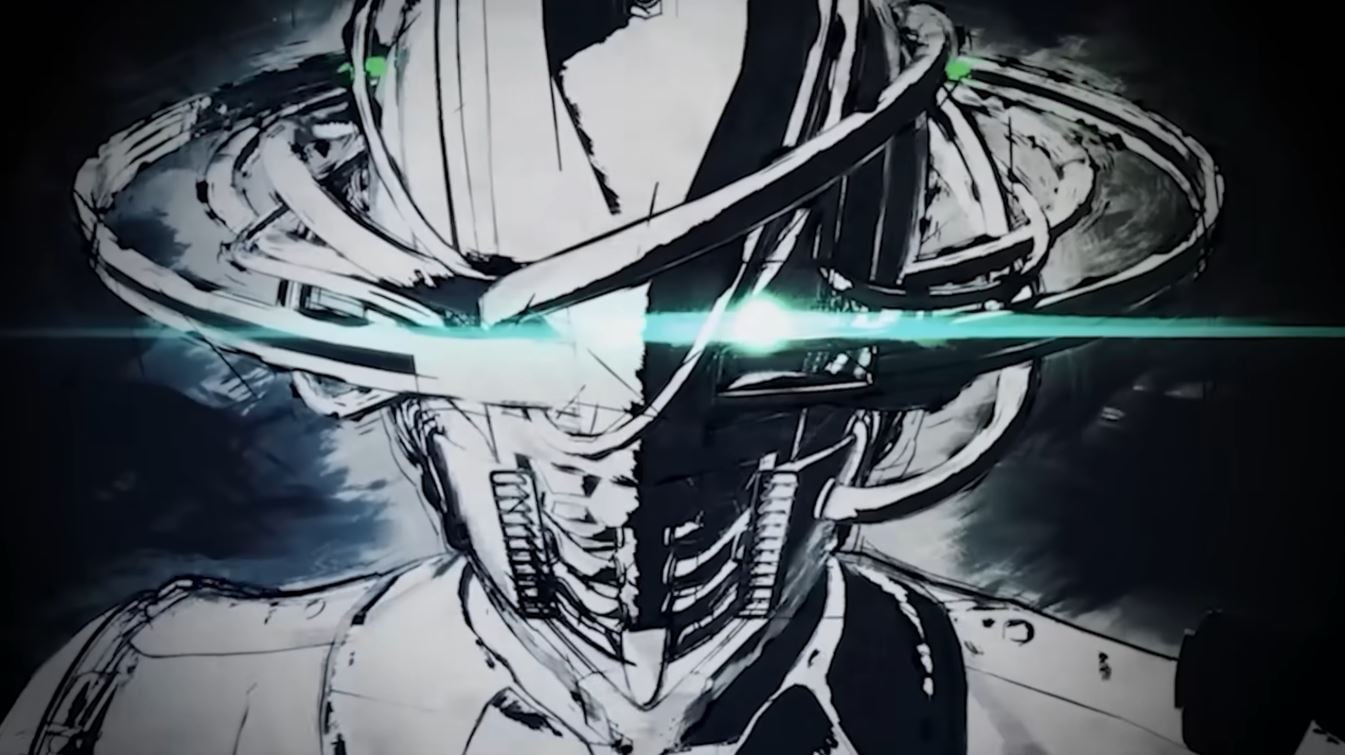
Romeo Is a Dead Man is a true Grasshopper Manufacture title, packed with all sorts of weird that can only come from the mind Goichi “Suda51” Suda and his fellow dev team. While some of the game’s unique elements that were implemented to cut costs were digitized (such as the manga panel cutscenes and pixel art spaceship hub), others were created using real-life practical effects.
Case in point: the game over screen, which sees Romeo’s face melting before the text reading “Romeo is Dead” appears. Choosing to continue rewinds the footage, showing Romeo’s melted face quickly regenerate as the hero gets prepped for battle.
This sequence was done for real, using dummy heads and flamethrowers. There was no air conditioning used in the recording studio either, perhaps due to the possibility that a temperature change might interfere with the melting process or the cold air might blow the flames in the wrong direction (or simply, due to a lack of an AC unit). The scene and its compositing were helmed by Grasshopper Manufacture video director and motion designer Takuma Araki, whereas the special effects were done by Tomo Hyakutake.
Another smart use of practical effects are the flower time-lapse videos that play between chapters. Takuma Araki was the lead on this project, which took a week of shooting to complete. Those ink sculptures are the real deal, too, and were created by ink artist Yusuke Isao.
Even the diorama of Deadford, which can be seen during the game’s intro sequence, was physically crafted and filmed in the studio. While these sections had digital effects added in post-production, there’s no mistaking the effort put into giving these scenes a “handmade” feel. Even if that feeling requires several flamethrowers aimed at a makeshift human head.
Related: Romeo Is a Dead Man’s save screen hides a reference to one of Japan’s first eroge
Romeo is a Dead Man uses no generative AI whatsoever, Suda51 assures