

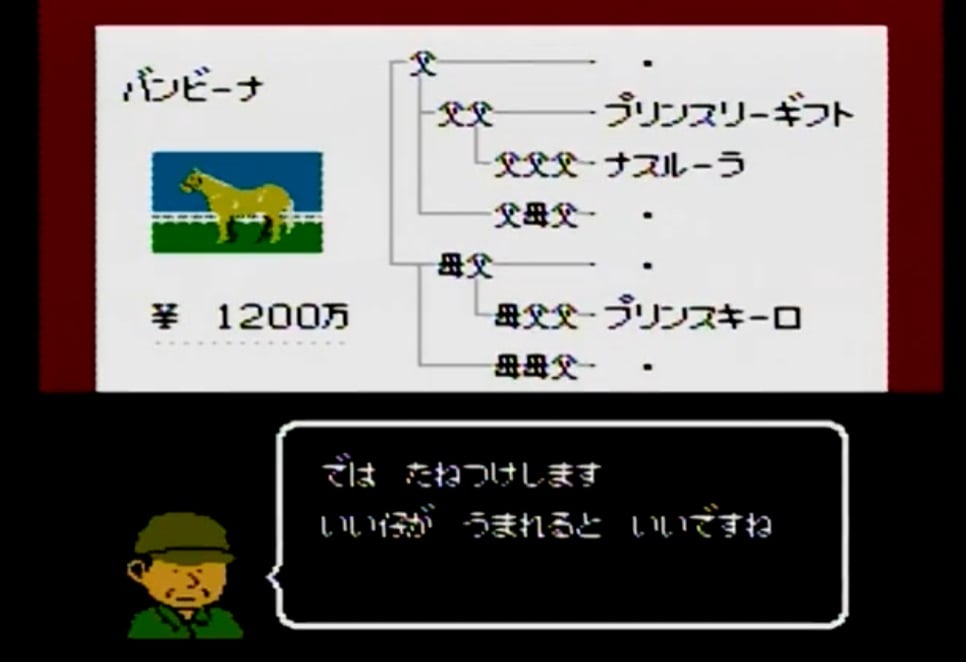
Decades before the craze for Umamusume: Pretty Derby, there was the Derby Stallion series. Debuting in 1991 with the launch of Derby Stallion: Best Race for the NES (Famicom), the long-running horse race and breeding simulator series was originally developed and published by ASCII. The franchise was huge in Japan during the 90s, selling millions of copies, and is considered one of the pioneers of the horse racing genre.
Nowadays, it’s not rare to see fans of Umamusume developing a love for horses and horse racing after learning about them through the game characters – which are all based on actual competing racehorses, past and present. However, back in the 90s, it was difficult even for big titles like Derby Stallion to put real life horses inside the game. In a recent interview with Game*Spark, ASCII developer Takeshi Kaneda talks about the struggles his team went through trying to make a realistic horse racing game.
Kaneda says that, ever since the beginning of the Derby Stallion, ASCII had been using real-life names for the studs appearing in the game. However, when it came to naming conventions for everything else – particularly racehorses and jockeys – they had to settle for pseudonyms. “I remember Sonobe (Derby Stallion series creator Hiroyuki Sonobe) wanted to have the real names of the horses, if possible, but even in case of the BestPlay Baseball series, we went through quite some trouble trying to implement real names of actual players (laughs).”
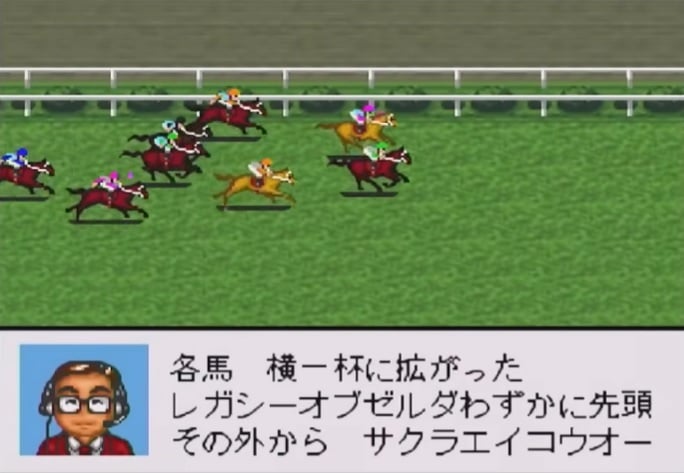
“In order to use the real names of the horses, we went on to negotiate with the JRA (Japanese Racing Association). They told us they had no problem with it, but of course, directed us to discuss it with the horse owners as well,” Kaneda explains. Apparently, the responses from horse owners to ASCII’s requests were all different, and Kaneda remarks one of them even said “You can use the horse’s name however you like, but we don’t want you to assign it ability stats.”
“With all that said, it was really a bumpy road, but when it came to names of racehorses in particular, actual jockeys who were playing Derby Stallion at the time put out a good word for us saying it would be ‘beneficial for the industry.’ So, we continued our negotiations, but I remember it was extremely tough, because we even had cases where parties other than horse owners held trademark rights,” Kaneda recalls. Luckily, the franchise started using actual names of racehorses and jockeys with the release of Derby Stallion ’96, five years after the series’ first installment launched in 1991.
Having gone through so much struggle to gain the rights for horse names alongside his peers at ASCII, Kaneda says the launch of Umamusume: Pretty Derby was quite a surprise for him. “Personally, I was amazed that they actually managed to pull it off from the start. It’s already difficult enough to have the horses simply appear as they are, but they went as far as to turn them into girls, so I’m certain they had to go through all kinds of trouble to achieve that. But I have so much admiration for the fact that they were able to carry it out and are currently thriving,” Kaneda comments.
Related articles:
Why does Umamusume: Pretty Derby have specific rules against sexual or violent fanart?
The horses are all part of a gambling racket, just like how gacha is a soulless, predatory business model designed to take advantage of the Japanese people’s predilection towards gambling, with 1 out of 10 japanese men being classifiable as problem gamblers. From gachapon machines instilling kids that gambling is fun, to pachinko using popular characters to lure people in with nostalgia, it’s no surprise that the Yakuza wants to lure excess men into wasting away their spendings on even more gambling.