


Recently, the use of generative AI has become more prominent in creative spaces, including game development, raising numerous questions about ethical and legal issues regarding the technology. In a New Year’s interview with GameMeca, Blue Archive producer Yongha Kim shed some light on how Nexon Games has been utilizing AI, while also addressing worries about it negatively affecting “authenticity” in the creative industry, and causing distrust among consumers.
Nowadays, more and more game studios have been coming out with new titles that use AI-generated or AI-assisted assets, often sparking criticism among fan communities – with even some widely-beloved and critically acclaimed games like Clair Obscur: Expedition 33 becoming subjects of debate. Citing copyright infringement and “soulless content” as some of the common criticisms within the industry, Kim explains that he understands these concerns, noting that the current issues with AI technology naturally impact how a game is received (note that this is based on machine translation, so exact nuances should be taken with a grain of salt).

“First, we have the issue of AI slop, when reckless use of generative AI lowers the quality of the output,” says Kim. “To use snacks as an example, even if the packaging looks appealing, if the actual amount of snacks inside it was reduced and the bag was filled with air, of course the consumers would react negatively.”
Furthermore, Kim mentions that consumers of more niche and subculture-oriented genres have higher expectations for “authenticity of creativity.” However, he says that current transformer or diffusion-based models are “merely simulators,” without any intent of personality behind them. “So if we entirely rely on them to produce results with a mere ‘click,’ I believe it raises the question: Can the creator’s authenticity really be incorporated into that?”
When asked about whether AI would be able to completely replace human-made works in the near future, Kim says that, while it could end up happening in the long-run, based on the present, his answer is – no. “The core issue is that, currently, AI still cannot fully generate the level of output demanded in development environments. I believe it will probably still fall short of expectations next year. However, it is undeniable that its utility as a tool is expanding,” Kim explains.
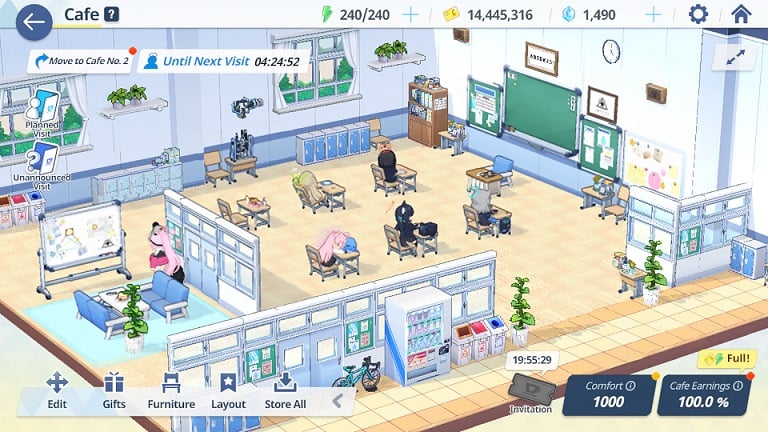
When it comes to use of AI within the company, Kim says that Nexon Game’s IO division (the team behind Blue Archive and Project RX) has been actively applying AI-based technologies such as voice recognition and speech synthesis into their games and exploring potential applications. “However, rather than abruptly transforming the entire organization around AI, we are taking a more practical approach of first identifying developers’ needs and then developing technologies or providing services that are able to meet them,” he details.
In one of his previous interviews, Kim also stated that Nexon Games IO had been using AI technology to support human developers and help minimize repetitive and time-consuming work. Apparently, this is to allow developers to dedicate more of their time to work that requires human creativity.
Completely agree that it should most likely not be front facing things like Character Designs and illustration work. If anything i like the way Level-5 handled it where it was used in concept art using their own designs and concept work to figure everything out before they decided to draw the real art itself.
I think AI should be looked at as a Utility it has uses and it will grow like Kim said. But it should be used for assist and help for more back end work like Concept Art, Programming and Debugging, Texture placement than front end work. Because the back end is usually where a lot of monotonous work happens and could make the difference between a game taking 5 years to release to 3 years to release or for a Gacha something that takes too much crunch time to something that puts less stress on workers.
The biggest issue is the commercial open use of Gen-AI. It becomes impossible to know what a company means when they say “we are adding AI to development”.
does that mean, you’re using ai to assist with coding and information input, or does that mean you’re replacing voice actors with synthesized duplicates and all of the art was scrubbed from uncredited artists?
its like if you went to a restaurant and the sandwiches were all labeled “meat”. yeah i might get turkey or i might get dog meat acquired by scooping up strays. I don’t really want to gamble on that.