Monster Hunter Wilds: Ascendance developers talk about revisiting “lessons learned from Wilds,” making Boost Bracers work across 14 weapon types, and evolving returning monsters
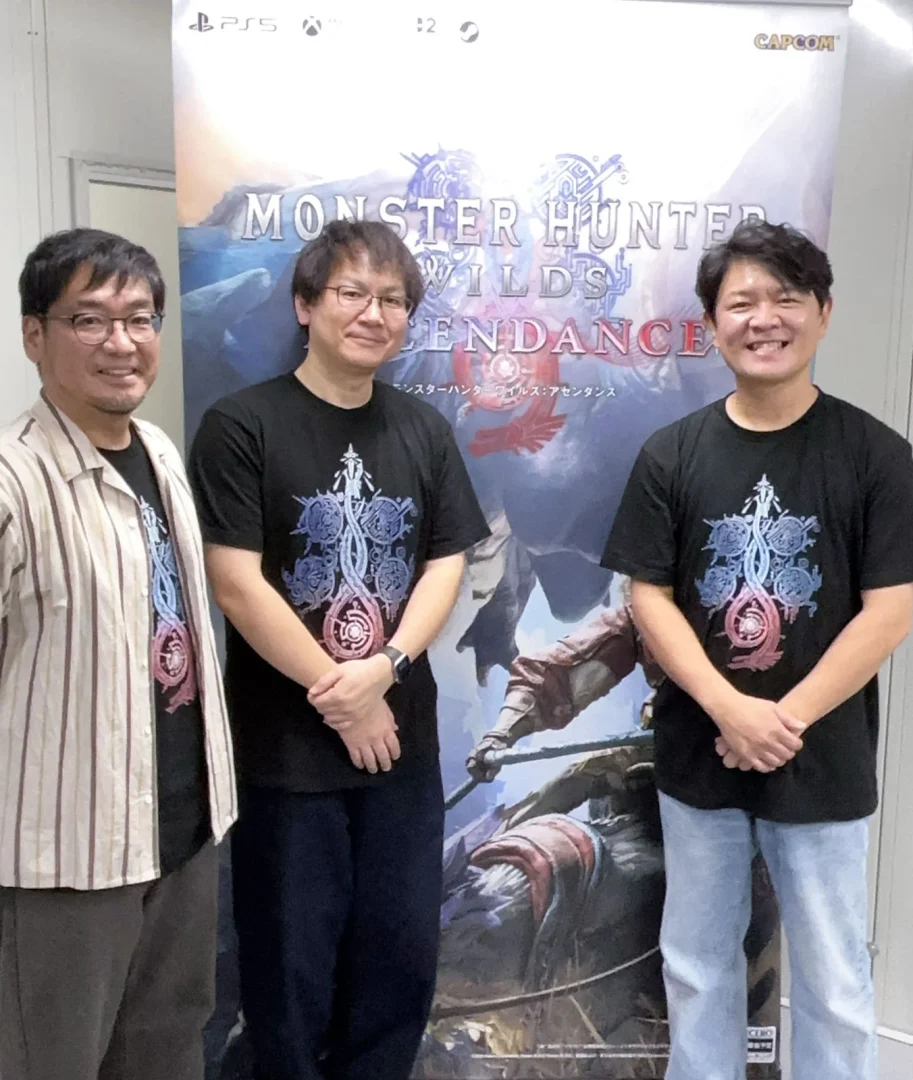
Interview with Monster Hunter Wilds: Ascendance producer Ryozo Tsujimoto, director Takuro Hiraoka, and executive director/art director Kaname Fujioka,

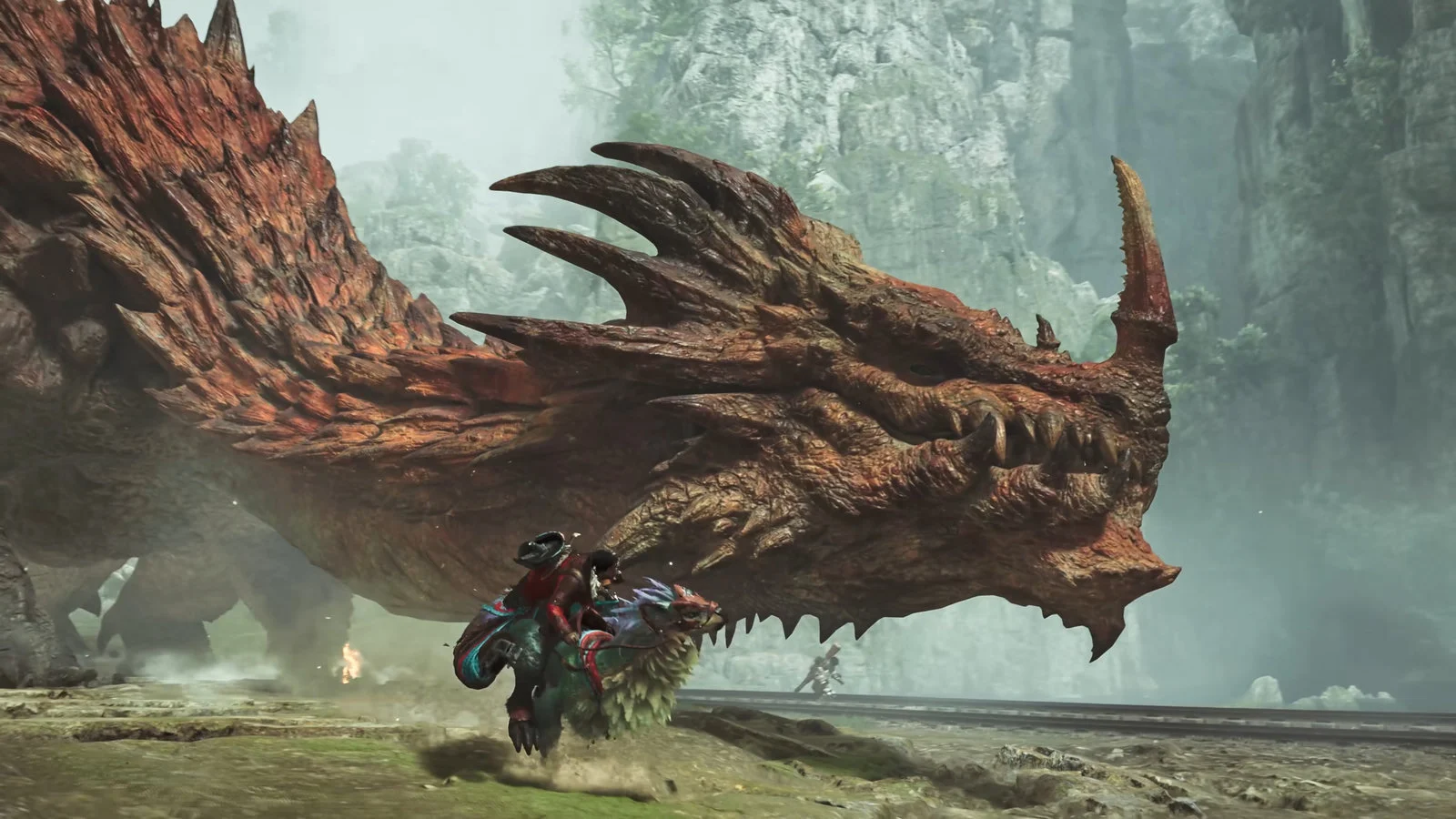
Monster Hunter Wilds: Ascendance is a massive expansion for Capcom’s Monster Hunter Wilds, scheduled to launch in 2027. The expansion will build upon the base game’s story and introduce a variety of new gameplay elements, including Master Rank quests.
To find out more, AUTOMATON recently spoke with Ascendance producer Ryozo Tsujimoto, director Takuro Hiraoka, and executive director/art director Kaname Fujioka, who talked to us about the ideas that went into designing the expansion’s new content.
―When developing Ascendance, what strengths of the base game did you want to build upon, and what areas did you particularly feel needed improvement?
Hiraoka:
When we started the Ascendance project, we established the concept of striving for a “natural evolution of Wilds.” One side of that involved properly building upon the things that were already good. We wanted to further develop the aspects that resonated positively with players, as well as the things we felt were rewarding to create.
The other side of it was to learn from the areas we recognized needed improvement, along with the feedback we received from players. Our policy was to thoroughly review and improve each part of the game we felt could be improved.
Build upon what should be expanded, and improve what needs to be improved. We believe that by doing so, we can achieve a natural evolution of Wilds. Add a new story and gameplay to that, and you get Ascendance. Personally, I think the action in Wilds itself is very engaging. Looking at existing mechanics like the Wound system and Focus Mode, we wondered whether we could create even more interesting action from there, which eventually led to the Boost Bracer.
As for feedback, we received an enormous variety of opinions. We went through them one by one, and after properly considering what should be changed and what simply could not be changed, we responded accordingly. This is reflected in the refinement work we’ve introduced previously, such as the improvements to the UI that we showcased during the recent Capcom Spotlight.
―What was the thinking behind adding the Boost Bracer as a new gameplay mechanic?
Hiraoka:
The starting point for the idea was partly rooted in Wilds’ core action mechanics that I mentioned earlier. But when we thought about what makes Monster Hunter’s action actually feel like “Monster Hunter,” we realized it comes down to a cycle of the hunter seizing openings or opportunities to attack the monster. So, what exactly constitutes an “opening or attack opportunity”? There are openings created when a monster attacks, but hunters can also create their own opportunities by using traps, Flash Pods, or the environment. The monster’s condition also matters. For example, when a monster is enraged, it has fewer openings, so the hunter needs to prioritize defense and play accordingly. Conversely, when a monster is exhausted, it is more prone to leaving openings, creating an opportunity to attack. These situational factors also contribute to what we consider an “opening or attack opportunity.”
From there, we thought it might be interesting if we could, in specific moments, allow players to create opportunities themselves through another means. That was the initial idea behind the Boost Bracer. From there, we conducted various experiments, and eventually arrived at the Boost Bracer that we’re now showcasing as a playable feature for the first time.
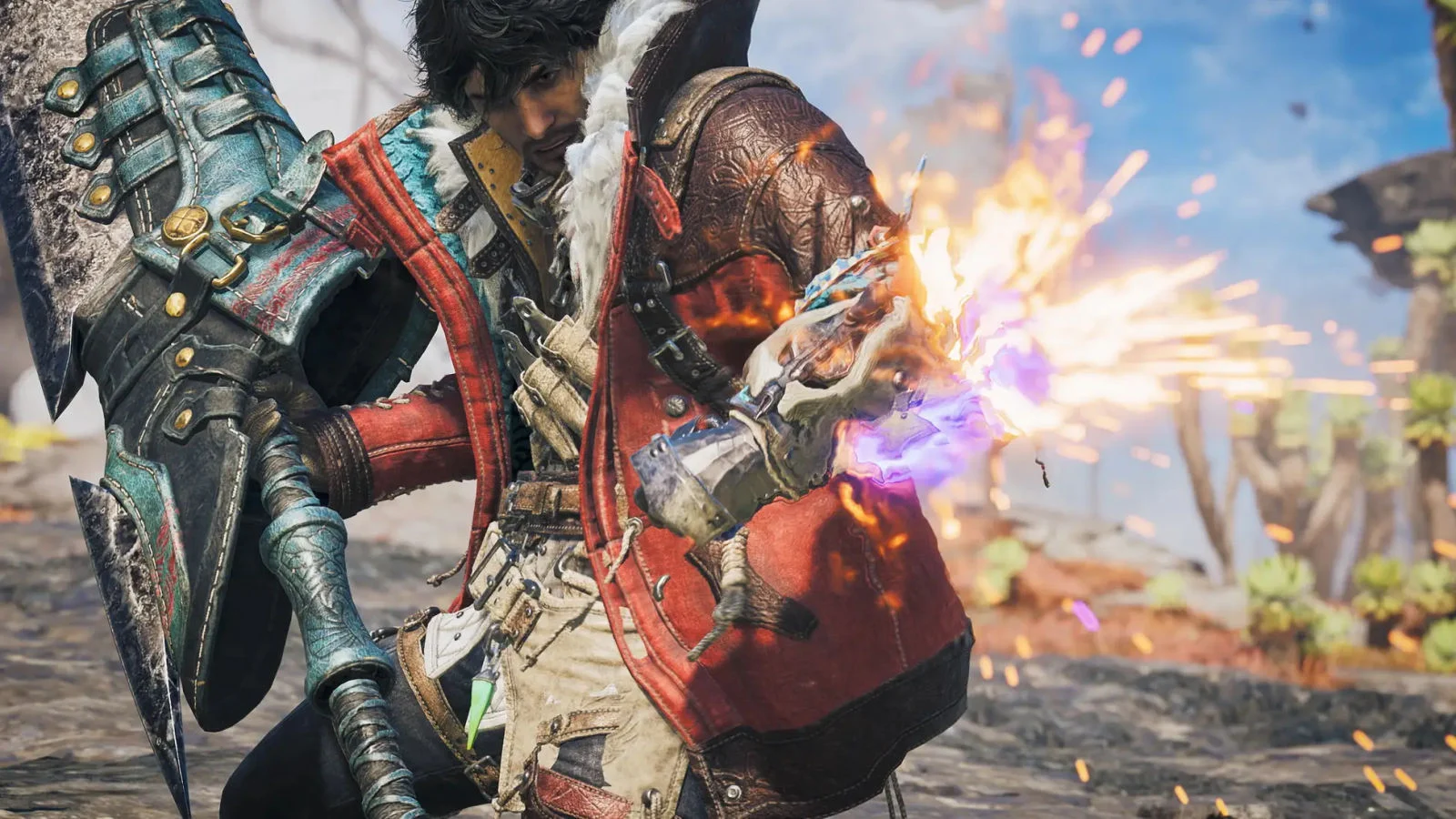
―Adding a Boost Bracer to all 14 weapon types must have been an extremely difficult task. How did you approach it? And could you tell us about your approach when it comes to balance?
Hiraoka:
It was incredibly difficult (laughs). As for balance adjustments, rather than designing with balance itself in mind, we first revisited the original concepts behind each of the 14 weapon types, one by one, and re-examined the unique attacks specific to each weapon.
Since Ascendance is based on Wilds, we carefully considered each element individually, asking ourselves, “This is how it worked in Wilds, but wouldn’t it stand out more if we made this improvement or made this addition?” or “Is there anything we can improve in terms of usability?”
For the Boost Bracer specifically, our concept was to enhance the characteristics and strengths of each individual weapon. We came up with ideas for things that each weapon could do and built them accordingly. When we put everything together, some things did feel overpowered. Since development is still ongoing, we’re continuing to adjust those aspects as we go.
That said, I feel that balance adjustment is extremely difficult. How effectively something is used varies depending on the player’s skill level, and it also changes according to their understanding of the game. But the most important thing for us with the Boost Bracer is making sure that the moment players use a Boost action, they can experience an exhilarating moment and actually feel like they’ve created an opportunity.
―You have played a central role in the development of several Monster Hunter titles with very different styles. How have those experiences informed your work on Ascendance?
Hiraoka:
I’ve been involved in developing Monster Hunter since Monster Hunter Portable 3rd, and have continued working on the series through Generations, Generations Ultimate, and World: Iceborne. In particular, I served as lead game designer on Generations Ultimate and Iceborne.
Rather than saying that I took one particularly strong lesson from either of those titles, I’d say that, in addition to what I’ve learned through developing the Monster Hunter series over the years, I’ve gained various experiences from playing games myself in my private life. Through all of that, I’ve developed my own sense of what I feel is important about Monster Hunter. I also played Wilds in my own time.
On top of that, I’ve been moving forward while discussing things with Fujioka-san and Tokuda-san, such as how we think about particular aspects. So rather than saying we took something specific and significant from one particular title, it’s more that we’re reflecting everything we’ve accumulated over the years. Saying we’re drawing from “life” would be an exaggeration, but that’s essentially what it is.
―Is collaboration between the teams smooth? For example, is there an environment where know-how from Generations Ultimate can be brought into Ascendance?
Hiraoka:
Rather than viewing it as collaboration between individual teams, we think of it in terms of the accumulated experience of the Monster Hunter team as a whole. As a team, we make an effort to preserve documentation and know-how, so it’s not particularly difficult to share knowledge between different titles.
Fujioka:
For example, someone responsible for player-related work may work across multiple titles, or a person responsible for monsters may move to another title once they have more availability on one project. People move around while accumulating experience, and people who newly join them then accumulate new experience as well, so it’s a constant flow of people. It’s not as though the two teams have been running completely separate development lines the entire time. Rather, people move back and forth between them.
―I had initially assumed that the Boost Bracer would be something you used only at limited, critical moments. But since the gauge also fills over time and when you’re hit, I sometimes felt like it had filled up before I even knew it, and I hadn’t used it. Is the idea that players should use it liberally to “create opportunities”?
Hiraoka:
That is precisely the design philosophy behind it. Our fundamental intention is for players to use it when they feel that they have an opportunity, whenever they think, “Now’s the time.”
That said, I don’t think there is necessarily just one optimal strategy. Everyone has a different level of proficiency, and at this demo event, people are playing it without having any prior information about the system. We’ve seen some players keep the gauge full and then use it all at once when they knock the monster down, and we consider this a valid playstyle too.
The Boost Bracer consumes a dedicated gauge and improves the hunter’s action performance while the boosted state is active. Rather than repeatedly using the Boost activation action to quickly empty the gauge, you’ll be able to maintain a stronger state more easily by making full use of the Boost duration before activating the next one. However, we don’t want players to feel that they’re missing out if they don’t do that. I think it’s enough for us to say that players who can do it are impressive and have mastered the system at a high level.
Various people have been sharing information since the first day of the event. As information spreads, players become more proficient. We also view that process positively, as different ways of using the system emerge.
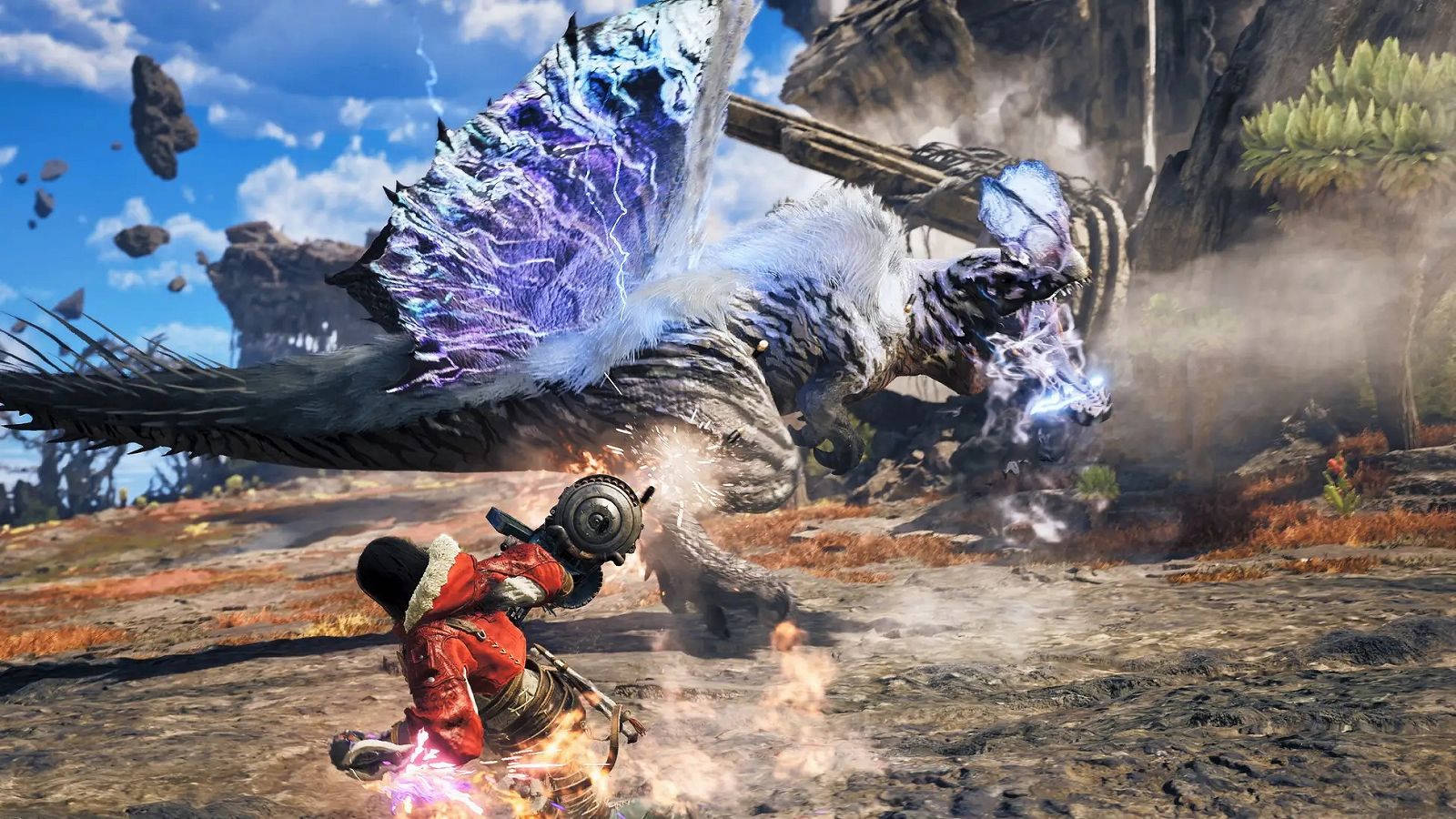
―Your Boost Bracer activation showcase garnered rather animated reactions on social media for its “hype moments and aura.”
Hiraoka:
We certainly didn’t make it with internet memes in mind (laughs). It was simply the result of asking what kind of functionality would be interesting when enhancing each weapon’s strengths. As far as the flashy nature of the presentation goes, that might be more in Fujioka-san’s area, but I think it does a good job of making the action feel satisfying.
Fujioka:
When we decided to give weapons the ability to close the distance in an instant – taking the Great Sword as an example – we realized that if a weapon that had always moved with a sense of weight suddenly sped up, it would feel unnatural without some kind of rationale. That led us to think about how we should express the action of “boosting.”
The result was equipping the hunter with a new gimmick called the Boost Bracer and using its propulsion to temporarily enhance the hunter, such as increasing their instantaneous movement speed and reducing knockback while guarding.
We started from the idea that even weapons that normally move slowly could move quickly for an instant. Before we knew it, the Hammer had started flying through the air using propulsion (laughs).
―Are the monsters appearing in Ascendance designed so that players will be unable to defeat them unless they have mastered the Boost Bracer mechanic?
Hiraoka:
First, I want to make it clear that this is absolutely not the case. The kind of action I envisioned was one where, within the core Wilds combat system, using the Boost Bracer creates moments where you can make an opening for yourself. In other words, when the gauge fills, the player’s thinking changes momentarily and the range of options available to them expands.
I think you’ll understand this if you look at how it works, but you don’t spend the entire hunt in a boosted state. It’s there as a nice accent to the action in Wilds, so we absolutely don’t want to make it so that all the Master Rank monsters are unbeatable unless you master the Boost Bracer.
There were comments on social media along the lines of, “Are the monsters going to become ridiculously difficult?” But that’s not the case at all. I’d like people to think of it simply as an extension of the action foundations established in Wilds. I’d also like to add that, naturally, when you move up to Master Rank, the monsters become stronger in terms of their parameters, but new actions are also added, while existing ones are modified. Since it takes the form of what we’ve traditionally called “Master Rank” in previous entries, I think you’ll be able to enjoy hunting existing monsters with a fresh sense of excitement.
―Are there plans to introduce armor skills related to the Boost Bracer?
Hiraoka:
I can’t say anything about that (laughs).
Tsujimoto:
Incidentally, the demo version we’re exhibiting at TGS 2026 has been configured specifically to allow players to experience and make use of the new features.
Fujioka:
Ascendance is still in development. We’ll be looking at the feedback from the people who played it this time, as well as how they actually play, and then we’ll make adjustments that fit our own concepts. As for whether there will be skills related to it, please look forward to finding out in the future.
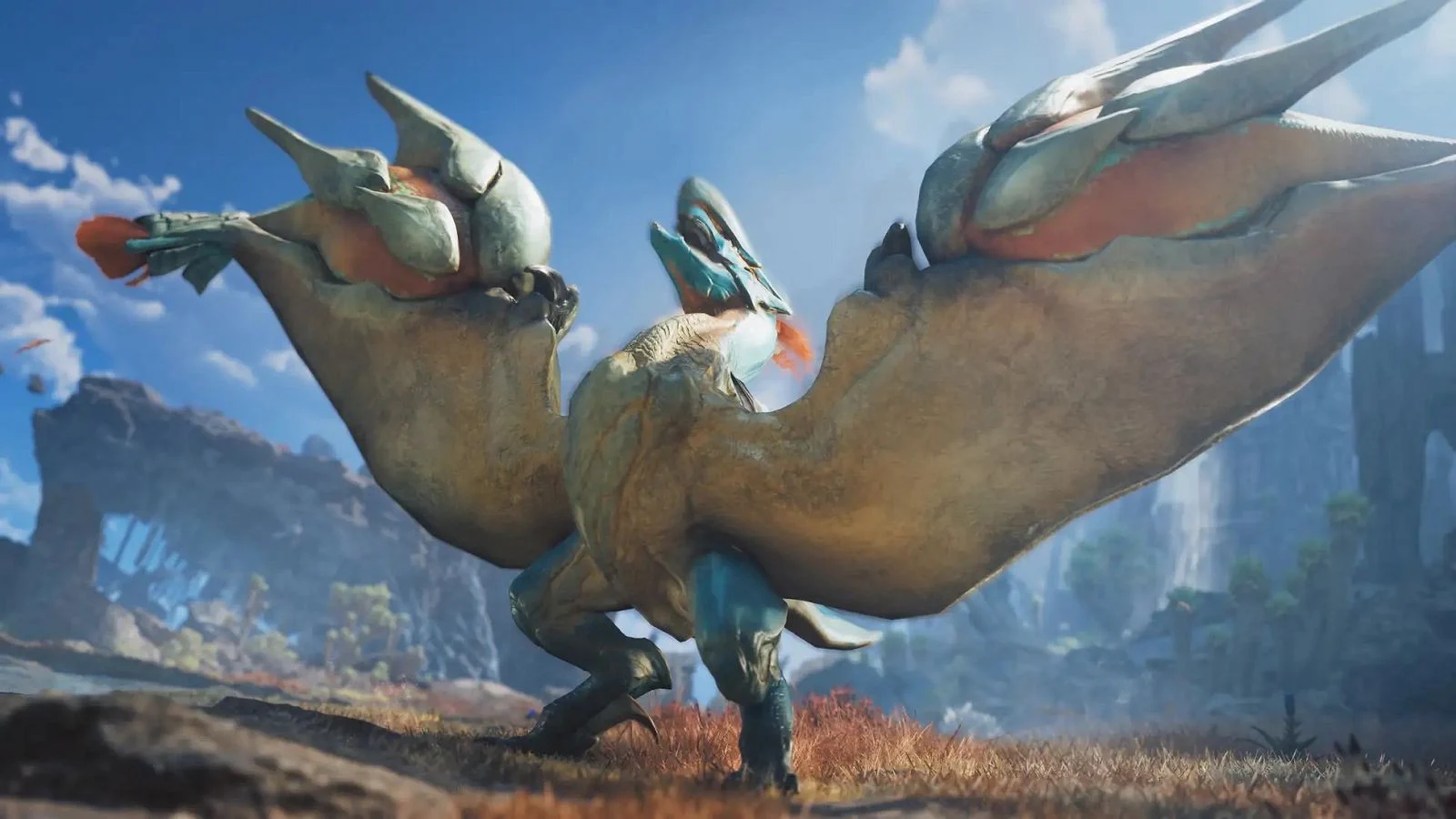
―When I played the demo this time, I was pretty overwhelmed just dealing with the monster during combat. But when it comes to the environment, there were new mechanics such as the air currents in the Skybound Eyrie. Previous games have also had areas where you could make use of terrain and environmental gimmicks. Are there any elements unique to this new map?
Hiraoka:
When creating a new field, our planners and designers are always thinking about what kind of gameplay each area should offer and what significance the terrain itself should have. We’re also planning to include gimmicks that are characteristic of the ruins.
―Are any of those in the current demo build?
Hiraoka:
There are monsters that you can pick up and throw, as well as endemic life such as Spark Bees (unofficial translation, JP: Hibanabachi), but we haven’t implemented any of the more dynamic, large-scale mechanics yet. Please look forward to future announcements.
―Regarding Lao-Shan Lung, there have been comments in the past that its battles could get somewhat monotonous. I’m curious about how it will return and evolve this time.
Hiraoka:
The last time Lao-Shan Lung appeared was in Generations Ultimate. The fundamental basis of the game is very different from what it was back then. The series also underwent a major evolution around World, and has evolved further from there into Wilds.
This also connects to what we were discussing about the Boost Bracer. As we developed the action for this game based on Wilds, we concluded that simply bringing Lao-Shan Lung over as-is wouldn’t be a good idea. The gameplay foundation has changed, and our technical capabilities for rendering the game have advanced tremendously. We are developing the monster by considering how to best portray its defining characteristic – that its mere movement constitutes a disaster-level event – and asking ourselves, “If we’re bringing it into Ascendance, how should we adapt and alter it?” You can expect the experience to be considerably evolved.
―Teostra, which was recently announced, is a monster that has also appeared in recent titles. What are the key points to look out for, and what has changed about it for its appearance in Ascendance?
Hiraoka:
Teostra has appeared in various forms throughout the series. With all those different versions of Teostra in mind, we considered how we should create a Teostra based on the action system of Wilds. Simply taking Teostra from a recent title and porting it over wouldn’t work, because the games themselves are different. We first considered what kind of foundation we should build Teostra around while taking into account the action and pacing of Wilds, as well as what Ascendance is trying to be.
There are attacks and actions that we’re bringing over by adapting existing ones, but we’re also adding new actions based on the idea that, “Adding this kind of behavior could create new ways for players to approach the fight.” That’s how we’re creating a version of Teostra’s action that really feels like it belongs to Ascendance and Wilds.
As for the double Supernova that has been getting attention this time, we added it with the idea that putting an extra twist on one of Teostra’s iconic moves might surprise veteran fans and give them something to talk about.
You could say it’s a little mean, but we’re not doing this for every monster, and we consider it a positive element. In fact, we’ve been able to see first-time players get taken out by it while still looking happy about what happened. As developers, that made us feel we’d achieved exactly what we were going for.
―While playing the demo, I was struck by the return of Cosmicite Ore, which hadn’t appeared in a while. Wilds itself had connections to previous games, and I was wondering whether Ascendance will also have any connections to past titles.
Hiraoka:
Rather than deliberately placing it there as a direct connection to the past, it came up when we were considering the names and composition of new ore items for Master Rank. We choose names while thinking about things like, “Would this name work?” and “Would people be happy to see this?” I can’t comment on whether there is actually a connection in terms of the lore, but if fans are happy to perceive it as a connection in a more intuitive sense, then that’s something we’re happy about. I hope you’ll enjoy those kinds of connections.
―Are Elder Dragons going to be a key part of the story?
Fujioka:
As one of the main selling points of the story, the emergence of Elder Dragons is going to be one of its key developments. That’s also why this was one of the first things we officially announced.
―World: Iceborne also centered heavily on Elder Dragons. How will the story involving Elder Dragons unfold this time? Will it be completely different from World: Iceborne?
Fujioka:
Yes, it will be completely different. The core of the story revolves around the question, “What does the existence of Elder Dragons trigger?” In addition, we’ll be exploring the backstory of Wyveria, which is a forbidden area, as well as the broader eastern region that includes it, including why it has come to have this particular background. We’ll properly tie the Elder Dragons into all of that, so I hope you’ll look forward to seeing how everything comes together.
―Thank you very much.
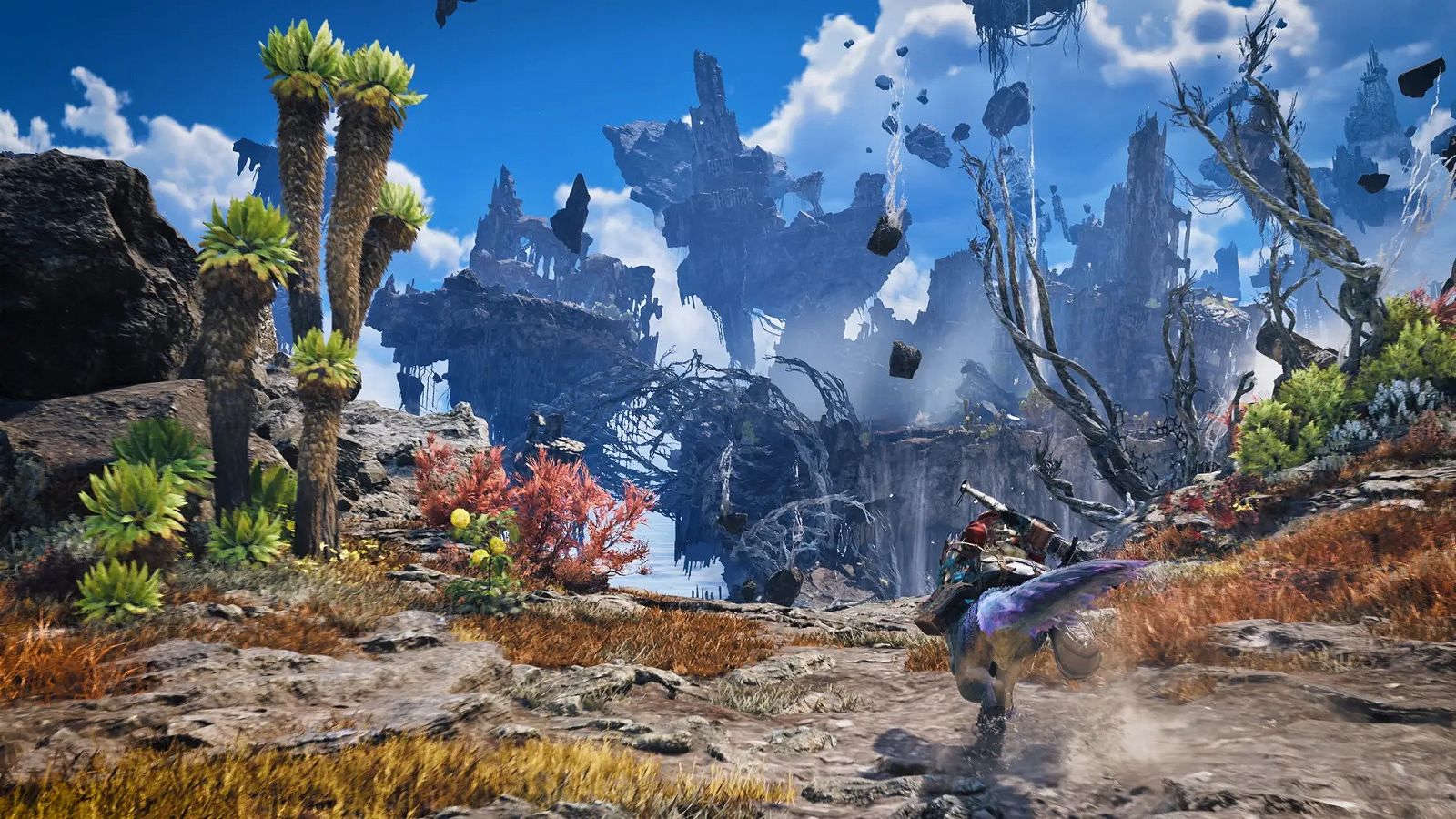
Monster Hunter Wilds is currently available for PC (Steam), PS5, and Xbox Series X|S. A Nintendo Switch 2 version is set for release on December 4. Additionally, the major DLC Ascendance is scheduled for release in 2027.
[Interviewer, writer: Takayuki Sawahata]
[Editor: Hideaki Fujiwara]

AUTOMATON WEST
Articles: 214Related Posts